Invest1 publisher2 min readPublished
Crude sells off for a fifth session as US and Iran hold 'very good' talks at UN
WTI has not fallen five days in a row since February. What set the run off was a three-hour meeting in New York plus Iran's conditional offer to reopen the Strait of Hormuz. Pump prices are still at record highs.
The Investor · Invest desk
What happened
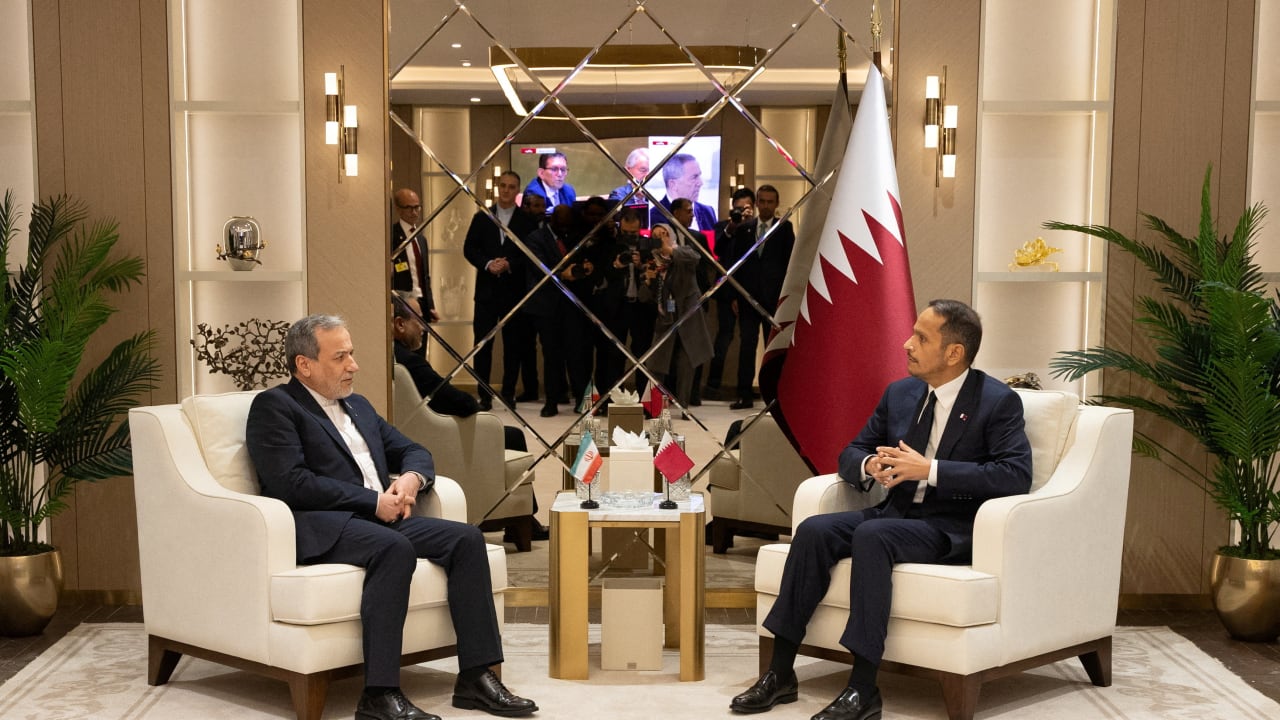
- Oil prices fell for a fifth consecutive session on Tuesday after Trump reported a three-hour meeting between U.S. and Iranian delegations on the sidelines of the U.N. General Assembly.
- Fuel prices remain at record highs, and Treasury Secretary Scott Bessent said the administration is weighing a full or partial ban on diesel exports to bring them down.
- The Nasdaq Composite closed at a record for a second straight session while the S&P 500 finished the day relatively flat.
Compiled by The InvestorSomething wrong?How this is made
Why it matters
- contradiction Crude is falling five days running while retail fuel sets records, so the two prices are tracking different shortages. A sixth down session in WTI would, on its own, leave the driver paying the same.
- decision Trump has framed his own next move as a choice between a deal with Tehran and destroying the Islamic Republic, and five sessions of selling have the futures market betting on the deal.
- exposure Anyone short supply risk is exposed to a condition Iran set: the seven-day Hormuz timetable requires the blockade to be lifted first.
- constraint The relief measures on the table, an export ban and a tax deduction, work on where product goes and who pays for it. Refining throughput and crude supply stay where they are under anything Congress is currently drafting.
A barrel of WTI for next-month delivery and a gallon at the pump are answering different questions this week. Iran's signal, reported before Trump's address to the General Assembly, was that it could reopen the Strait of Hormuz within seven days if Washington eases its military pressure and lifts its blockade on Iranian ports [4]. Conditional, and dated. No barrel has moved yet, and crude has fallen for five straight sessions anyway [1].
The same run sets two different records. For WTI it is the longest losing streak since February [2], roughly seven months back from Tuesday's session [1]. For Brent it is the longest in more than a year [3]. The gap between the European benchmark's last five-session slide and this one is at least five months longer [2].
What Washington is doing about the pump is downstream of all that. Treasury Secretary Scott Bessent said the administration is considering fully or partially banning diesel exports to help ease prices [6], and Trump said he has pushed for it in internal discussions [7]. House lawmakers have introduced a slew of bills this month aimed at fuel costs, including a floated tax deduction [8]. A deduction moves money to the driver. An export ban redirects product that has already been refined. Neither one adds a barrel of crude or an hour of refinery runs, and fuel prices are at record highs while the front-month contract falls [5].
In the speech itself, Trump defended his decision to go to war with Iran and said he now has a "big decision" to make on whether to make a deal with Tehran or "annihilate the Islamic Republic and do it quickly" [10]. Iran's military called the threats a sign of "strategic desperation" [11]. Five sessions of selling are the market betting on the first of those two outcomes.
Two other explanations fit the same tape. One is demand: if traders were selling a weakening world economy, the Nasdaq Composite closing at a record for a second straight session, with the S&P 500 flat, is hard to square with that [9]. That index is a poor demand gauge this particular week, given that Anthropic and OpenAI both announced lower-cost models on Tuesday [12]. The other explanation is simple pass-through lag, in which today's record pump price is last month's crude and the gap closes on its own in a few weeks. I think the diplomatic explanation is the right one, because the move dates from a three-hour meeting [1]. Evidence against it would be crude turning back up while the talks continue, or pump prices falling before any export restriction is written.
What to watch
- A sixth consecutive decline in WTI. That would stretch the longest run since February further still.
- Whether the House fuel bills get a hearing and whether the floated tax deduction survives into a marked-up text.
- Iran's posture if the U.S. blockade on its ports stays in place past the seven-day window it described.