Invest1 publisher3 min readPublished
Bessent proposes a US-China AI incident channel in the week Trump rejected a 'globalist scheme'
Scott Bessent proposed a US-China AI incident alert channel in the same week Trump told the UN he rejects global control of AI. The channel asks nothing of labs before launch, while Xi's main ask, looser US chip export controls, is the item with revenue at stake.
The Investor · Invest desk
What happened
- China's commerce ministry said on Thursday the US and China had held their first AI dialogue, after Scott Bessent met Vice Premier He Lifeng in New York earlier in the week.
- Bessent said the US proposed a notification mechanism between the two countries for national-security-related AI incidents.
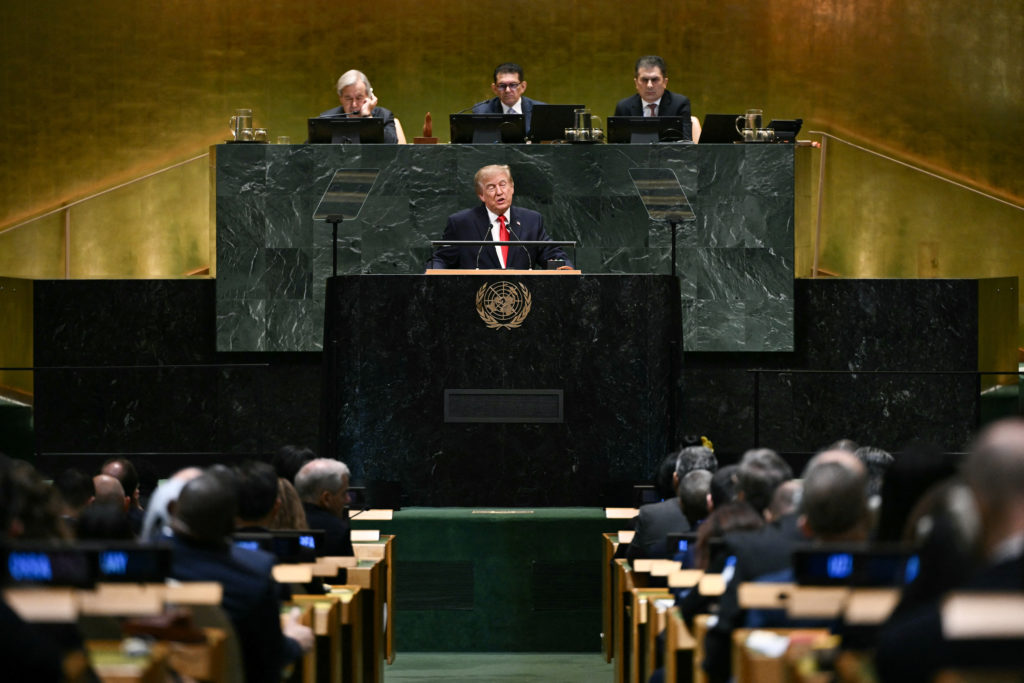
- Earlier the same week, Trump told the UN General Assembly that the US rejects any "globalist scheme" to control AI.
- Loosening US export controls on advanced chips is one of Xi's top asks during his White House visit this week, Fortune reported.
Compiled by The InvestorSomething wrong?How this is made
Why it matters
- constraint An alert channel works after an incident, when one government notifies the other, so US labs keep testing and pacing their models as they do now, which is where Trump said he wanted AI left.
- cost Treasury's offer omits the bans and cross-government verification Amodei asked for, so the compliance burden Fortune says favours a few well-funded labs has not yet been imposed on anyone.
- decision Whether Washington loosens chip export controls, one of Xi's top asks, is still undecided. Agreeing an alert channel leaves that choice open.
Trump's own post on Thursday sits closer to Bessent's proposal than the contrast suggests. He wrote that he wanted to leave AI "exactly where it is. That is China's position also," and added, "Our guardrail is the DOJ!" [2]. A prosecutor acts after the harm is done. So does an incident notification channel, under which one government tells the other that a national-security AI incident has occurred [5].
The day before, Anthropic chief executive Dario Amodei gave the UN Security Council a sequence: start with small agreements every country could accept, such as a ban on using AI to make biological weapons. After that, governments would build systems to verify each other's commitments, then set up a global alert system [8]. "No leader, no company, and no nation can manage this alone," he said [6]. OpenAI's Sam Altman also called for fast, shared incident reporting, and said his company had slowed its own development before and would again [9]. Treasury's offer is Amodei's third step with the first two left out [17]. The cost sits in those first two, and Fortune notes that the regime the two labs are pitching, with extensive testing, verification and a coordinated pace at the frontier, is the kind only a few well-funded companies can most easily meet [14].
Open-model advocates made the opposite case at the same session. Hugging Face chief executive Clement Delangue told the council that when his team tried to defend itself with closed American models, their safeguards blocked it, so the team used an open-source model from China [13]. Pakistan is a founding member of the World Artificial Intelligence Cooperation Organization, which Beijing launched in July with 29 countries and no major Western democracy. It warned that measures "pursued in the name of safety must not become instruments of denial of technology" [10][11]. Fortune takes that as a thinly veiled shot at US export controls on advanced chips [11].
Loosening those controls is one of Xi's top asks this week, according to Fortune [12]. Standing beside Trump, Xi said the two countries have "both the capability and responsibility to develop and manage AI for good" [3]. China's commerce ministry confirmed that a first AI dialogue had taken place [4]. The notification proposal rests on Bessent's account, and Fortune does not report how Beijing answered it [5].
The channel can stay a stand-alone alert line between the two governments, free to both sides. It can become the first step of Amodei's sequence, and verification would then put costs on developers that, on Fortune's reading, the largest closed labs absorb most easily [14]. Or the summit can turn on chip relief, one of Xi's top asks [12]. I think the first outcome is the likeliest on this evidence, because the proposal begins where Trump's DOJ line already stands, after an incident [2][5]. The counter-view is Fortune's: a formal channel with the country Trump casts as the main rival in AI is an early sign that the administration's public posture and private diplomacy do not fully line up [16]. That view gains weight if Treasury attaches verification terms or export-control changes to the channel, and loses it if the channel is agreed on its own.
What to watch
- Whether Beijing publicly accepts, amends or ignores the incident notification mechanism Bessent described.
- Any change to US export controls on advanced chips announced after the Trump-Xi summit.
- Whether Treasury or the White House attaches testing or verification commitments to the proposed channel.