Invest1 publisher3 min readPublished
Zillow's index puts six condo markets below their 2006 highs
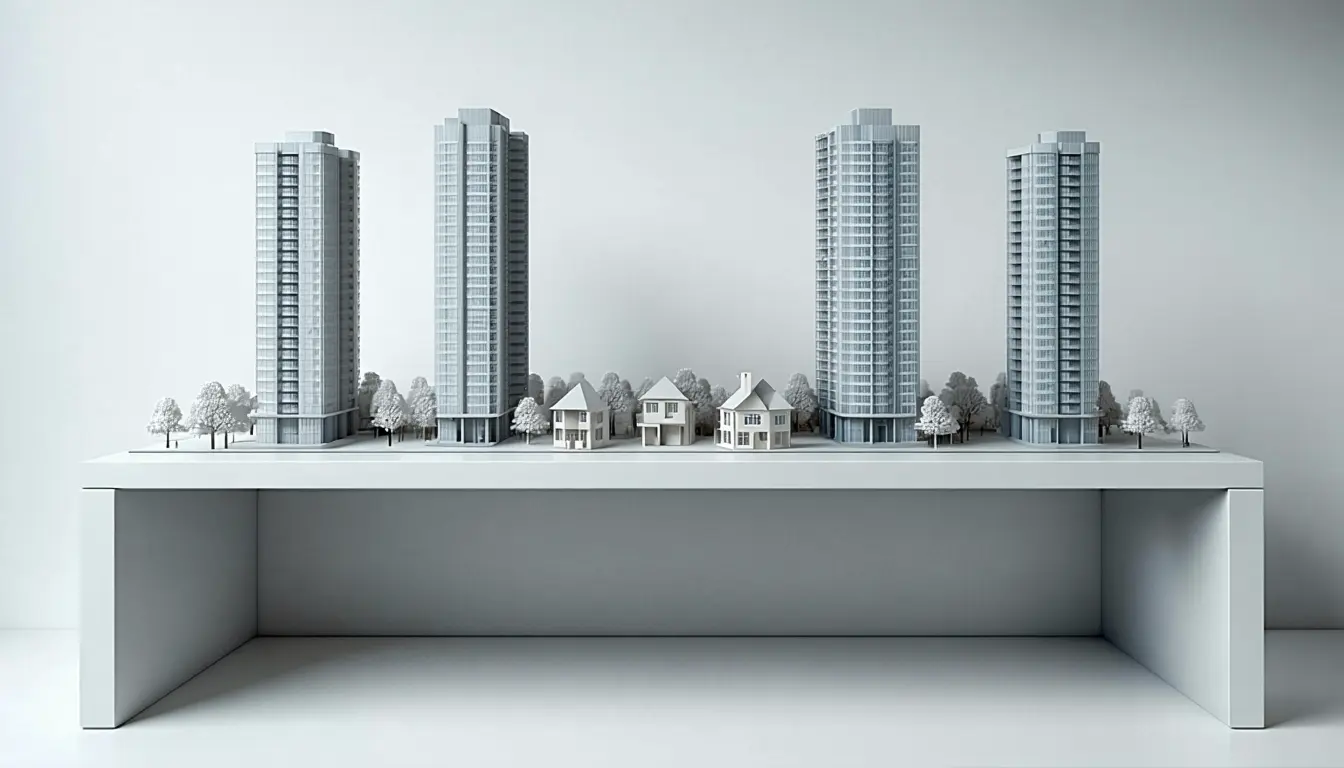
Wolf Richter counts 34 bigger markets where mid-tier condo prices sit 15% to 34% below peaks mostly set in mid-2022, and six that are back under their 2006 highs. In San Francisco, houses are re-exploding while condos stay 7% under peak.
The Investor · Invest desk
What happened
- Mid-tier condo prices through August stood 15% to 34% below their peaks in 34 bigger US markets, according to Wolf Richter's reading of the Zillow Home Value Index.
- Nine of those 34 markets, running from Oakland via Austin to Jacksonville, are down 21% to 34%, and three of the nine are down by more than 30%.
- A further 35 bigger cities show condo price declines of 8% to 14% from peak, a band Richter tracks as a list without individual charts.
Compiled by The InvestorSomething wrong?How this is made
Why it matters
- exposure A borrower who put 20% down at a mid-2022 peak in one of the 30%-plus markets cannot sell or refinance without bringing cash to the table. Whoever holds that note absorbs the difference.
- contradiction Richter has San Francisco house prices re-exploding while its condos sit 7% below their 2022 peak. Anyone marking condo collateral off a metro-level house price index is marking up units in a market that has not recovered.
- constraint An owner who bought at the 2006 high in Cape Coral or Orlando has no nominal gain to roll into a larger purchase. Trade-up volume in those six markets depends on cash buyers or on sellers accepting a loss.
Work backwards from the six markets that are under their 2006 highs. A market trading below its Housing Bubble 1 high after a decline of at most 34% had a mid-2022 peak no more than about 1.52 times that 2006 high. That is 2.6% a year compounded over the sixteen years in between [3]. Four of the six are in Florida, Cape Coral, Fort Myers, Sarasota County and Orlando; the other two, Oakland and Contra Costa County, sit in the East Bay [4][2].
The peak date matters more than the percentage. Richter puts the vast majority of the 34 peaks in mid-2022, with a few in 2023 and 2024 [2]. A purchase loan written at 80% of price at one of those peaks is now 121% of value in a market down 34%, and 94% of value in a market down 15%. That is a spread of 27 points of loan-to-value on identical underwriting [4].
Only one city in the article puts houses and condos side by side. Richter wrote that San Francisco, "the epicenter of the AI investment boom," is a market "where home prices are now re-exploding." Its condo prices, he wrote, "were still down by 7% from their peak in 2022" [10]. That is one market out of the 69 he counts with declines of 8% or more [1].
Prices in these markets rose 180% to 350% in the ten years to their peaks [11]. Take 34% off the top of a 350% run and the market is still 197% above where it stood a decade earlier. Take 15% off a 180% run and it is 138% above [5]. The damage is concentrated in what was bought and lent against from mid-2022 on. The counter-case is that the 35 cities down 8% to 14% are the leading edge of something wider [5]. Dallas, Irving, Sacramento, Huntsville and San Antonio are, in Richter's words, "only a few bad months away from getting on the list" [9]. That would take the count from 34 to 39 [6].
These are seasonally adjusted three-month averages of mid-tier condos and co-ops from the Zillow Home Value Index, a backward-looking series built from tax records, MLS, brokerages and agents, including off-market and for-sale-by-owner deals [12]. Three-month averaging shows turns late in both directions. Glendale, Arizona crossed into the 15% band in August after Houston and Tempe crossed in July, and no market came off the list [6][7][8].
Each market's table carries four columns: decline from peak, month over month, year over year, and the remaining gain since January 2000 [16]. All four are price columns, so the data cannot say whether dues or assessments did the pushing. Richter's own explanation for the volatility is who owns the units: buyers of rentals, short-term vacation rentals and vacation homes, and nonresident foreign investors parking cash in the US. That mix, he said, makes condos particularly speculative [13]. He also notes that land appreciates over the long term while most buildings depreciate and are eventually torn down [14].
What to watch
- Whether September's Zillow print removes any market from the 15%-plus list for the first time since Glendale joined it.
- Whether the next update adds a seventh market below its 2006 high, and whether it comes from Florida or California.
- Whether single-family prices in Cape Coral or Fort Myers start tracking their condo series down, which is the test of whether the losses are condo-specific.