Build1 publisherNot yet confirmed elsewhere2 min readPublished
Northern Territory EPA pauses the 19,150-hectare Project Ares data centre over gaps in its environmental plans
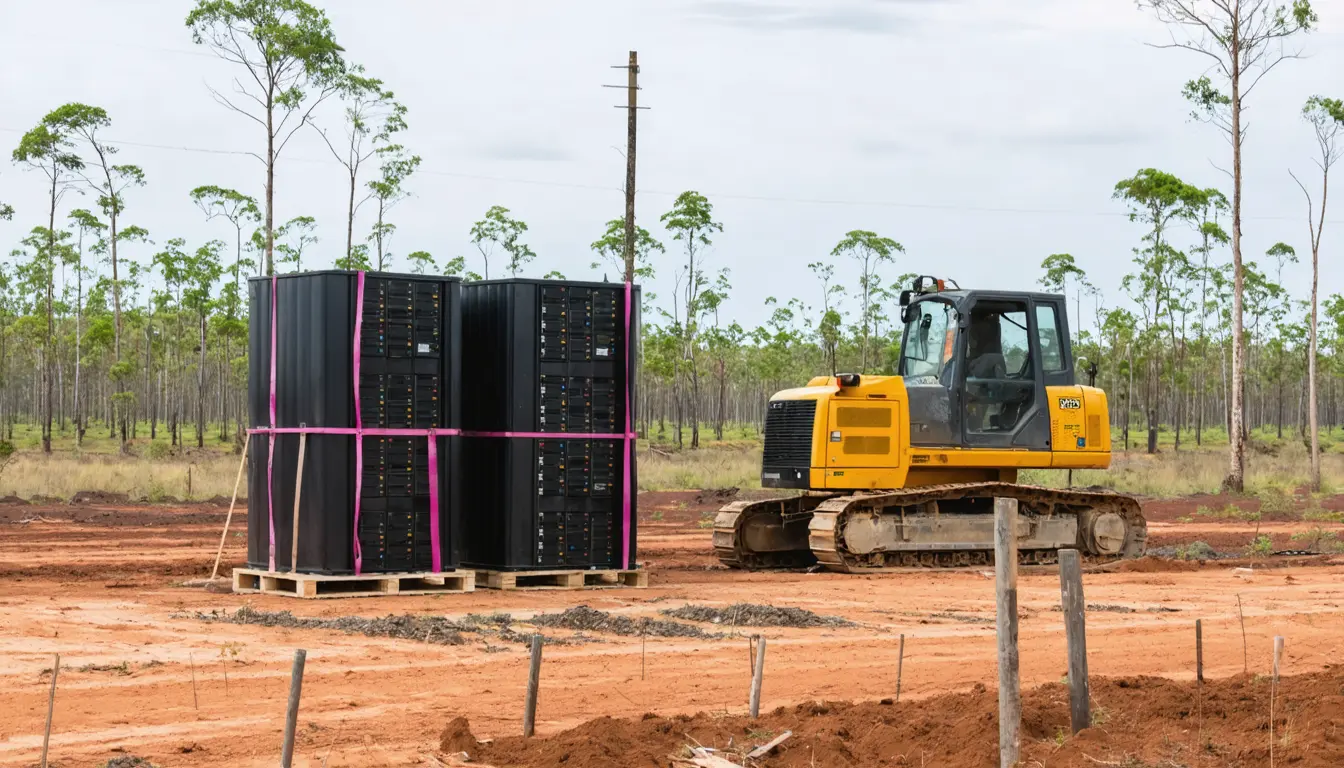
Northern Territory's EPA has paused its assessment of Energy North's 19,150-hectare Project Ares data centre, citing a 'low level of confidence' in its plans. Energy North now has to turn its water and power plans into measurable commitments while the national rules it will be judged against are still being drafted.
The Engineer · Build desk
What happened
- The application has not been rejected; Energy North must now submit an environmental impact statement, and the NT EPA will consult the public and the federal government.
- Project Ares, on Murranji cattle station in the Barkly Region, would extract up to 4 billion litres of groundwater a year and needs significant on-site power infrastructure.
- The NT EPA listed 10 potential impacts on air, water, people and land, and said a built campus could have a significant impact on the environment.
- Separately, the national EPA must assess and approve Project Ares before it can proceed.
Compiled by The EngineerSomething wrong?How this is made
Why it matters
- constraint Energy North has to fix measurable water commitments while a federal recycled-water priority is still possible, and a design built on groundwater would need reworking if that mandate passes.
- contradiction Environment Centre NT wants no development before national laws pass, while Energy North says the project will align with those laws; the pause settles neither claim.
- precedent The NT EPA has put proponents on notice that assessment requirements will shift with federal policy, so a large data-centre filing made now risks being judged against rules written mid-review.
The NT EPA's objection is to the plans. Responding to Energy North's environmental management plans, the regulator said there was "insufficient information on most environmental aspects" and that it was not confident the company's measures would be effective [8]. The groundwater cap works out to about 11 million litres a day, every day of the year [20]. The campus covers roughly 191 square kilometres [21].
Energy North accepts the finding. "One of the NT EPA's key concerns was that our measures to avoid and manage potential impacts weren't yet developed in detail," vice-president Daniel Hunter said [14]. "That's a fair assessment, and it's exactly the gap the EIS is designed to fill, with management plans and specific, measurable commitments, backed by detailed technical studies," he said [15]. On Hunter's account, the pause puts the project on the route it asked for. He said the company had proposed assessment via an EIS in its original application [16].
The power design needs the closer look. "It will generate all its own power ... so it won't draw on the existing electricity grid," Hunter said [1]. Staying off the grid means the campus adds no load to the existing network. It also puts the generating plant's emissions and fuel supply inside the project's own assessment. I'd expect the EIS to be tested on power as closely as on water. Hunter named both concerns: "We know the community has real questions about water and gas. We'll be engaging with the community on those questions, and the EIS will address them in detail." [17]
The ABC report covers one proposal. It does not establish a common approval test for Australian data-centre builds. The Albanese government is working on national data centre standards to be legislated in 2027 [11]. According to the ABC, the laws could include mandates to prioritise recycled water and to force AI companies to reserve computing capacity for Australian businesses and researchers [12]. If legislated, a recycled-water priority would apply directly to a campus planned around groundwater. In a separate statement, the NT EPA said the approvals process may be affected by the new laws [13]. "As policy and industry evolve, requirements of proponents and environmental impact assessment processes will also evolve," the statement read [13].
Environment Centre NT's Bree Ahrens welcomed the decision and said no development should take place until "robust" national laws are in place [18]. She said people across the territory were "really concerned about the potential impacts" on water, climate and habitats [19]. Hunter said Project Ares would align with the federal government's proposed new laws [2].
What to watch
- Energy North's EIS filing, and whether its water and power management plans contain the specific, measurable commitments Hunter promised.
- The national EPA's own assessment and approval decision on Project Ares.
- The text of the 2027 national data centre standards, especially any mandate to prioritise recycled water.
Clarity's read
What the record supports and how the coverage leans. The claims behind it follow.
Reality
- Evidence58
- Adoption
- Insufficient
- Hype gap+20
- Incentives60
- Confidence55
Claim ledger
Ranked by verification strength, evidence, and original report placement.
- [1]
"It will generate all its own power ... so it won't draw on the existing electricity grid," Hunter said.
ReportedSupportedSource: Daniel Hunter, Energy North, via ABC News2 sources— create a free account to open themView cited source - [2]
Hunter said Project Ares would align with the federal government's proposed new laws.
ReportedSupportedSource: Daniel Hunter, Energy North, via ABC News2 sources— create a free account to open themView cited source - [3]
The Northern Territory's EPA has paused assessment of an outback data centre while it consults with the national regulator.
- [4]
Energy North is seeking environmental approvals to build a proposed 19,150-hectare hyperscale data centre campus, Project Ares, on Murranji cattle station in the Barkly Region.
- [5]
Project Ares would extract up to 4 billion litres of groundwater annually and require significant on-site power infrastructure.
- [6]
The NT EPA says it holds a "low level of confidence" in the environmental planning behind the data centre.
- [7]
The NT EPA said, if built, the data centre could have "a significant impact on the environment" and listed 10 potential impacts on air, water, people and land.
- [8]
Responding to Energy North's environmental management plans in a publicly available document, the NT EPA said there was "insufficient information on most environmental aspects" and was not confident the measures put forward by the company would be effective.
- [9]
The application has not been rejected; Energy North will be required to submit more information in an environmental impact statement (EIS), and the NT EPA will consult further with the public and federal government.
- [10]
Project Ares will also require assessment and approval from the national EPA before it can proceed.
- [11]
The Albanese government is working on national data centre standards to be legislated in 2027.
- [12]
The new laws could include mandates to prioritise the use of recycled water and force AI companies to reserve computing capacity for Australian businesses and researchers.
- [13]
In a separate statement the NT EPA said the approvals process may be affected by the new laws: "As policy and industry evolve, requirements of proponents and environmental impact assessment processes will also evolve."
- [14]
"One of the NT EPA's key concerns was that our measures to avoid and manage potential impacts weren't yet developed in detail," Energy North vice-president Daniel Hunter said.
- [15]
"That's a fair assessment, and it's exactly the gap the EIS is designed to fill, with management plans and specific, measurable commitments, backed by detailed technical studies."
- [16]
Hunter said the company agreed with the NT EPA's reasoning and that Energy North proposed to be assessed via an EIS in its original application.
- [17]
"We know the community has real questions about water and gas. We'll be engaging with the community on those questions, and the EIS will address them in detail."
- [18]
Environment Centre NT's Bree Ahrens welcomed the NT EPA's decision and said no development should take place until "robust" national laws are in place.
- [19]
"We've heard from people across the territory who are really concerned about the potential impacts of Project Areas on water, on climate and on really important habitats," Ms Ahrens said.
- [20]
Up to 4 billion litres of groundwater a year is about 11 million litres a day.
- [21]
A 19,150-hectare campus is about 191 square kilometres.
Sources
1 independent publisher whose own reporting we read for this story.
- abc.net.auData centre plan leaves NT environmental regulator with 'low level of confidence' - ABC News
1 article · October 8, 2026
Topics and entities
Follow any of these and your For You feed starts watching them — no settings page required.