Product1 publisher3 min readPublished
The Air Force's JASSM bet: a second engine source beats a better engine
Kratos and GE Aerospace's GEK800 is now the F143-ZZ-100, with an EMD contract to become a second propulsion source for JASSM rather than a replacement for the incumbent.
The Product Desk · Product desk
Drafted by a language model from the sources cited here and checked against its claim ledger before publication. How we use AISend a correction
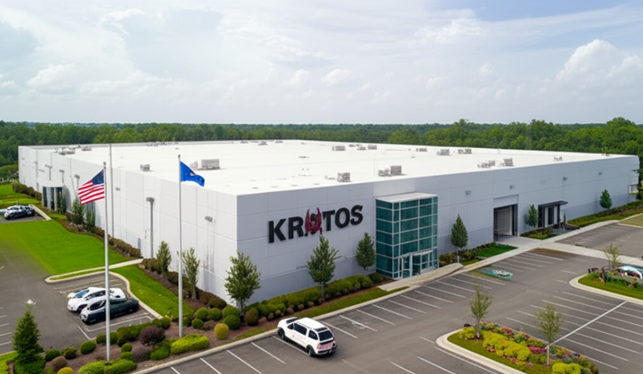
What happened
- The U.S. Air Force selected the F143 turbofan as a second-source engine for the Joint Air-to-Surface Standoff Missile (JASSM), after the propulsion system completed altitude testing.
- The engine was developed by California-based Kratos Defense & Security Solutions and Ohio-based GE Aerospace.
- The two companies announced that their GEK800 engine received the U.S. Military Engine Type Designation F143-ZZ-100 on Monday, August 17.
- The engine also secured an Engineering, Manufacturing and Development (EMD) contract from the Air Force, to be developed as a second-source propulsion system for JASSM.
- The source describes the move as supporting the Pentagon's active push for affordable, mass-produced jet engines.
Compiled by The Product DeskSomething wrong?How this is made
Why it matters
The Air Force has selected the F143 turbofan as a second-source engine for the Joint Air-to-Surface Standoff Missile, and the companies behind it say the engine received the U.S. Military Engine Type Designation F143-ZZ-100 on Monday, August 17, along with an Engineering, Manufacturing and Development contract [1][3][4]. The shape of that award is the story: according to the reporting, the contract positions the F143 as a second source for JASSM rather than replacing the missile's existing propulsion system outright [15].
That is a procurement decision, not a performance one. A second qualified engine does not make JASSM fly further or cost less by itself; it makes the program less hostage to one production line at a moment when demand for long-range weapons is rising [15]. The source frames the move as consistent with the Pentagon's push for affordable, mass-produced jet engines [5], which is a different objective from wringing another few percent out of an incumbent design.
The hardware is deliberately modest. The GEK800, developed by California-based Kratos Defense & Security Solutions and Ohio-based GE Aerospace, is an 800-pound-thrust (3.56-kilonewton) turbofan aimed at long-range missiles and other uncrewed applications [2][7]. Engineers began work in 2023 under a Technology Maturation and Risk Reduction phase that included engine testing, combining company investment with support and funding from the Air Force Research Laboratory [8][9]. The team has logged more than 50 engine starts in ground tests at its own facilities [10], and completed altitude testing at Purdue University's Maurice J. Zucrow Laboratories in October 2025, beginning in late September and finishing with tests of the engine's limits [11]. GE Aerospace vice president Mark Rettig said at the time that the joint team expanded the altitude envelope and identified the engine's rotor speed limits and compressive system boundaries [12]. From TMRR start to type designation, that is roughly two to three years [17].
The commercial logic is broader than one missile. The engine is also pitched at collaborative combat-type aircraft and other uncrewed aerial vehicles [13], and Kratos CEO Eric DeMarco said the companies are working with the Air Force to expand domestic jet engine production and investing with government partners to increase manufacturing capacity for drones, missiles and other systems [14]. Amy Gowder, who leads GE Aerospace Defense & Systems, called the designation and EMD award a test of the engine's performance and of the partnership with Kratos [6]. GE brings scale to that argument: an installed base of about 49,000 commercial and 29,000 military engines and roughly 53,000 employees [16].
What to watch: EMD is development, not a production award, so the near-term questions are qualification of the F143 on the JASSM airframe, whether the Air Force splits production quantities between sources or holds the second line as insurance, and what unit price the new line actually delivers. Also watch whether the capacity investments DeMarco described [14] show up as rate tooling rather than intent, and whether CCA and UAV programs adopt the same engine, which is what would make an 800-pound-thrust class engine cheap through volume.