Invest1 publisher3 min readPublished
Allied buyers took more than $44 billion of US weapons in the quarter the Pentagon reported shortfalls
A Pentagon watchdog says the war with Iran left the United States short of advanced munitions and its suppliers bottlenecked, in the same three months allied governments were buying American weapons by the tens of billions.
The Investor · Invest desk
What happened
- The Pentagon inspector general published its first report on the war with Iran on Monday, the fullest official account so far of damage to American aircraft, bases and diplomatic outposts in the Middle East.
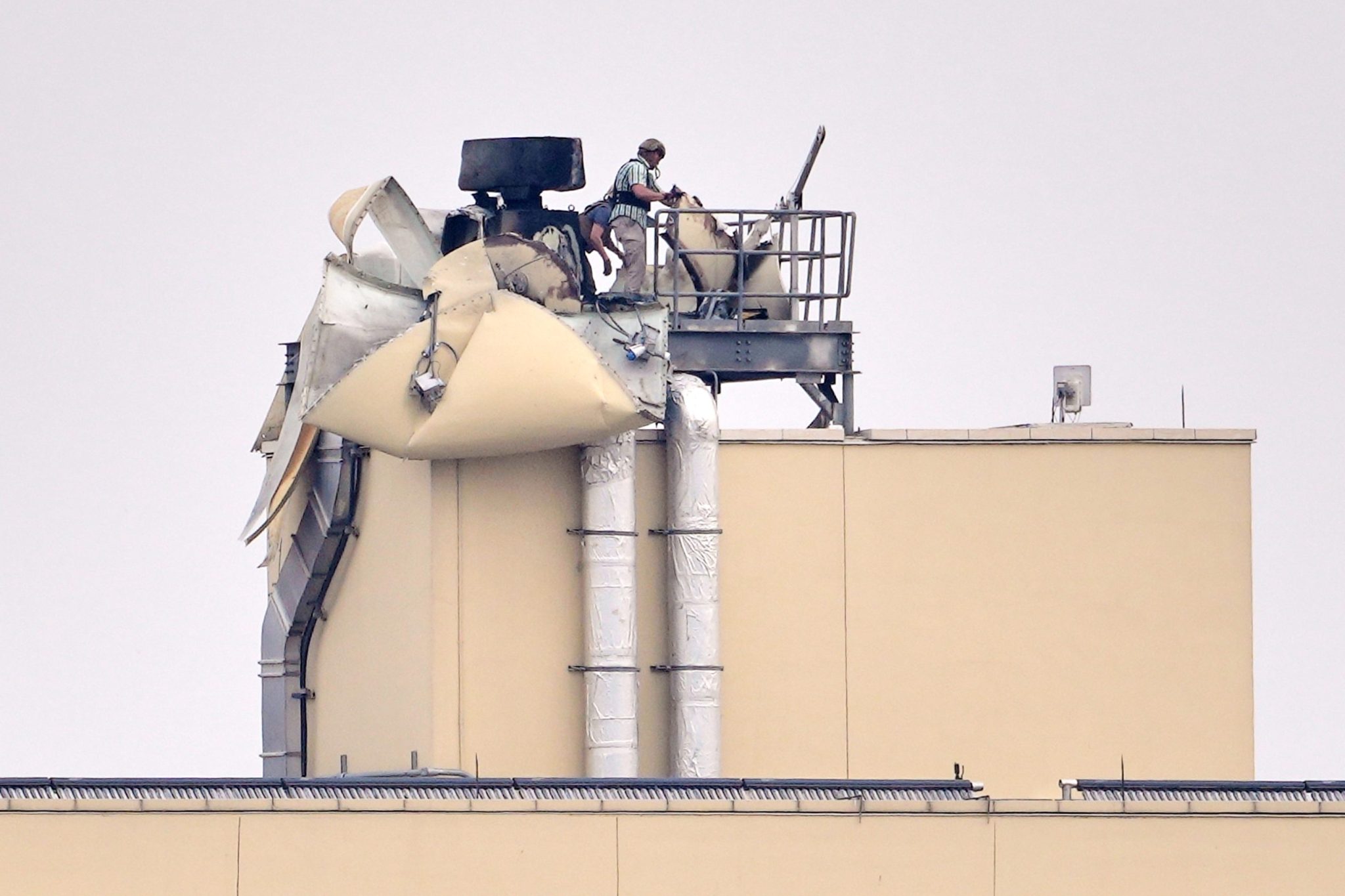
- Iranian strikes damaged or destroyed hundreds of buildings and other structures at US bases in Kuwait, Bahrain, Qatar, the UAE, Saudi Arabia, Iraq, Oman and Jordan, plus dozens of American aircraft and drones.
- Damage to diplomatic outposts in Iraq, Kuwait, Saudi Arabia and the UAE was put at an estimated $184 million, a cost that had not been publicly released before this report.
- About 9,000 US citizens were evacuated from the Middle East and Europe after the February 28 strikes, at a cost of more than $11 million as of late June.
Compiled by The InvestorSomething wrong?How this is made
Why it matters
- contradiction One document says munitions resupply is bottlenecked and also records tens of billions in sales that include munitions. The order in which those contracts reach the production line decides how long the American shortfall lasts.
- constraint Every slot booked for allied deliveries is a slot the American refill waits for. Sequencing matters as much as funding to anyone pricing the shortfall.
- decision A contractor weighing a new line is pricing that capital against a three-year replenishment estimate no agency in this report stands behind.
- cost By State's own determination the evacuation bill cannot be recovered from the people flown out, so it stays on the appropriation.
Defense Secretary Pete Hegseth told Congress in late July that the war had cost $37.5 billion so far [7]. Set that beside the sales the State Department logged in the same window and the sales are the larger number, about 17 percent larger, roughly $6.5 billion more [1]. The list runs to military helicopters, munitions and munitions support and advanced precision weapons systems, with billions going to Qatar, Kuwait, the UAE and Israel as well as Saudi Arabia [13][14]. The report gives the total as a single figure and leaves the categories out.
The same document says the war "has resulted in strategic inventory shortfalls and revealed industrial base bottlenecks for munitions resupply" in advanced weapons [4]. Both statements cover the same three months, April 1 to June 30 [2]. If the binding constraint is production capacity and not order flow, the munitions in those allied sales and the munitions that refill American inventories come off the same lines. Sequencing of contracts then decides how long the shortfall runs.
Fortune has reported that it will take about three years for military contractors to replenish advanced missiles and defensive missile interceptors to prewar levels [5]. That figure is Fortune's, not the inspector general's. Three years is twelve quarters, twelve times the window this report covers [4]. A company deciding whether to add a shift or another line prices that capital against signed multiyear orders, and what it has here is an estimate of duration.
The State Department put its own costs from the conflict at $113 million, with nearly $80 million spent on contingency plans including evacuation of American personnel and their families [9]. The evacuation worked out at roughly $1,200 a person [2]. The 1,200 Americans taken out of the UAE to Istanbul, Athens and Washington cost more than $4 million, over $3,300 each and close to three times that average [12][3]. "State determined that consular officers would not be able to fully document travel itineraries required to seek reimbursement from evacuees and therefore it would be impracticable to seek reimbursement from them," the report states [11].
I would bet against the fast path, the one in which the shortfall converts into American orders inside a year. Congress can fund replenishment with multiyear procurement and contractors can expand against it, but this report stops short of both. Two other paths are live. Allied orders keep the lines busy and the American refill queues behind them, stretching the three-year figure; or munitions are a modest slice of the sales total and the demand is thinner than the headline number suggests. In my view the demand documented here is allied and buyer-funded, and an appropriation or a multiyear award with quantities and dollars in it is what would move the contractor case from inference to backlog.
What to watch
- An appropriation or multiyear munitions award naming quantities and dollars would convert the inspector general's shortfall language into a contractor backlog.
- Whether the next inspector general report breaks the military sales total into munitions and non-munitions categories.
- Any Pentagon statement on delivery sequencing between allied sales and American replenishment on the same interceptor lines.