Science14 publishers3 min readPublished Updated
Roman's launch date is now a planning input: Aug. 30, 7:26 a.m., one Falcon Heavy
NASA has cleared the Nancy Grace Roman Space Telescope for final preparations, which gives the dark energy and exoplanet community a firm Sunday morning and a single point of failure.
The Scientist · Science desk
What happened
- A SpaceX Falcon Heavy is scheduled to lift NASA's Nancy Grace Roman Space Telescope from Kennedy Space Center as early as Sunday morning.
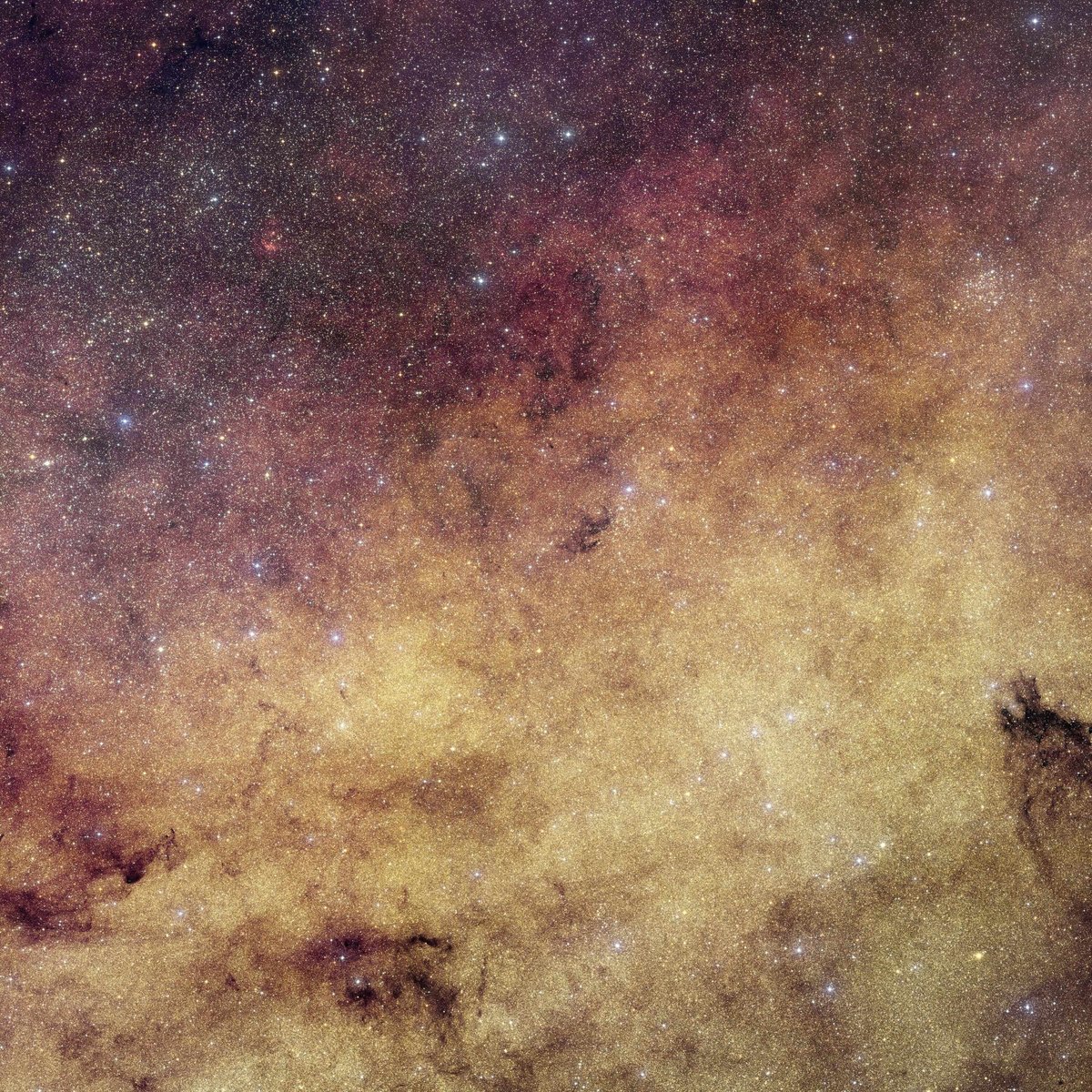
- More than a quarter of Roman's planned five-year primary mission is committed to a single program, a repeated stare into the 10,000-light-year-wide galactic bulge that earlier telescopes barely penetrated.
- Kristen McQuinn, who leads the mission office, says the survey's slice of sky, a band about eight full moons across, should resolve hundreds of millions of individual stars.
- The same observations are expected to turn up on order of 100,000 transiting planets, on top of the more than 6,000 exoplanets already catalogued.
Compiled by The ScientistSomething wrong?How this is made
Why it matters
- constraint Because a lensing alignment never repeats, the mission can establish how common Earth-mass planets are without handing anyone a target list to point other instruments at.
- capability The survey can put numbers on planets that drift free of any star, a population invisible to a method that requires a world to cross a stellar face.
- decision Assigning at least fifteen months of clock to one field before launch means Roman's exoplanet mix is set by scheduling rather than adjusted as results arrive.
- precedent Whichever mission eventually chases temperate rocky worlds around nearby stars will inherit its expected hit rate from this stare, so a low bulge yield narrows that mission's case.
Microlensing is a demographic instrument. A foreground object, usually another star, drifts across our line of sight to a background star and its gravity briefly warps and amplifies that background light; when the foreground star carries planets, each one adds a smaller blip on top of the main signal [8]. The technique reaches down to bodies with Earth-like dimensions [9], but the part that actually shapes the science is geometric: the alignment happens once and never comes back around [11].
That makes the denominator the whole design. Kristen McQuinn, who leads the Roman Space Telescope's mission office, puts the rule of thumb at 10,000 stars watched to see one event per year [10]; the survey's narrow band holds hundreds of millions of them [7]. Scale that naively at the low end, 100 million divided by 10,000, and you land on the order of 10,000 events a year [21]. Real rates depend on stellar density and event duration rather than a linear multiply, so treat it as an order of magnitude only. It still explains the choice. The survey does not look harder than earlier microlensing programs; it simply looks at far more stars at the same instant.
Narrow and deep was the only version that fit. The Galactic Bulge Time-Domain Survey targets a strip roughly eight full moons across [4] because anything wider would have been more than even Roman's panoramic field of view could readily cover [5]. Scott Gaudi of Ohio State University, a member of the commissioning team, describes the trade without decoration: not much of the bulge, but very deep into it, all the way to the other side of the galaxy [6].
The transit yield rides along on the same cadence. An image every 12 minutes [12] is five an hour and 120 across a full day of staring [22], dense enough to catch the repeating dips of planets crossing their stars, and repetition is what lets those systems be revisited later [13]. Planners expect on order of 100,000 such planets from this field [15], against the more than 6,000 exoplanets known now, most of them found by transits [14].
The 100,000 figure says nothing about how many of those planets will be small and cool, because transit detection favours heavier planets on tight orbits [16], even if Roman's sensitivity should extend to objects as small as the moon [17]. Planets thousands of light-years deep in the bulge will also stay out of reach for atmosphere studies. The engineering here was aimed at a census question, and McQuinn frames it that way: not only how many planets, but how many are Earth-like, and how many are bound to a star rather than drifting free [18].
It is a view with a condition attached. If the Earth-mass question for this decade is how common such planets are, fifteen months of one stare is a defensible price for the answer. If the question is what any single one of them is made of, that answer has to come from a different telescope.
What to watch
- Whether the launch holds to the Sunday window, since a slip moves the survey clock without changing the design.
- Whether the first bulge observing season delivers event rates near the 10,000-stars-per-event rule of thumb, which sets the realistic Earth-mass yield.
- How much of the projected 100,000-planet transit haul lands below Earth size, where the moon-scale sensitivity claim actually gets tested.