Invest2 publishers3 min readPublished
Mozilla's pitch against Gemini-wired Chrome is an off switch and a search deal with Exa
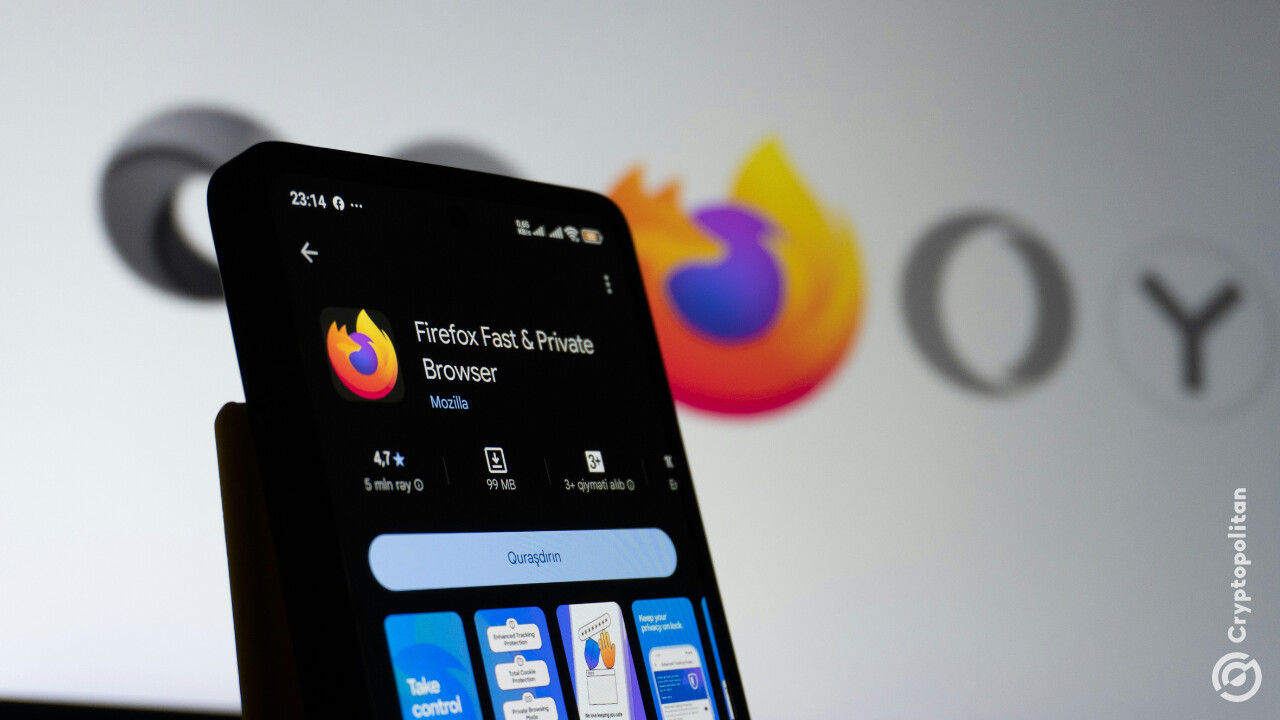
Firefox's opt-in Smart Window gained Exa web search, tab grouping and visual history on August 18. The product is small; the positioning is the whole bet.
The Investor · Invest desk
Drafted by a language model from the sources cited here and checked against its claim ledger before publication. How we use AISend a correction
What happened
- Mozilla added Exa-powered web search, automatic tab grouping, and visual history previews to Firefox's opt-in Smart Window on August 18.
- Mozilla is selling model choice and off switches as its edge, with an AI Controls panel and a one-click kill switch letting users decide what the assistant sees.
- Google controls more than 63% of the global browser market, according to Cloudflare figures cited by Cryptopolitan, and has wired its Gemini models into Chrome for U.S. desktop users.
- If Chrome holds more than 63% of the global browser market, less than 37% remains for all other browsers combined.
- Smart Window is a separate window in Firefox, next to the browser's Classic and Private modes, where users can chat with an AI assistant while they browse.
Compiled by The InvestorSomething wrong?How this is made
Why it matters
Mozilla added three features to Firefox's opt-in Smart Window on August 18: web search from a startup called Exa, automatic tab grouping, and visual previews of browsing history [1]. What matters is not the feature list but the positioning, because Mozilla is selling model choice and off switches as its edge against a Chrome that holds more than 63% of the global browser market, according to Cloudflare figures cited by Cryptopolitan, and that already has Gemini wired in for U.S. desktop users [2][3].
That share leaves under 37% of the market for every other browser combined [4], which tells you Mozilla is not trying to win on assistant capability. Smart Window sits as a separate window beside Firefox's Classic and Private modes, where a user can chat with an assistant of their choice while browsing [5][6]. It works only with the context the user hands over, such as open tabs and relevant history, and those permissions live in an AI Controls panel that also contains a switch to disable Smart Window entirely [7]. Firefox shipped a one-click AI kill switch earlier this year [8], tied to the Project Nova redesign that gave the browser a single control to disable every AI feature at once, according to Decrypt [9]. "In Firefox, you'll never be locked into one ecosystem or have AI forced into your browsing experience," Mozilla said in its announcement [10]. Mark Surman, president of the Mozilla Foundation, has said the group intends to let users decide which model to connect [11].
The Exa deal is the one piece with a commercial shape. Exa is an AI search and web-retrieval company, and the collaboration lets Smart Window pull live information and show sources for an answer directly, without a separate results page [12]. That is a retrieval dependency on a startup rather than on a search incumbent, which is consistent with the independence argument. The other two additions are housekeeping: Smart Window proposes groups of related tabs and flags duplicates for one-click closing [13], and a natural-language prompt such as "running shoes I looked at last week" surfaces visual previews of pages from history so the right one is easier to spot [14].
The reach is narrow. The beta is English-only for users in the United States and Canada [15], with Cryptopolitan pointing others to a sign-up page at firefox.com/smart-window [16] and Decrypt reporting a waitlist at firefox.com/ai, with the feature staying off unless a user turns it on [17]. Mozilla debuted the earlier "AI Window" concept last November and spent months watching testers, who used the assistant mainly for search and navigation [18]. "The browser already has much of the context around what you're trying to do," said Ajit Varma, Head of Firefox [19].
Watch whether the roadmap holds the line. Next up is surfacing recent browsing journeys and stitching related tabs and history together, plus help completing online forms, both under the same permission model [20]. Form filling is where a permissions promise gets tested, since the data involved is not browsing exhaust. Also watch the field Mozilla is differentiating against: Perplexity's Comet, Microsoft's Copilot-powered Edge and Opera Neon are shipping, Brave built LEO with Anthropic as a privacy-first option, and OpenAI closed its Atlas browser to work on a larger app [21].