Invest3 publishers2 min readPublished
McDonald's lawsuit tests whether pooled-data pricing advice counts as franchise price-fixing
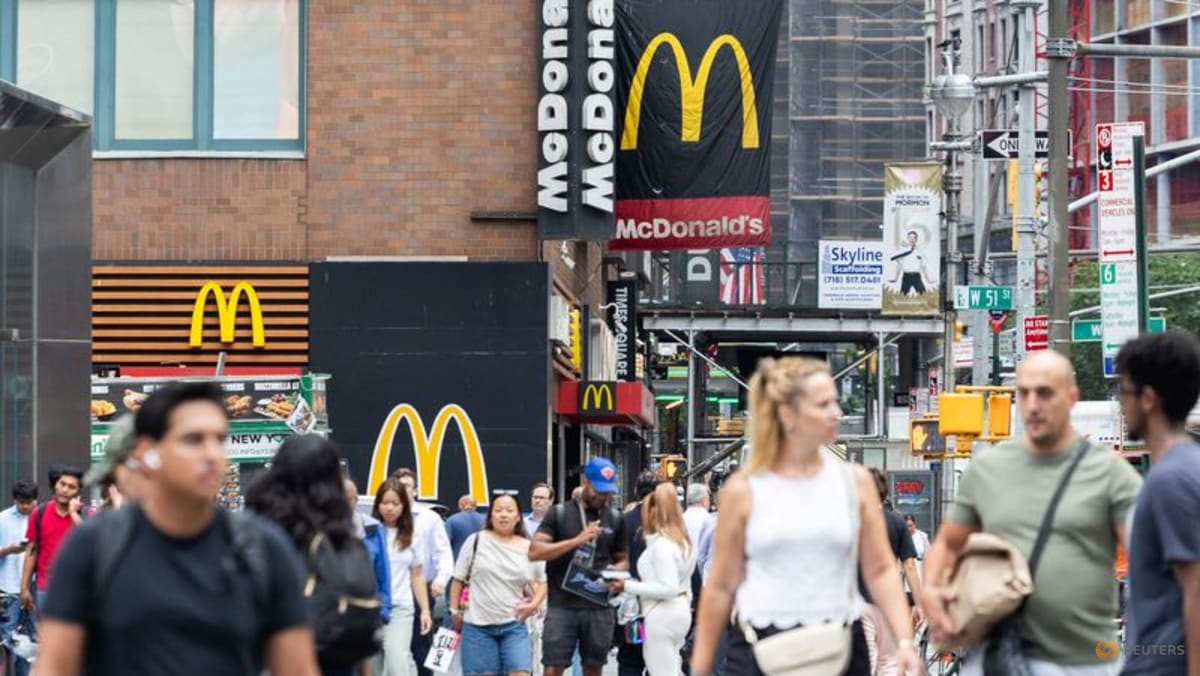
McDonald's faces a proposed class action alleging its AI pricing tool, fed by nonpublic data from about 14,000 US restaurants, fixed franchise menu prices. The company says owners can ignore the recommendations, so the case turns on how often they follow them, a question for every franchisor running shared pricing software.
The Investor · Invest desk
Drafted by a language model from the sources cited here and checked against its claim ledger before publication. How we use AISend a correction
What happened
- Filed Friday in federal court in Chicago, the suit came days after Reuters published an investigation into the company's pricing engine.
- An Illinois resident brought the case and is seeking to represent a class of potentially millions of McDonald's customers in the US.
- According to the complaint, the alleged coordination between McDonald's and its franchisees dates to 2019.
- McDonald's called the allegations speculative and uninformed, saying "AI does not set the price of a Big Mac or any other menu item."
Compiled by The InvestorSomething wrong?How this is made
Why it matters
- exposure Any franchisor feeding pooled store data into a shared price recommender fits the plaintiffs' theory, and the Reuters reporting cited in the complaint says other fast-food chains are turning to AI pricing.
- precedent A ruling for the plaintiffs would carry the algorithmic price-fixing claims already filed over hotel rooms and apartment rentals, none yet proven, into franchise systems.
- decision Because McDonald's defense rests on franchisees' freedom to refuse its advice, franchisors using similar tools now have reason to keep records of how often owners override the recommended price.
Both sides of the case rely on the same fact. "Independent businesses must set their prices independently," the lawsuit said [17]. McDonald's defense rests on that same independence [8]. The plaintiffs contend that routing guidance through one central system fed by nonpublic data weakens the rivalry that should exist between McDonald's locations, because owners who might price on their own are nudged toward common figures [16].
The guidance is detailed. Reuters reported that the engine continually analyzes millions of daily transactions [4] and produces recommendations for individual products [3]. A franchisee who takes the number is pricing off sales data from other restaurants that, by the plaintiffs' account, is not public [2].
Suppose a court treats the owner's freedom to refuse as decisive. Then the suit fails early, and McDonald's argument that recommendation tools and analytics are widespread across industries [9] ends up protecting everyone who runs one. If the claim survives, discovery turns on how often franchisees priced at the recommended figure. The published accounts of the complaint and the company's statement do not include that rate. A settlement would leave the question open for the next defendant.
The one store-level comparison in the reporting points away from uniform prices. Reuters data showed a Big Mac at $5.69 at one corporate location in Fresno, California, and $6.89 at another about two miles away [20]. The difference is $1.20 [22], about 21% of the lower price [23]. Reuters could not establish whether the software caused it [21]. A system that, as Reuters described it, weighs regional buying patterns and how sensitive customers are to price in each market [10] would tend to pull nearby prices apart.
If prices diverge, the plaintiffs' stronger argument is about how high prices are set. Lark Turner, a lawyer for the plaintiff, said McDonald's is "leveraging its troves of data and its franchised system to nickel-and-dime consumers down to the last French fry" [5]. A recommender that finds each store's local ceiling could remove the rivalry between two restaurants two miles apart without making their prices match. (That version is harder to plead as price-fixing, and harder for McDonald's to answer by pointing at dispersion.)
I think the acceptance rate decides how far this reaches. If owners routinely depart from the recommendation, the risk to other franchisors with shared tools is small. In that case McDonald's is right that it hands out advice and leaves the pricing to owners. If owners mostly take it, the theory applies to any franchisor whose owners price from a shared recommender built on each other's data.
What to watch
- Whether McDonald's moves to dismiss, and whether the Chicago court treats optional recommendations as falling outside an antitrust agreement.
- Any figure, from discovery or a court filing, on how often franchisees priced at the level the system recommended.
- New suits against the other fast-food chains that Reuters said are turning to AI for pricing.