Science1 publisherNot yet confirmed elsewhere2 min readPublished
Human lung organoids keep resident memory T cells that control SARS-CoV-2 on their own
A team reporting in Nature grew human lung organoids whose own memory T cells, once boosted, blunt a later SARS-CoV-2 infection with no lymph node present. It gives a human in vitro way to study how much recall immunity to respiratory viruses the lung mounts locally.
The Scientist · Science desk
What happened
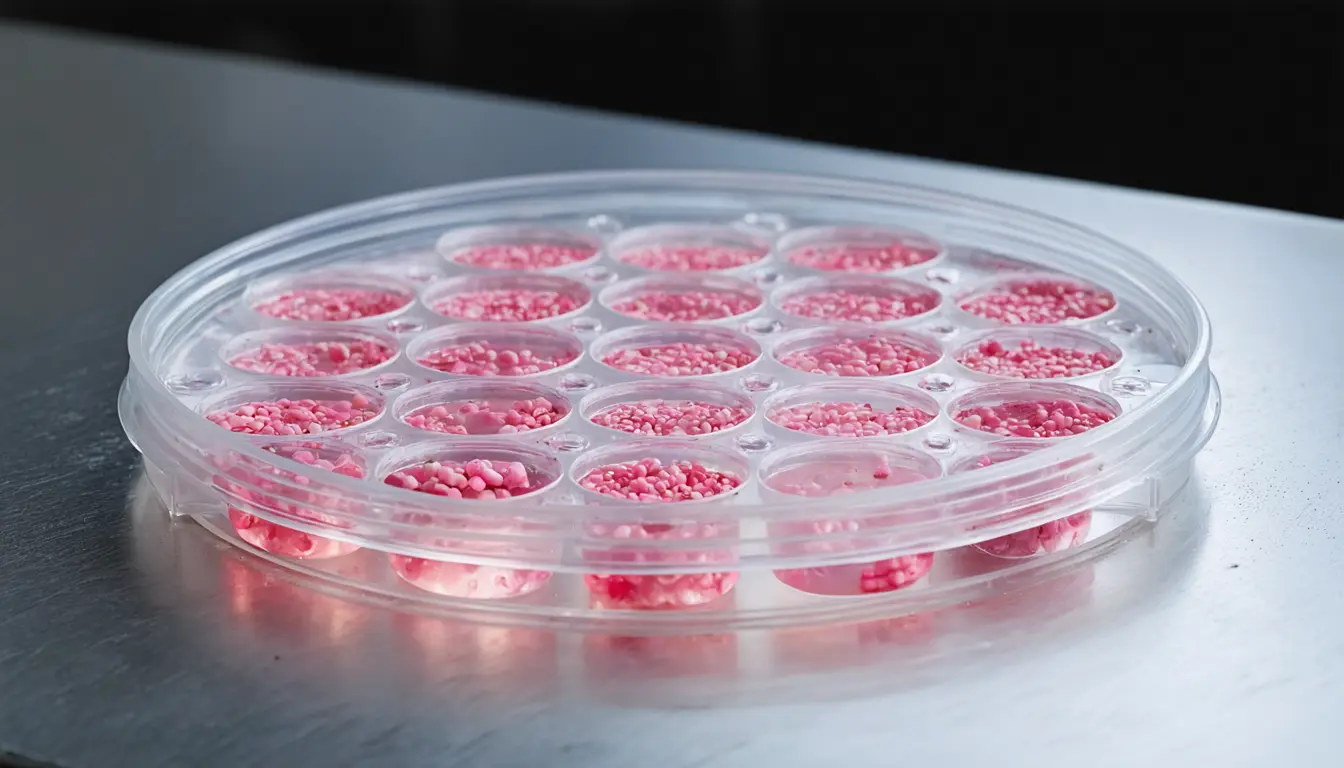
- Grown from intact fragments of adult human distal lung in a 3D air-liquid interface culture, the organoids kept epithelial and stromal cells together with resident T, B, NK and myeloid cells.
- The resident T cells carried residency and memory markers and preserved the T cell receptor repertoires found in the matched donor's fresh tissue.
- Exposed to SARS-CoV-2, the organoid epithelium became infected, produced inflammatory cytokines and drew a SARS-CoV-2-specific response from the resident T cells.
Compiled by The ScientistSomething wrong?How this is made
Why it matters
- capability Researchers can now watch human lung-intrinsic memory T cells control a live respiratory virus in culture, without an animal model standing in for human immunity.
- constraint With no lymph nodes in the system, the model can show lung immunity acting alone, but it cannot weigh how much the lymph nodes add during an infection in a living person.
- precedent The authors frame the result as a rationale for local vaccination, giving a reason to test vaccines delivered to the airway to build memory where a respiratory virus lands.
Tissue-resident immunity is a first line of defence against pathogens, giving rapid innate and adaptive memory responses at the tissue itself [7]. Studying it in people has been held back by the lack of holistic human in vitro models that can infect the lung epithelium while its resident immune cells are still present [8].
An organoid has no lymph nodes, so any protective response inside it has to come from cells already in the tissue [4]. That makes it a way to probe a contested question, whether recall immunity to a respiratory virus forms locally in the lung or in concert with the lymph nodes [5]. Differing views on how long resident memory T cells stay put have kept the question unresolved [5]. The team tested it directly. They boosted the organoids' resident T cells with pools of SARS-CoV-2 peptides, then infected the cultures, and the later infection was weaker [4]. Boosting acts on T cells that already recognise the virus, so the step probes recall of existing memory [4].
The authors call the result consistent with a component of protective resident T cell function, their own signal that this is one piece of the protection [4]. The organoid shows lung-resident cells are sufficient to blunt a later infection by themselves; whether they are strictly required is a different question [4]. The abstract does not report how many donors were used, how long the cultures held, or how large the reduction in infection was. Beyond this virus, the authors present the organoid as a general platform for studying human tissue-resident immunity in health and disease [10].
What to watch
- Independent replication, and whether the reported reduction in infection holds across more lung donors.
- Whether the platform works for other respiratory viruses such as influenza or RSV, and for diseased lung tissue.
- Whether airway-delivered vaccines in people produce the local protection the organoid model points to.