ScienceNot yet confirmed elsewhere1 publisher2 min readPublished
Los Angeles County's West Nile count passes 180, the highest in nearly a decade
Los Angeles County has logged more than 180 West Nile cases this year, its most in nearly a decade, county health figures show. A local vector-control official links the rise to a warm year, a plausible cause that one season of figures can show only as a correlation.
The Scientist · Science desk
What happened
- A mild winter with heatwaves in February and March kept mosquitoes active through months when overnight lows near 50F usually shut them down.
- The invasive Aedes mosquitoes can spread dengue, chikungunya, Zika and yellow fever, but they are not associated with West Nile virus.
- The Guardian reports that local authorities have struggled to contain the region's mosquito problem for the past decade.
Why it matters
- constraint Backyard biting is a weak guide to West Nile risk, since most of the nuisance comes from human-biting Aedes while the virus moves through bird-feeding quinx.
- constraint Positive traps and the case count track a virus carried by Culex, so any dengue risk carried by Aedes has to be measured separately.
- exposure Forecast cooling will not halt mosquito activity in most places and rain will add breeding sites, so residents stay exposed and the county's case total is likely to keep rising.
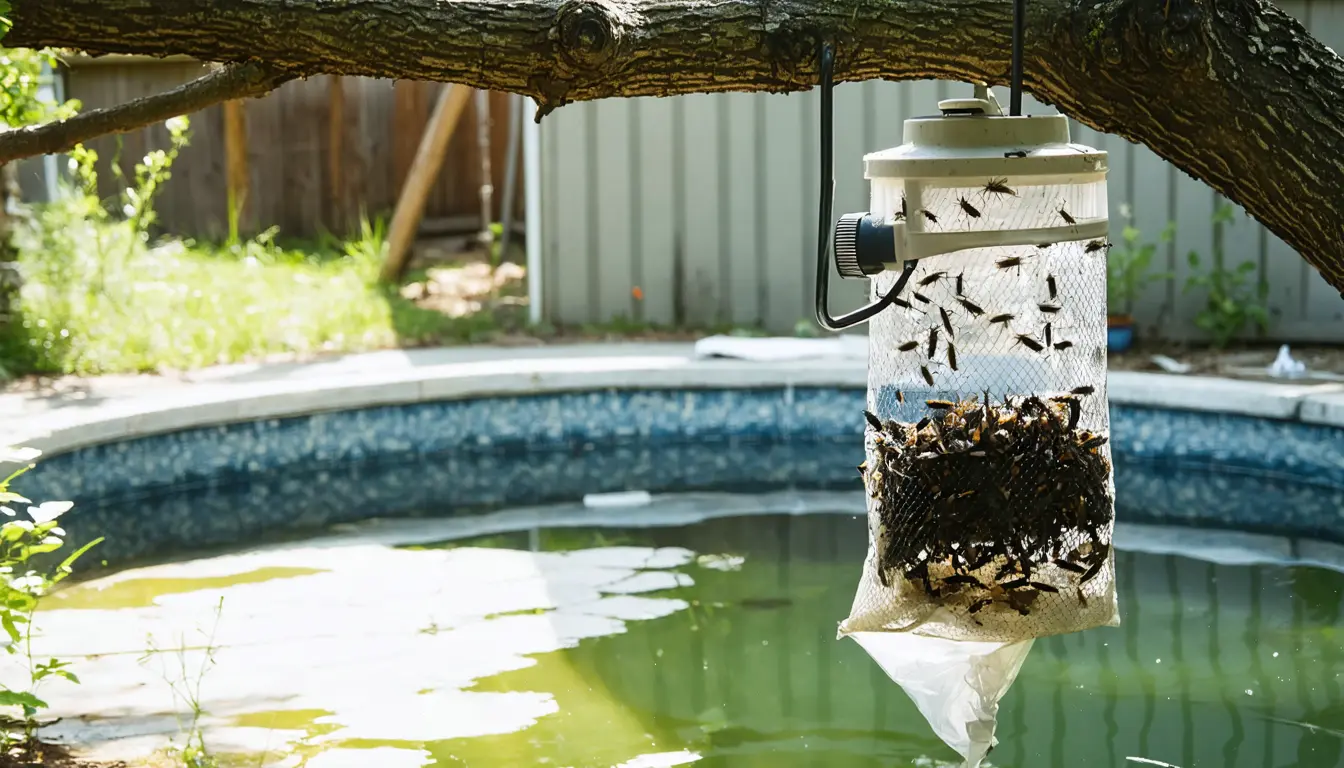
Residents have taken to sleeping in long sleeves and stuffing towels into the gaps under their doors [17]. The mosquito they are most likely to notice is Aedes, the "ankle biters" that first showed up in the region in 2014 and target humans [11]. "They like human blood," said Anais Medina Diaz, communications director for the San Gabriel mosquito and vector control district. "They will bite you multiple times to get a full blood meal." [13] People here have had less exposure to the species, so its bites can leave larger welts, according to Medina Diaz [12].
West Nile takes another route [7]. The virus moves through Culex quinquefasciatus, the region's most common native mosquito, known locally as "quinx" [7]. Quinx prefer birds to people. They pick up the virus from birds such as crows and pass it on when they do bite humans [7].
Districts follow that cycle with traps [8]. Brian Brannon, public information officer for the Orange County mosquito and vector control district, said the season's tally of positive traps "doesn't mean 850 mosquitoes" but "means 850 traps full of mosquitoes with West Nile virus" [9]. "We've had a pretty busy season," he said [10]. The reporting does not include the district's total number of traps, Los Angeles County's case counts for earlier years, or any measure of control effort [1][8]. Without those figures, nobody can calculate the share of traps testing positive or the size of this year's rise.
On cause, the official quoted points to the weather. "This year in particular for our area has been higher mosquito activity and higher disease activity," Medina Diaz said [2]. "We can attribute that to some connection to the environment and how warm it's been this year." [3] The Guardian goes further and ties the season to heatwaves and an extra-powerful El Niño [19].
We think warmth is the better-supported explanation for the West Nile rise, because it has a physical basis. Mosquito activity drops sharply as overnight temperatures approach 50F [4], and an unusually humid summer made breeding easier [5]. It is still one warm season set beside one high case count. Medina Diaz herself described the link only as "some connection" [3]. If the region's decade of struggling control contributed to this year's cases, the officials quoted did not say so [16].
Dengue is a separate question. The Guardian frames it as a fear that travelers could bring the virus in [19]. Aedes, the mosquito that would spread it locally, has been proliferating in the region for 12 years [18], and this year's moisture has especially helped it thrive, according to the Guardian [15].
What to watch
- Any locally acquired dengue case in Los Angeles County would show Aedes passing on a virus brought in by a traveler.
- Winter overnight lows: a return to about 50F would test whether this year's West Nile rise was a warm-winter effect.
- The county's final West Nile total for the season, set against published counts for earlier years, would show how large this year's jump is.
Clarity's read
What the record supports and how the coverage leans. The claims behind it follow.
Reality
- Evidence45
- Adoption
- Insufficient
- Hype gap+20
- Incentives
- Insufficient
- Confidence50
Claim ledger
Ranked by verification strength, evidence, and original report placement.
- [1]
Los Angeles County has documented more than 180 cases of West Nile virus this year, according to the county public health department, the highest number in nearly a decade.
ReportedSupportedSource: Los Angeles County public health department, via the Guardian2 sources— create a free account to open themView cited source - [2]
"This year in particular for our area has been higher mosquito activity and higher disease activity,"
ReportedSupportedSource: Anais Medina Diaz, communications director, San Gabriel mosquito and vector control districtView cited source - [3]
"We can attribute that to some connection to the environment and how warm it's been this year"
ReportedSupportedSource: Anais Medina Diaz, San Gabriel mosquito and vector control districtView cited source - [4]
Mosquito activity plummets when temperatures approach 50F overnight; this winter was exceptionally mild, with heatwaves in February and March that allowed mosquitoes to stay active.
- [5]
The unusually moist and humid summer made it easier for mosquitoes to reproduce.
- [6]
The region has been under a record-breaking heatwave since early October; forecasts show relief, but temperatures won't drop low enough in most places to halt mosquito activity, and coming rains will give mosquitoes new places to breed.
- [7]
The region's most common endemic mosquito, Culex quinquefasciatus ("quinx"), prefers birds over humans; it is exposed to West Nile virus after biting birds such as crows, and infected quinx can spread the disease to humans when they bite them.
- [8]
The Orange County mosquito and vector control district monitors disease threats with a large array of traps; some 850 have tested positive for West Nile virus so far, according to public information officer Brian Brannon.
ReportedSupportedSource: Brian Brannon, Orange County mosquito and vector control districtView cited source - [9]
"That doesn't mean 850 mosquitoes ... that means 850 traps full of mosquitoes with West Nile virus,"
ReportedSupportedSource: Brian Brannon, Orange County mosquito and vector control districtView cited source - [10]
"We've had a pretty busy season."
ReportedSupportedSource: Brian Brannon, Orange County mosquito and vector control districtView cited source - [11]
The mosquitoes southern Californians are most likely to notice are from the Aedes genus, which first showed up in the region in 2014 and have proliferated since; known locally as "ankle biters", they target humans.
- [12]
Because Aedes is new to the area and people have had less exposure, its bites can leave larger welts, according to Medina Diaz.
- [13]
"They like human blood," ... "They will bite you multiple times to get a full blood meal."
ReportedSupportedSource: Anais Medina Diaz, San Gabriel mosquito and vector control districtView cited source - [14]
Aedes mosquitoes are not associated with West Nile virus, but they are known spreaders of diseases including dengue, chikungunya, Zika and yellow fever.
- [15]
This year's moisture has especially helped the invasive Aedes thrive.
- [16]
Local authorities have struggled to contain the mosquito problem for the last decade.
- [17]
Some residents have resorted to sleeping in long sleeves, and others have tried to seal off the cracks below their doors with towels.
- [18]
Aedes mosquitoes have been in the Los Angeles region for about 12 years.
- [19]
A series of heatwaves and an extra-powerful El Nino are making 2026 one of the worst mosquito years in recent history, causing a spike in West Nile cases and raising fears that mosquitoes could spread other diseases including dengue, brought in by travelers.
Sources
1 independent publisher whose own reporting we read for this story.
- theguardian.com‘A living hell’: how Los Angeles got taken over by mosquitoes
1 article · October 11, 2026
Topics and entities
Follow any of these and your For You feed starts watching them — no settings page required.
Topics
- West Nile virusFollow
- Mosquito-borne diseaseFollow
- Vector controlFollow
- Climate and HealthFollow
Entities
- Greater Los Angeles County Vector Control DistrictFollow
- Culex quinquefasciatusFollow
- San Gabriel Valley Mosquito and Vector Control DistrictFollow
- West Nile virusFollow
- Anais Medina DiazFollow
- Brian BrannonFollow
- Orange County Mosquito and Vector Control DistrictFollow
- Los Angeles County Department of Public HealthFollow
- AedesFollow
- Angela CaranciFollow