Invest1 publisher3 min readPublished
Tenth Circuit doubts on Colorado's rate cap leave the national pricing model intact
Appellate judges pressed Colorado on how a lender would even locate a borrower under its DIDMCA opt-out. If the state loses, out-of-state charters keep setting the price of consumer credit.
The Investor · Invest desk
Drafted by a language model from the sources cited here and checked against its claim ledger before publication. How we use AISend a correction
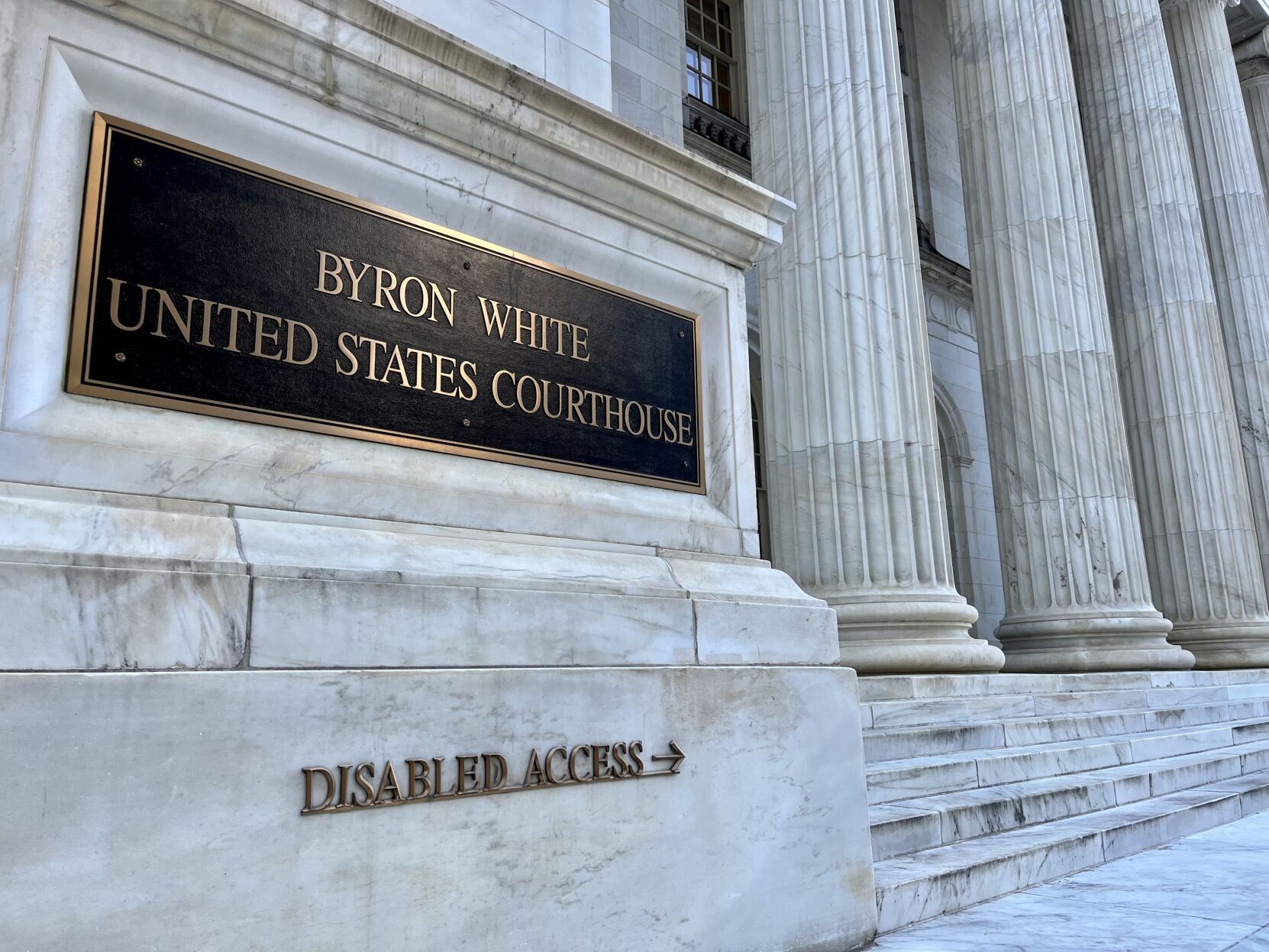
What happened
- Several federal appellate judges on Tuesday appeared highly skeptical of an effort by the state of Colorado to enforce its usury cap beyond banks chartered in that state, an effort financial institutions say would upend the dual-banking system.
- The case centers on the Depository Institutions Deregulation and Monetary Control Act (DIDMCA), a 1980 federal law that preempted state usury limits but included a controversial opt-out provision.
- Colorado chose to opt out of DIDMCA in 2023.
- Chief Judge Jerome A. Holmes of the U.S. Court of Appeals for the Tenth Circuit, a Republican appointee, seemed to be siding with the banking industry almost from the start of Tuesday's oral arguments.
- Holmes asked a lawyer for Colorado how he responded to the American Bankers Association's argument that Colorado's approach would create 'an unworkable morass,' with banks struggling to apply a multitude of varying interest rates of borrowers in opt-out states and trying to figure out where borrowers are.
Compiled by The InvestorSomething wrong?How this is made
Why it matters
Several federal appellate judges appeared highly skeptical on Tuesday of Colorado's attempt to apply its usury cap to banks chartered outside the state, an effort lenders say would upend the dual-banking system [4]. For anyone underwriting consumer loans through a partner bank, the practical question being litigated is whether the price of credit is set where the lender sits or where the borrower does [12].
The dispute turns on the Depository Institutions Deregulation and Monetary Control Act, the 1980 federal law that preempted state usury limits but carried an opt-out provision [1]. Colorado exercised that opt-out in 2023 [2], a move that, per American Banker's account of the case, drew in the National Association of Industrial Banks [3]. Banking groups argue that subjecting out-of-state banks to a patchwork of state caps would disrupt interstate banking and fracture the dual-banking system [15].
The bench did not hide where it was leaning. Chief Judge Jerome A. Holmes of the Tenth Circuit, a Republican appointee, seemed to side with the industry almost from the start of argument [5], quoting the American Bankers Association's warning of "an unworkable morass" and asking Colorado's lawyer how banks would apply varying rates and determine where borrowers are [6]. He then asked why those practical realities did not cut against the state's reading, and whether Congress could have anticipated them [7].
Colorado's answer was procedural. Russell Johnson, deputy solicitor general in the state attorney general's office, argued that the borrower's location is central to a loan transaction and laid out three steps for compliance: identify where the borrower and lender are, determine whether the state has opted out, then decide whether the opt-out reaches that specific borrower [9]. "A natural consequence of the choice to go outside of their home state and offer interstate credit is having to comply with other states' laws," Johnson said, adding that nothing compels banks to lend into Colorado [10]. Judge Carolyn McHugh, a Democratic appointee, said she found the three-step process difficult to understand [11], and judges questioned why a borrower's location bore on a contract that typically applies where the lender is [12]. Judge Veronica Rossman and others ran hypotheticals, pressing Johnson on how to define the location of a loan in the digital era [13].
That last point is the one with money attached. The 75-minute hearing also covered DIDMCA's text and legislative history and the rent-a-bank structures in which a high-cost lender partners with an out-of-state bank and uses its charter to bypass local rate limits [8]. If the court accepts that geography is unworkable, the bank-partnership stack keeps pricing off a single charter's home-state law rather than fifty caps, and origination volume in opt-out states does not have to be repriced or shut off. Consumer advocates read the same outcome as the end of enforceable state rate ceilings; Katelin Shaw Kaiser, policy counsel at the Center for Responsible Lending, wrote in an amicus brief that usury laws are among the oldest and most fundamental forms of consumer protection [14].
A hostile oral argument is not a judgment. Watch whether the opinion rests on statutory text or on administrability, because a ruling built on the impracticality of locating borrowers would discourage other legislatures from trying the same opt-out, while a narrow textual holding leaves the question open for the next state to draft around [1].