Invest2 publishersReports disagree2 min readPublished
JPMorganChase ranks first in Evident's AI ranking of banks for fourth straight year
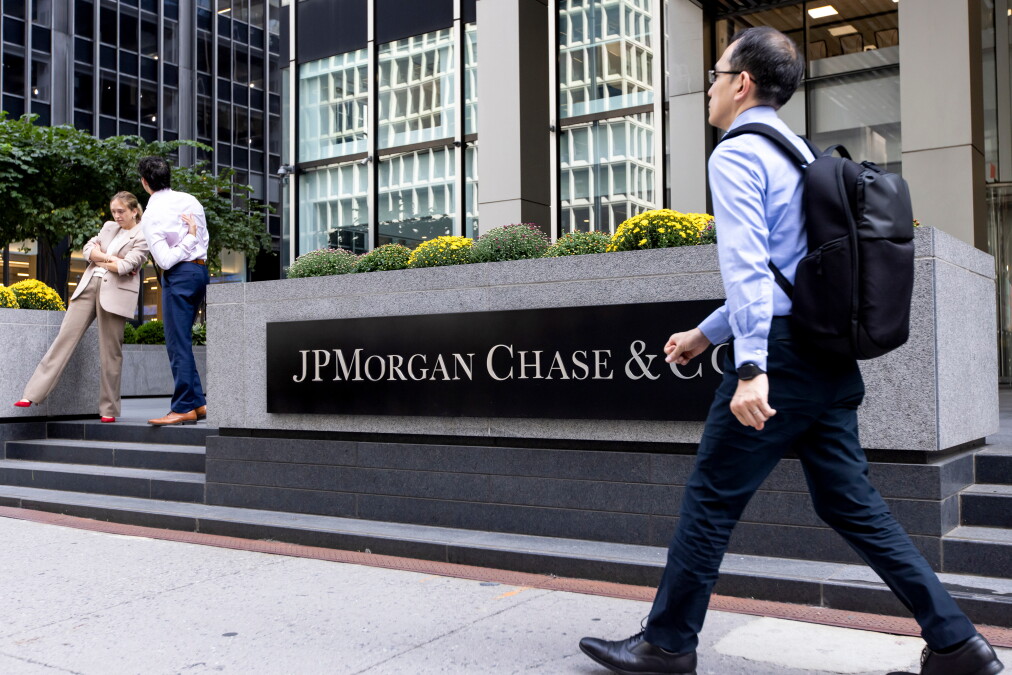
JPMorganChase topped Evident AI's bank ranking for a fourth straight year, and Evident says its lead over banks outside the top ten is widening. The firm credits platform architecture the smaller banks have yet to build.
The Investor · Invest desk
Drafted by a language model from the sources cited here and checked against its claim ledger before publication. How we use AISend a correction
What happened
- Capital One and RBC are the other two banks Evident names as AI leaders, behind JPMorganChase.
- Wells Fargo rose to fifth from sixth, Citi to eighth from twelfth and Bank of America to seventh from tenth, while Morgan Stanley slipped to ninth from fifth.
- Evident counted 21 percent growth in enablement talent, its term for the engineers who build AI controls and management tools.
Compiled by The InvestorSomething wrong?How this is made
Why it matters
- constraint The only route Evident offers the banks falling behind is to press their vendors, so their ceiling is whatever capability a vendor will also sell to their rivals.
- contradiction Banks spending most on AI are hiring most, with 'zero impact on headcount' by Evident's count, so the budgets are not funding the job cuts the technology is assumed to bring.
- capability The leaders are earning from AI sooner, onboarding corporate clients in six days instead of six months, a roughly thirtyfold cut, and billing from there.
The scorecard rates four things, all of them inputs: AI talent, innovation, leadership and transparency [2]. JPMorganChase has held first place for four years in part because it is the biggest bank, with the largest technology budget and staff [21][3], and Evident's researchers say it still scores above what that budget and headcount would predict [4]. Alexandra Mousavizadeh, Evident's co-CEO and co-founder, said the bank is "building infrastructure that gets AI into the hands of everyone across its 22 lines of business and 10 functions" [5]. She said it is "laser focused on workflow transformation every single day" and is working to lower its cost of delivery [13].
What separates the top of the table from the rest this year, on her account, is platform architecture. The leaders route each task to a small language model where that is cheap enough and to a frontier model only where it is needed [14]. "Dynamic model routing that picks the right model for any given task keeps your costs down," she said. "This is what the leading banks are building or have built" [15]. The banks below the top ten do occasional rollouts and use copilots "but they're not setting up for speed and scale," she said [6]. "If you're standing still, you have banks that are barreling ahead of you" [7].
The leaders also spent the year building what Mousavizadeh calls harnesses, the guardrails that agentic AI needs. "Without that control set up, you can't really do agentic AI," she said [12]. Capital One has had strong AI platform architecture for years, Evident said [18], and Mousavizadeh called RBC "absolutely relentless and super aggressive on their line of business rollout and their platform build and their infrastructure" [19].
Two things qualify the widening-gap claim. Evident is the research firm behind the ranking, and the judgements here come from one of its co-founders [10], so the firm that built the scorecard is also the one reading it. The four dimensions reward building capability, not earning from it; a bank can lead on talent, routing and controls and still not out-earn a rival that bought the same tools off the shelf.
What to watch
- Whether Evident's next scorecard adds a returns measure like revenue per head to test deployment against profit.
- Whether vendors close the capability gap for sub-top-ten banks and narrow JPMorgan's four-year lead.
- Whether the 'zero headcount impact' holds as agentic AI moves past its early days at the banks.