Japan's up to $21 billion will fund two New York fabs that the US government will co-own
Japan will invest up to $21 billion in two chip fabs at GlobalFoundries' Malta, New York site, while Commerce takes about 4% of the company. Japan supplies the capital and GlobalFoundries earns fees to operate, so a tariff deal becomes partly government-owned US capacity.
The Investor · Invest desk
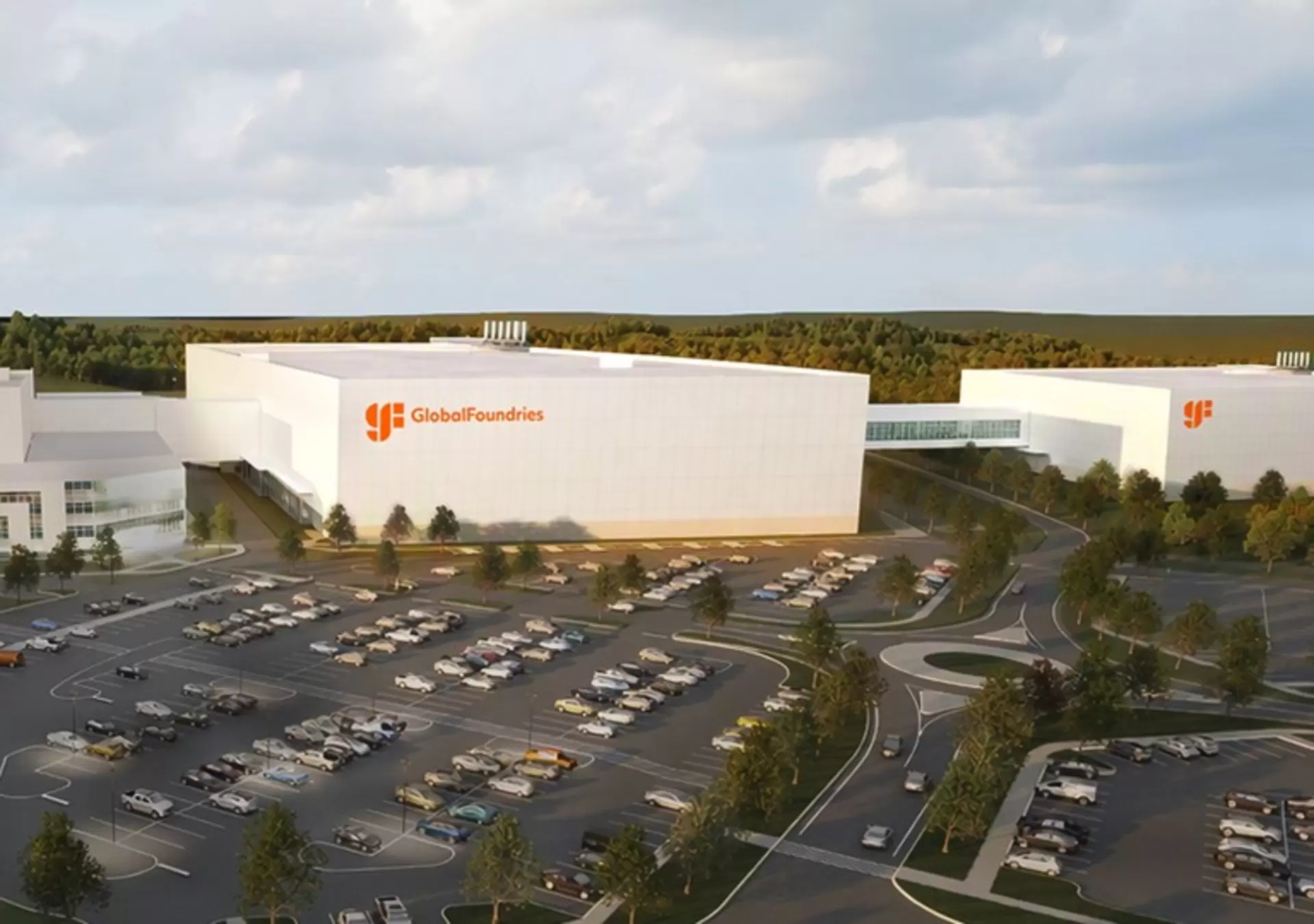
Japan will provide up to $21 billion for two GlobalFoundries fabs in Malta, New York. Japan has announced two batches of projects worth over $100 billion combined under the scheme, which is part of a $550 billion pledge to invest in the US, struck in return for lower US tariffs.
| Figure | Value | Note | Claim |
|---|---|---|---|
| Japan funding for two Malta, New York fabs, up to | $21 billion | 1 | |
| Projects Japan has announced so far, over | $100 billion | two batches combined | 8 |
| Japan's pledge to invest in the US | $550 billion | struck in return for lower US tariffs | 7 |
What happened
- The first fab is a 300mm plant funded by an initial investment of about $10 billion and due online in 2029; a second investment of about $10 billion would fund the second.
- The money comes from Japan's $550 billion pledge, struck last year in return for the US lowering tariffs on Japanese cars and other imports from at least 25% to 15%.
- Available free cash flow splits evenly between the US and Japan until a specific allocation is reached, after which 90% goes to the US.
- GlobalFoundries CEO Tim Breen said initial customers include Japan's Renesas Electronics and Apple.
Why it matters
- exposure Japan and the US, as owners, would absorb the cost of idle capacity if GlobalFoundries' operating fee is fixed.
- constraint Buyers outside the US and Japan sit behind a priority list and an allocation process that has not yet been run.
- precedent Trump chooses the projects and Japan pays, so later picks can reuse this structure of operator fees, US equity and a back-weighted cash split.
Start with who is paid for what. According to CNA, GlobalFoundries earns fees for building and operating the plants and for licensing its manufacturing technology to them [17], while Japan supplies all of the capital [2]. Two investments of about $10 billion each come to about $20 billion, $1 billion under the headline figure of up to $21 billion [24]. Divide $10 billion by the 900,000 wafers a year each fab is expected to add and the capital comes to about $11,100 per wafer of annual capacity [25]. Against the more than 1,000 manufacturing jobs the company projects, the full $21 billion is under $21 million per permanent job [27].
Japan is paying for the plants (or, more precisely, financing them in return for a share of free cash flow that tilts toward Washington past a threshold) [5]. The reports do not include the threshold or GlobalFoundries' fee rates. Trump selects the projects Japan funds [6], and this one is under 4% of the $550 billion pledge [21] and equal to less than 21% of the more than $100 billion Japan has announced so far [22].
Ownership sits in layers. Abu Dhabi's Mubadala holds a controlling stake in GlobalFoundries [14]. The Commerce Department's 4% brings the US total to about 7%, Breen told Reuters [4], implying about 3% was already in US hands [23]. The fabs themselves are to be co-owned by the US government and Japanese interests [16].
GlobalFoundries is not putting its own money into the 1.8 million wafers of annual capacity the two fabs would add [26]. Its existing CHIPS Act award is going to other uses: $955 million has been reallocated toward silicon photonics, silicon-germanium and advanced packaging at Malta and Burlington, Vermont [20].
In our view the owners, not the operator, carry the utilization risk. If a fab runs below capacity and the fee does not track volume, GlobalFoundries is still paid to run it while the capital sits with Tokyo and Washington. If fees track volume, the operator shares the loss and the view weakens. It also weakens if the second investment is never committed, because capacity then stops at one fab [3].
Demand is the other test. "We definitely would like to give priority to US and Japanese customers," Breen said [10]. He added that he expects other companies to be part of demand, with allocation settled after the announcement [11]. Some of the spending leaves again: at least some of Japan's capital will flow back to toolmakers such as Tokyo Electron, Breen said [12], and "Obviously, we have a strong interest in the Japanese equipment suppliers to be part of it," he said [13]. Shares rose as much as 15% before Wednesday's open and gave back much of that [15].
What to watch
- Whether the second investment of about $10 billion is formally committed; without it capacity stops at one fab of 900,000 wafers a year.
- Publication of the allocation level where the US share of cash flow rises to 90%, and of GlobalFoundries' fee terms.
- The customer allocation Breen said would follow the announcement, and which Japanese toolmakers win orders.
Clarity's read
What the record supports and how the coverage leans. The claims behind it follow.
Reality
- Evidence66
- Adoption30
- Hype gap+25
- Incentives75
- Confidence68
Claim ledger
Ranked by verification strength, evidence, and original report placement.
- [1]
GlobalFoundries announced it has been selected as technology provider and operator for two new semiconductor fabs at its Malta, New York site, backed by up to $21 billion in funding from Japan under a U.S.-Japan initiative.
- [2]
Japan will provide all of the investment capital, while GlobalFoundries contributes its manufacturing expertise and technology.
- [3]
An initial investment of approximately $10 billion will fund the first facility, a 300mm fab expected online in 2029; a second investment of approximately $10 billion would fund a second fab, the company said.
- [4]
In a separate agreement the US government will take a 4% stake in GlobalFoundries, bringing its total ownership of the chipmaker to about 7%, CEO Tim Breen told Reuters.
- [5]
Available free cash flows from the investments will be split evenly between the two countries until a specific allocation is reached, after which 90% will go to the US.
- [6]
Under the arrangement with the US, Trump selects the projects to be funded by Japan.
- [7]
The project is part of a deal for Japan to invest $550 billion in the US, struck by the Trump administration last year in return for the US lowering tariffs on Japanese cars and other imports from at least 25% to 15%.
- [8]
Japan has so far announced two batches of projects worth over $100 billion combined under the investment scheme.
- [9]
Initial customers for the New York factories include Japan's Renesas Electronics and iPhone maker Apple.
- [10]
"We definitely would like to give priority to US and Japanese customers," Breen said.
- [11]
Breen said he expects companies that are not US or Japanese to also be part of demand, with the exact allocation of who gets what over what timeframe to be finalized through a process after the announcement.
- [12]
Breen said at least some of the capital investment by Japan will flow back to chip-manufacturing toolmakers such as Tokyo Electron and other Japanese firms.
- [13]
"Obviously, we have a strong interest in the Japanese equipment suppliers to be part of it," Breen said.
- [14]
Mubadala Investment Company, Abu Dhabi's sovereign wealth fund, holds a controlling stake in GlobalFoundries.
- [15]
GlobalFoundries stock surged up to 15% ahead of Wednesday's open before giving back much of that advance.
- [16]
The two New York chip factories will be jointly owned by the US government and Japanese interests and operated by GlobalFoundries.
- [17]
GlobalFoundries will earn fees from building and operating the factories, as well as licensing chip manufacturing technology to them.
- [18]
When fully operational, each fab is expected to add approximately 900,000 300mm wafers of annual U.S. manufacturing capacity.
- [19]
Together the two plants are projected to create about 27,000 construction and ecosystem jobs and more than 1,000 manufacturing jobs in New York's Capital Region.
- [20]
GlobalFoundries agreed with the Commerce Department to amend its existing CHIPS and Science Act award to reallocate $955 million toward investments in silicon photonics, silicon-germanium and advanced packaging at its facilities in Malta and Burlington, Vermont.
- [21]
The $21 billion is about 3.8% of Japan's $550 billion pledge, so under 4%.
- [22]
The $21 billion is less than 21% of the more than $100 billion in projects Japan has announced so far.
- [23]
A 4% stake bringing the US total to about 7% implies about 3% already held by the US government.
- [24]
Two investments of about $10 billion total about $20 billion, about $1 billion below the up to $21 billion headline.
- [25]
Capital per wafer of annual capacity is about $11,100 ($10 billion over 900,000 wafers).
- [26]
Two fabs of about 900,000 wafers a year each add about 1.8 million wafers of annual capacity.
- [27]
Spread over more than 1,000 manufacturing jobs, $21 billion is under $21 million per permanent job.
Get this ledger inside ChatGPT. Ask about any of our stories and the answer brings its figure, each claim’s verdict and the sources. Free, no account.
Sources
2 independent publishers whose own reporting we read for this story.
- channelnewsasia.comJapan to invest up to $21 billion in two US chip factories to be run by GlobalFoundries
1 article · October 14, 2026
- economictimes.indiatimes.comJapan to invest up to $21 billion in two US chip factories to be run by GlobalFoundries - The Economic Times
1 article · October 14, 2026
- qz.comGlobalFoundries tapped to run 2 new chip plants backed by $21 billion from Japan
1 article · October 14, 2026
Topics and entities
Follow any of these and your For You feed starts watching them — no settings page required.
Topics
- CHIPS ActFollow
- US-Japan trade and investment dealFollow
- Government Equity Stakes in Private FirmsFollow
- Semiconductor manufacturing and packagingFollow
Entities
- Mubadala Investment CompanyFollow
- GlobalFoundriesFollow
- AppleFollow
- ReutersFollow
- Renesas ElectronicsFollow
- Tim BreenFollow
- US Department of CommerceFollow
- Tokyo ElectronFollow