Israel's blockchain-tracing contract costs 18% of what one laundering case seized
An April 2026 indictment over roughly $13 million in laundered Bitcoin and Tether sits alongside a 9 million shekel analytics contract and a court ruling letting Israeli police ask foreign issuers to freeze wallets.
The Investor · Invest desk
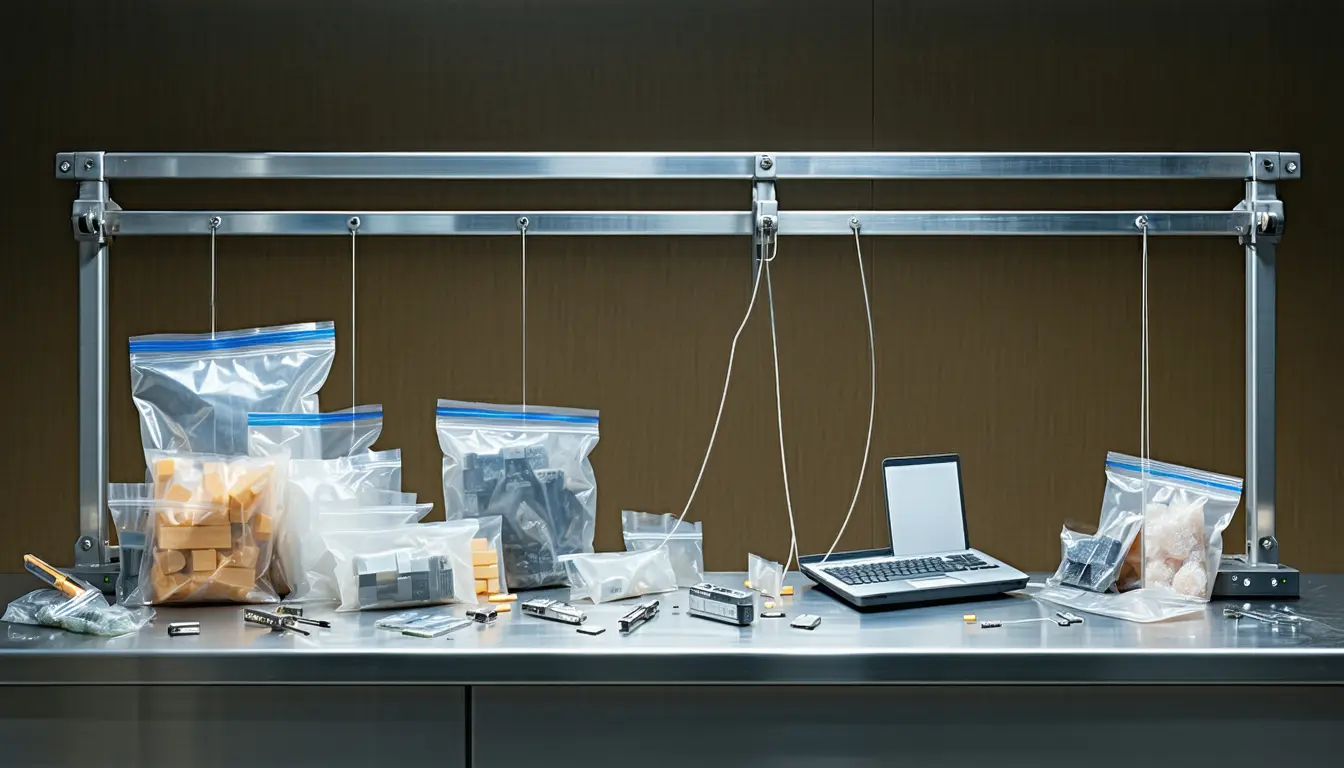
What happened
- Israeli authorities indicted seven defendants in April 2026, among them members of classified IDF and police units, over bribery, theft and the laundering of more than 50 million shekels, about $13 million, through crypto.
- Israeli authorities have signed a 9 million shekel contract with blockchain analytics firm Chainalysis covering advanced tracing tools and training for investigators.
- A 2025 Herzliya robbery saw $650,000 of Bitcoin and Tether taken from a victim and then laundered through exchanges including HTX and Kyrrex.
Why it matters
- exposure A treasury denominated in USDT holds an instrument whose availability depends on how a private issuer answers a foreign police request, a contingency Bitcoin holders are not carrying.
- cost At 18% of a single case's seizure, the tracing bill is small enough that the taxpayer case for buying more of it writes itself, and the matching compliance cost lands on venues that must answer the resulting requests.
- contradiction The same reporting that says criminal adoption is outrunning regulators offers only individual case sums, so the claim cannot be sized against either total USDT supply or total illicit flow.
- precedent Once a court has said police may go straight to a foreign issuer, the freeze request becomes a routine investigative step other jurisdictions can copy without waiting on mutual legal assistance.
Freeze risk was always a property of centralised issuance; what an Israeli Supreme Court ruling adds is standing. Tether's centralised structure means any USDT can in theory be frozen by its issuer at any moment, a risk Bitcoin's absence of a central authority does not carry [7], and the ruling establishes that Israeli police may seek wallet freezes directly from foreign token issuers [16]. Tether has already obliged at least once, freezing more than 10 million USDT in May 2025 at the direct request of Israeli law enforcement [5], which is roughly fifteen times the $650,000 in Bitcoin and Tether taken in the Herzliya robbery the same year [12][3], so the tool is clearly being used well below trophy-file thresholds.
The state's side of the ledger is cheap, and that is the part I would model. Fifty million shekels described as roughly $13 million implies about 3.85 shekels to the dollar [9], which puts the 9 million shekel Chainalysis engagement [4] near $2.3 million [10], or about 18% of the wallets and cash seized in that single April 2026 case [11][2]. A police force clearing one case of that size a year is running a tracing budget that returns better than five to one, which is the arithmetic that produces renewals rather than reviews. It also means Israel is renting forensic capability rather than building it, so the roadmap for what gets traced sits with a vendor.
The counter-thesis deserves saying in the same breath. The reporting gives no figure for total USDT outstanding, nor for aggregate Israeli illicit crypto flow [8], so the publisher's line about organised crime moving faster than regulators can keep up [17] is a direction without a magnitude, and a single ten million dollar freeze against a float I cannot size from this material is a base rate nobody here has computed. The historical anchor the piece reaches for, the Crypto Capital Corp collapse at an estimated $850 million tied to cocaine trafficking [15], is about 65 times the current indictment [13], which cuts both ways: either the scale has fallen sharply, or the current case is one thread of something the file has not yet named.
This is probably wrong in its emphasis, but what a treasury holding USDT should price is the cost of demonstrating, on demand, that a balance is not two hops downstream of a Tron transfer [6] when a request lands, not merely the odds of its own balance being frozen, and that cost falls on venues before it falls on holders, which is why the naming of HTX and Kyrrex in the Herzliya laundering path [3] is the detail an exchange operator should read twice. Tether's stability is exactly why the networks prefer it for large transfers [14], and the same centralisation that makes it convenient is the switch.
The thesis would break on either of two events: Tether declining an Israeli request in a case with any political friction, which would show the standing is nominal, or an issuer being made to compensate a frozen holder who turns out clean, which would reprice the freeze from a free option into a liability.
What to watch
- Whether the 9 million shekel Chainalysis engagement is renewed or widened once the April 2026 indictment reaches trial.
- Whether Tether begins disclosing how many foreign police freeze requests it receives and executes, which would supply the denominator this file lacks.
- Whether HTX or Kyrrex face Israeli enforcement action rather than simply appearing in a laundering path.
Clarity's read
What the record supports and how the coverage leans. The claims behind it follow.
Reality
- Evidence30
- Adoption42
- Hype gap+28
- Incentives
- Insufficient
- Confidence33
Claim ledger
Ranked by verification strength, evidence, and original report placement.
- [1]
In April 2026, Israeli authorities indicted seven defendants, including members of classified IDF and police units, on charges of bribery, theft and money laundering, with alleged proceeds exceeding 50 million NIS (roughly $13 million) laundered through cryptocurrencies.
- [2]
The April 2026 case involved the seizure of crypto wallets and cash worth over 50 million NIS.
- [3]
In a 2025 robbery case in Herzliya, assailants stole $650,000 worth of Bitcoin and Tether from a victim and laundered the funds through exchanges including HTX and Kyrrex.
- [4]
Israeli authorities signed a contract worth 9 million shekels with blockchain analytics firm Chainalysis for access to advanced tracing tools and training.
- [5]
In May 2025, Tether froze over 10 million USDT tied to a fraud investigation at the direct request of Israeli law enforcement.
- [6]
Tether transactions on networks like Tron, which has become a favored rail for illicit USDT transfers globally, can be harder to track depending on the tools available and the cooperation of the underlying network.
- [7]
Tether's centralized structure means any USDT can theoretically be frozen by its issuer at any time, a risk that Bitcoin, with no central authority, does not carry.
- [8]
The report gives no figure for total USDT in circulation and no aggregate estimate of Israeli crypto-laundering volume, only individual case amounts.
- [9]
Describing more than 50 million NIS as roughly $13 million implies an exchange rate of about 3.85 shekels per dollar.
- [10]
At about 3.85 shekels per dollar, the 9 million shekel Chainalysis contract is worth roughly $2.3 million.
- [11]
The 9 million shekel analytics contract equals about 18% of the more than 50 million NIS in wallets and cash seized in the April 2026 case.
- [12]
The single May 2025 freeze of more than 10 million USDT at Israeli request is about 15 times the $650,000 stolen in the 2025 Herzliya robbery.
- [13]
The estimated $850 million in the Crypto Capital Corp case is about 65 times the roughly $13 million in the April 2026 indictment.
- [14]
Tether, the dollar-pegged stablecoin, has become particularly popular among these networks because its price stability makes it more practical than Bitcoin for large-value transfers.
- [15]
Some Israeli organized crime figures have historical ties to the Crypto Capital Corp collapse, a case involving an estimated $850 million connected to cocaine trafficking where payments were made in cryptocurrencies.
- [16]
An Israeli Supreme Court ruling established that police can seek wallet freezes from foreign token issuers.
- [17]
The publisher frames organized crime's shift to crypto as accelerating faster than regulators can keep up, even as law enforcement fights back with analytics contracts and cross-border wallet freezes.
Sources
1 independent publisher whose own reporting we read for this story.
- cryptobriefing.comIsraeli crime groups increasingly use Bitcoin, Tether for money laundering
1 article · August 29, 2026
Topics and entities
Follow any of these and your For You feed starts watching them — no settings page required.
Topics
- Cryptocurrency-based money launderingFollow
- Blockchain Forensics ProcurementFollow
- Israeli Crypto EnforcementFollow
- Stablecoin Freeze RiskFollow