ProductIndependently confirmed3 publishers3 min readPublished Updated
IBM's Arm-on-Z core turns "leave the mainframe" into a budget question
IBM says a single core will run z/OS and Arm-native Linux at once. The part has no name and no ship date, which puts in-flight migration programs back into argument.
The Product Desk
What happened
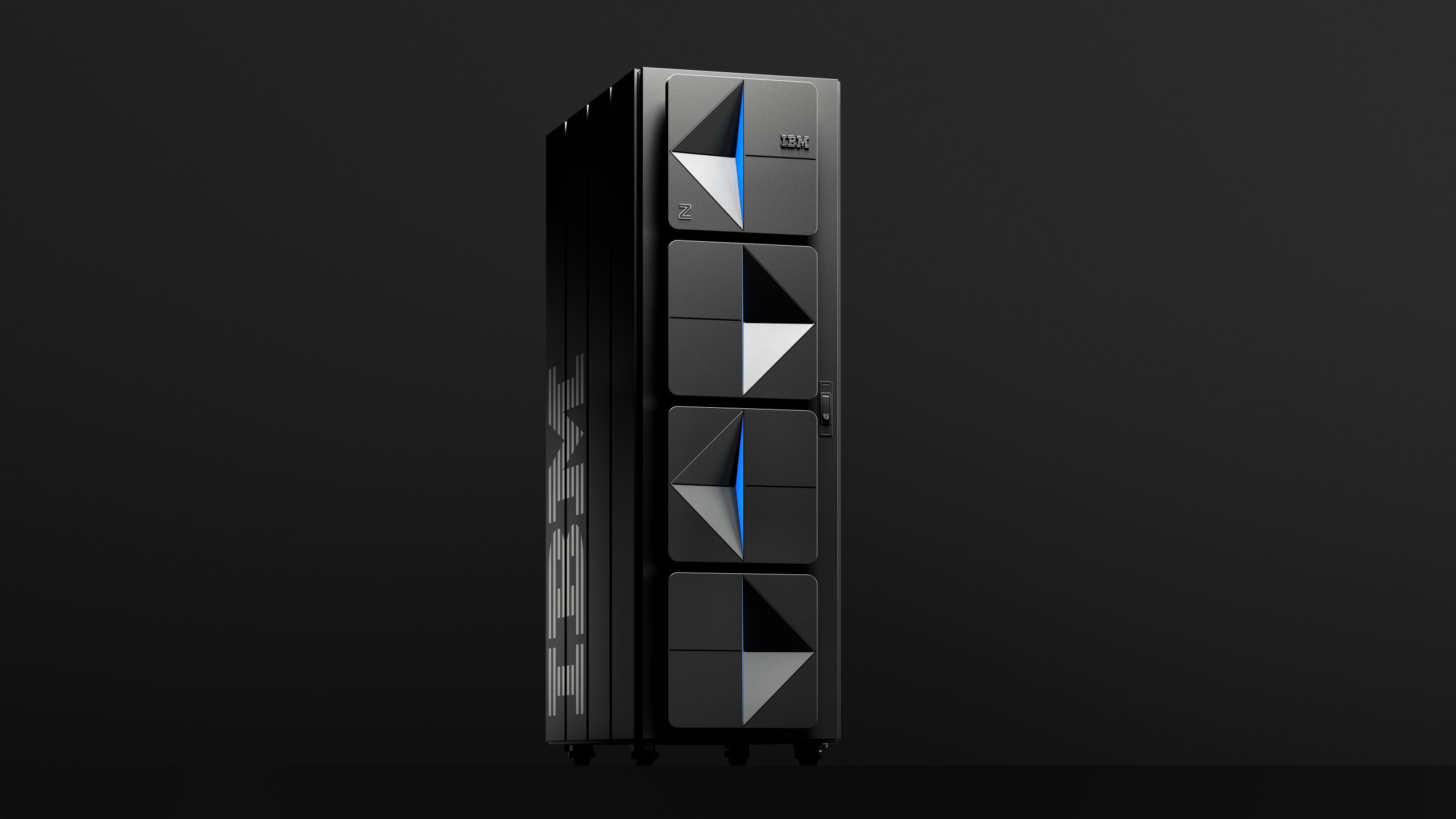
- At Hot Chips 2026, IBM said it is co-designing an as-yet-unnamed dual-architecture processor with Arm for future IBM Z mainframes and LinuxONE systems.
- The same core is designed to run z/OS and Arm-native Linux workloads at once, which IBM says has never been done before.
- The co-designed part removes the need for virtualization or emulation, and for splitting work across separate Arm and IBM cores.
- Disclosed specifications: two-nanometer process, 11 cores at 5.7GHz, an on-chip DPU for I/O, and inference accelerators for real-time fraud detection.
Why it matters
- decision Migration programs sold on the impossibility of getting modern Arm tooling onto the mainframe now have to be re-argued on cost and staffing, the two grounds that get cut in every planning cycle.
- constraint If the route to Arm's developer base runs through IBM hardware, the credible threat to leave loses its technical footing, and with it the leverage it gave buyers at renewal.
- contradiction April's virtualization-and-emulation plan and this silicon are different answers to the same question, so treating the Hot Chips talk as a procurement roadmap is reading further than the evidence...
- exposure Real-time fraud scoring is the workload IBM is aiming at with on-die inference, which puts off-platform scoring fleets in the position of defending a move that was made for accelerator access.
The trade that funded most mainframe exit plans is stated plainly in IBM's own framing of the problem: to reach Arm's software ecosystem, a regulated shop had to give up the Z and LinuxONE systems it could not otherwise justify leaving [17]. That is an architecture argument, and architecture arguments get funded because they have no workaround. A core that executes both instruction sets concurrently, with no partitioning between Arm and IBM cores, takes the workaround problem off the table [3][4]. What remains of the migration case is money and headcount, and those get renegotiated every planning cycle.
What the Hot Chips disclosure does not settle is nearly everything a replanning exercise needs. The chip has no name [2], and the account carries no availability date, price, or named customer [15]. It is the first concrete output of a partnership announced in April, whose stated technique then was virtualization and emulation [10]. That route was abandoned because virtualized workloads often fail to match non-virtualized performance, a point Futurum Group analyst Brendan Burke made at the time [11], and the co-designed core is the answer to it [5]. A design whose method changed once between announcements is not a delivery schedule.
The specifications are 11 high-performance cores at 5.7GHz on a two-nanometer process, with an on-chip data processing unit taking I/O off those cores [6][7]. IBM's promise of expansion to hundreds of cores [12] is therefore a claim about systems rather than packages: at 11 cores per chip, 200 cores is roughly 18 chips [16]. Anyone reading "hundreds of cores" as a single-socket figure is reading a frame-level number.
The accelerator choice is the tell about who this is for. On-chip inference is aimed at real-time fraud detection in financial transactions [8], on a platform IBM's own estimate credits with about 70% of the world's financial transactions [13]. The scoring model ends up next to the system of record instead of across a network boundary from it. On the other side, Arm brings a developer base the account puts above 22 million [14], and IBM CTO Christian Jacobi describes the result as combining access to a fast-growing software ecosystem with the qualities that made IBM systems a foundation for how businesses run [9].
SiliconANGLE's account goes a step past IBM and says developers will soon write for Arm and deploy directly on mainframes [18]. The "soon" is the publisher's; no date appears in the disclosure [15]. So the honest position for a shop two years into a migration is not that the migration was wrong. It is that the technical case for it has an expiry date somebody else controls, and the remaining case has to survive on cost and staffing alone.
What to watch
- A name, a ship date, and pricing for the part; without them, any replanned migration schedule rests on a roadmap slide.
- Whether IBM states how Arm-native Linux is licensed and supported when it shares a core with z/OS, since the account says nothing about it.
- Independent measurements of Arm workloads on this core against commodity Arm servers, the performance gap Burke flagged in April.
Clarity's read
What the record supports and how the coverage leans. The claims behind it follow.
Reality
- Evidence50
- Adoption3
- Hype gap+35
- Incentives70
- Confidence60
Perspective Coverage
3 publishers- Builder
- Builder 35%
- Operator
- Operator 43%
- Investor
- Investor 22%
Claim ledger
Ranked by verification strength, evidence, and original report placement.
- [1]
IBM said at Hot Chips 2026 that it is developing an unnamed dual-architecture processor in partnership with Arm Holdings, destined to power next-generation IBM Z mainframes and LinuxONE systems.
- [2]
The new chip does not yet have a name.
- [3]
The chip is designed to run both z/OS and Arm-native Linux workloads simultaneously on the same core, which IBM says marks the first time that has been done.
- [4]
The chip has a single unified architecture, so companies will not have to partition tasks across separate Arm and IBM cores; its cores can execute Arm and IBM Z or LinuxONE instructions concurrently.
- [5]
IBM and Arm opted to co-design a dual-architecture processor that eliminates the need for either virtualization or emulation.
- [6]
The chip will be built on a two-nanometer process node and feature 11 high-performance cores running at 5.7GHz.
- [7]
The chip includes a dedicated on-chip data processing unit to handle input/output operations so the cores can devote their processing to workloads.
- [8]
The chip includes AI inference accelerators specifically designed to handle real-time fraud detection in financial transactions.
- [9]
IBM CTO and Fellow Christian Jacobi said the processor represents a significant architectural advancement for IBM Z and LinuxONE, and that bringing Arm natively to the platforms combines access to one of the industry's fastest-growing software ecosystems with the qualities that have made IBM systems the foundation for how businesses run.
ReportedSupportedSource: Christian Jacobi, IBM CTO and Fellow, quoted by SiliconANGLE3 sources— create a free account to open themView cited source - [10]
The chip is the first concrete development since IBM and Arm announced their strategic partnership in April, when they said Arm-based workloads would run on IBM enterprise hardware using techniques such as virtualization and emulation, with the initial goal of bringing cloud-like flexibility to highly regulated environments.
- [11]
Futurum Group analyst Brendan Burke pointed out at the time of the April announcement that virtualized workloads often struggle to match the performance of their non-virtualized counterparts.
- [12]
IBM said the chip will be able to expand to support hundreds of cores if enterprises need to scale up.
- [13]
IBM Z mainframes and LinuxONE systems are estimated to process around 70% of all financial transactions on the planet, and also handle work such as airline reservations and healthcare data.
- [14]
Arm's cloud-native and AI software ecosystem is supported by more than 22 million developers.
- [15]
The disclosure as reported contains no availability date, no price, and no named customer for the chip.
- [16]
At 11 cores per chip, an expansion to 200 cores implies roughly 18 of these chips, so the hundreds-of-cores figure is a multi-chip system claim.
- [17]
Heavily regulated financial firms cannot give up their Z mainframes and LinuxONE systems, but to access Arm's software ecosystem they have had no choice but to forsake IBM's systems.
- [18]
SiliconANGLE wrote that soon developers will be able to write code for Arm and deploy it directly on mainframes, keeping IBM's legacy hardware relevant for years.
ReportedInsufficientSource: SiliconANGLE2 sources— create a free account to open themView cited source
Sources
3 independent publishers whose own reporting we read for this story.
- datacenterdynamics.comIBM mainframe chip to run Arm and Z workloads on the same cores
1 article · August 25, 2026
- interestingengineering.comTwo-in-one: IBM’s new 2-nm processor brings dual-architecture computing to mainframes
1 article · August 24, 2026
- siliconangle.comIBM is developing a dual-architecture chip to run Arm-native AI apps on Z mainframes and Linux servers
1 article · August 24, 2026
Topics and entities
Follow any of these and your For You feed starts watching them — no settings page required.