Thirty minutes in 40C water lowered blood pressure more than moderate cycling in a 25-person trial
Exercise physiologist Kristanti Wigati and colleagues found 30 minutes in 40C water lowered blood pressure more than 30 minutes of cycling in 25 adults. The single-session result, from people who could also manage the bike, supports testing heat therapy in those who cannot exercise.
The Scientist · Science desk
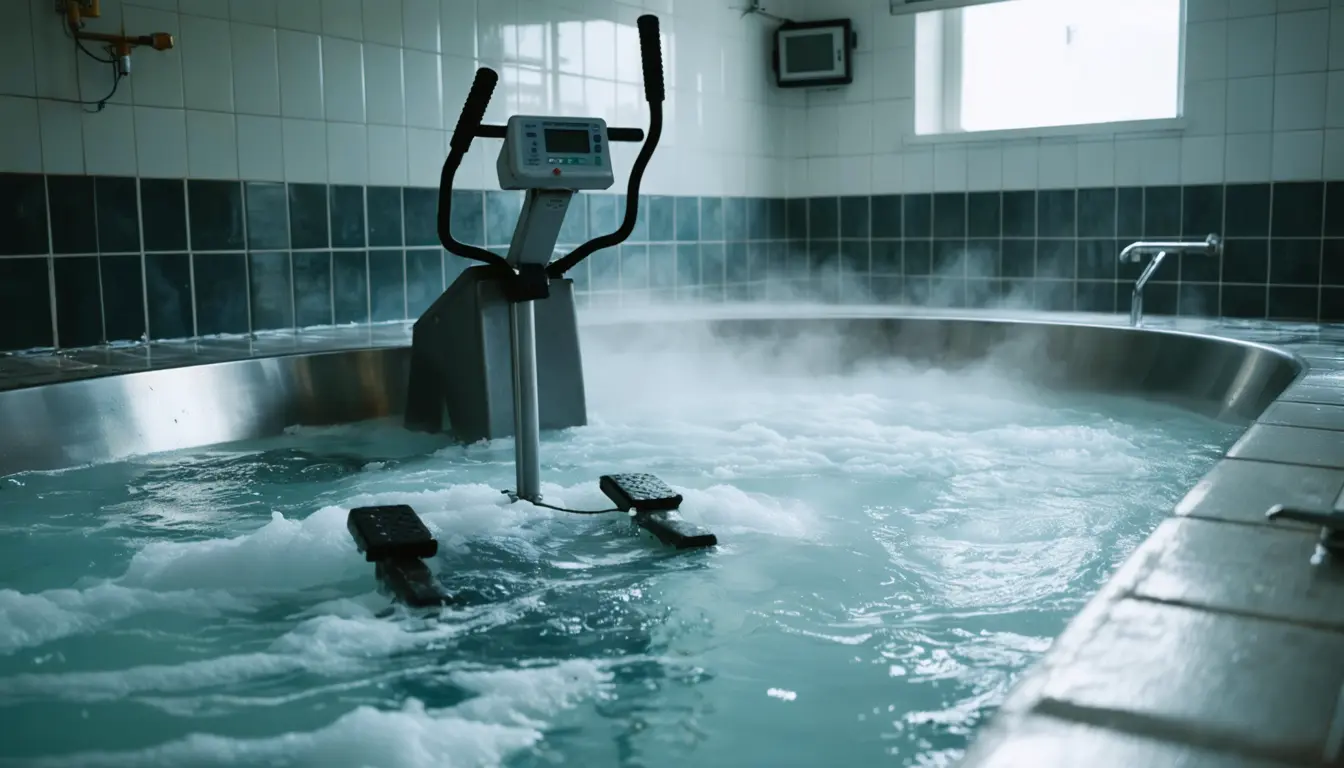
What happened
- Participants were aged 45 to 70, averaged 59, and all had overweight or obesity.
- Each person did both sessions, chest-deep immersion and stationary cycling, in random order and at least 72 hours apart.
- The team tracked heart rate, mean arterial pressure and core temperature, and imaged small skin vessels with optical coherence tomography.
- After immersion, skin vessels showed significantly larger increases in diameter, blood flow, velocity and the density of perfused microvessels than after cycling.
- Immersion produced the larger rise in core body temperature, while cycling produced the higher heart rate.
Why it matters
- constraint The authors attribute part of the soak's larger vessel response to heating the skin directly, so that margin cannot be counted as evidence that heat trains blood vessels better than exercise does.
- decision Anyone offering heat to patients who cannot exercise is extrapolating, because everyone in this sample also completed a moderate cycling session.
- precedent With acute data now in middle-aged adults with overweight or obesity, the authors' own framing points the next study at repeated soaks in people who cannot exercise at all.
Hot water immersion, like exercise, increases blood flow and shear stress along the inside walls of blood vessels. That stress triggers adaptations that improve vascular function, according to ScienceAlert's summary of the research [6]. Earlier studies found that repeated immersion improved vessel function, reduced arterial stiffness and helped vessels widen through nitric oxide. Those studies recruited young, healthy adults [7].
The new trial, published in the European Journal of Applied Physiology [1], went after a different group. "These findings suggest that hot water immersion may act as an 'exercise-like' vascular stimulus, but evidence in older individuals with risk factors for cardiovascular disease who are unable to engage in conventional exercise is lacking," the researchers wrote [8]. They cite global estimates that "approximately 31 percent of adults worldwide do not meet physical activity guidelines" [5].
The crossover is the right design for 25 people. Each participant is compared with themselves across both sessions [10]. Between-person differences in fitness, weight and resting pressure drop out of the comparison. In a two-group study this small, those differences could swamp the effect. Randomising the order means neither session gains from always coming second.
The authors are candid about where the larger vessel response comes from. "Collectively, these findings suggest that the larger microvascular responses observed after hot water immersion likely reflect the combined effects of direct local skin heating and greater systemic thermal strain imposed by passive heating," they wrote [16]. They tie the widening of vessels after immersion to the body shedding heat by moving blood to the skin [17]. By their own account, part of the margin over cycling comes from warming the skin that the scanner was imaging [16].
ScienceAlert's report does not give the size of the blood pressure falls in millimetres of mercury, or how long they lasted once participants were out of the water. Each arm was one 30-minute bout [11][12], so the result describes an acute response to a single session.
Every participant also completed the cycling arm at 60 to 70 percent of maximum heart rate [12]. The sample, in other words, was made up of people able to do moderate exercise [18].
I think the evidence supports the modest version of the claim. ScienceAlert's write-up frames passive heat as a possible way for people unable to exercise to get some of the same benefits [4]. The same write-up notes that this was a small experiment and that nobody is suggesting people give up exercise for hot baths [3].
What to watch
- The paper's blood pressure figures in mmHg, and whether the falls persisted for hours after participants left the water.
- A control arm that heats only the skin, to separate the local and systemic heating effects the authors describe.
Clarity's read
What the record supports and how the coverage leans. The claims behind it follow.
Reality
- Evidence45
- Adoption
- Insufficient
- Hype gap+30
- Incentives
- Insufficient
- Confidence50
Claim ledger
Ranked by verification strength, evidence, and original report placement.
- [1]
In a study published in the European Journal of Applied Physiology, 30 minutes of hot water immersion lowered participants' blood pressure more than 30 minutes of moderate-intensity cycling.
- [2]
The paper's first author is exercise physiologist Kristanti Wigati of the University of Western Australia.
- [3]
This was only a small experiment, and nobody is suggesting people should give up exercise to take more hot baths instead.
- [4]
For people who may be unable to exercise, hot water immersion or other passive heat therapy may be an important way of getting some of the same health benefits exercise provides.
- [5]
"However, recent global estimates indicate that approximately 31 percent of adults worldwide do not meet physical activity guidelines, supporting the need to explore adjunct or alternative interventions for individuals who may struggle with regular exercise participation."
- [6]
Hot water immersion, like exercise, increases blood flow and shear stress along the inside walls of blood vessels, which triggers adaptations that improve vascular function.
- [7]
Previous research in young healthy adults showed repeated hot water immersion can improve blood vessel function, reduce arterial stiffness, and help vessels widen through nitric oxide.
- [8]
"These findings suggest that hot water immersion may act as an 'exercise-like' vascular stimulus, but evidence in older individuals with risk factors for cardiovascular disease who are unable to engage in conventional exercise is lacking,"
- [9]
The researchers recruited 25 adults aged 45 to 70 with overweight or obesity, with an average age of 59.
- [10]
Each participant completed both interventions, in random order, separated by at least 72 hours.
- [11]
In the hot water intervention, participants sat chest-deep for 30 minutes in water maintained at 40C (104F).
- [12]
In the exercise intervention, participants cycled for 30 minutes on a stationary bicycle at an intensity of 60 to 70 percent of maximum heart rate.
- [13]
Heart rate, mean arterial pressure and core body temperature were monitored, and tiny blood vessels in the skin were assessed with optical coherence tomography (OCT).
- [14]
Compared with exercise, hot water immersion produced significantly larger increases in blood vessel diameter, blood flow, blood velocity, and the density of microvessels with detectable blood flow.
- [15]
"These pronounced microvascular responses were accompanied by a larger elevation in core body temperature and greater reductions in systolic and diastolic blood pressure following hot water immersion, whereas moderate-intensity exercise elicited a higher heart rate response,"
- [16]
"Collectively, these findings suggest that the larger microvascular responses observed after hot water immersion likely reflect the combined effects of direct local skin heating and greater systemic thermal strain imposed by passive heating."
- [17]
The researchers say hot water immersion promotes vasodilation, which facilitates heat dissipation by redistributing blood flow to the skin.
- [18]
All 25 participants were able to perform 30 minutes of moderate-intensity exercise, so the trial did not include people unable to exercise.
Sources
1 independent publisher whose own reporting we read for this story.
- sciencealert.comA Hot Bath May Lower Your Blood Pressure More Than a 30-Minute Workout Can, Study Reveals
1 article · October 7, 2026
Topics and entities
Follow any of these and your For You feed starts watching them — no settings page required.
Entities
- Optical coherence tomographyFollow
- European Journal of Applied PhysiologyFollow
- University of Western AustraliaFollow
- Kristanti WigatiFollow