Science1 publisher3 min readPublished
Honduras puts 234 of 298 municipalities on drought alert, and names its own end date
A record-strength El Nino has moved from forecast to administrative emergency in the Central American Dry Corridor. The government says the crisis runs to March or April.
The Scientist · Science desk
Drafted by a language model from the sources cited here and checked against its claim ledger before publication. How we use AISend a correction
What happened
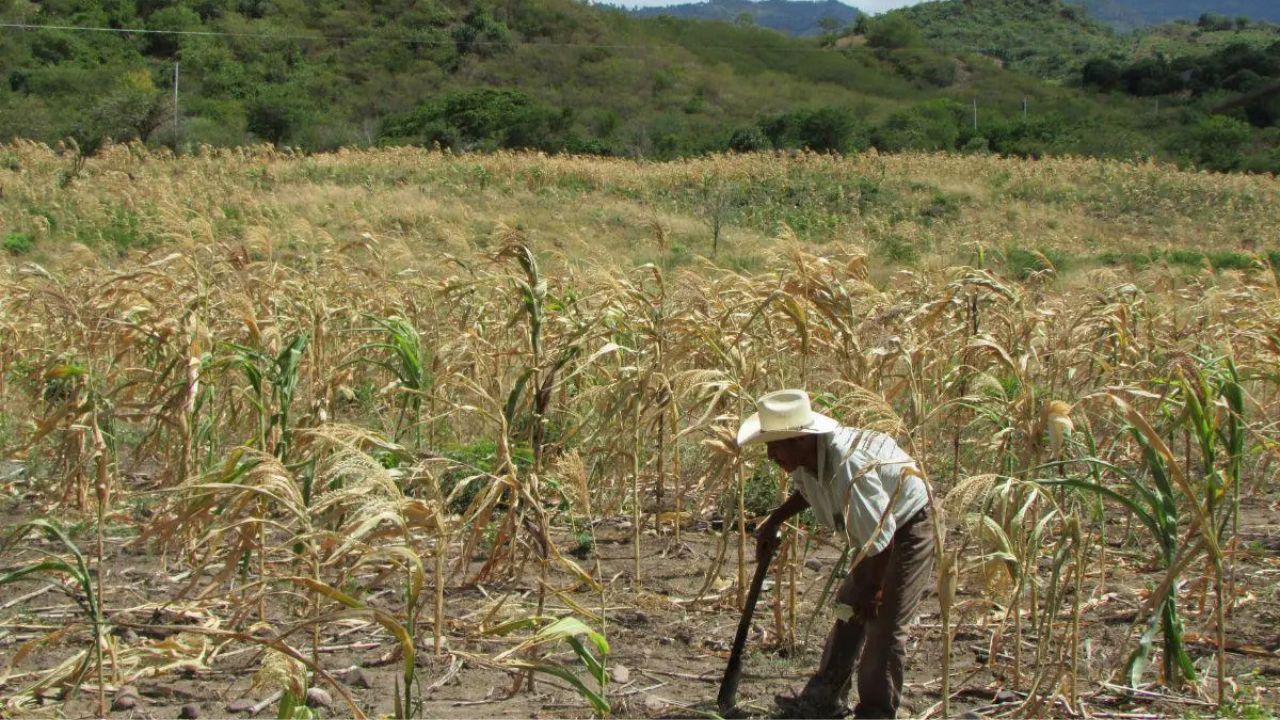
- The Honduran government on Wednesday placed 80% of the country, including the capital, on drought alert as El Nino scorches harvests and causes livestock to die of thirst.
- The measures cover 234 municipalities out of a total of 298 that have been affected by low reservoir levels, crop losses and livestock deaths, threatening food security.
- This year's El Nino is forecast to be one of the strongest on record.
- Tegucigalpa, the capital city with 1.7 million inhabitants, tops the list of 75 areas placed under red alert, meaning they are at maximum risk.
- Francisco Euceda, a cattle rancher from one of the municipalities under red alert, told AFP: "Cattle have died, and the cows we still have are thin. The situation is critical; the forecasts are discouraging."
Compiled by The ScientistSomething wrong?How this is made
Why it matters
Honduras on Wednesday placed 234 of its 298 municipalities under drought alert, with the capital Tegucigalpa heading a list of 75 areas at the maximum red level [2][4]. The trigger was not a forecast but observed damage: low reservoir levels, crop losses and livestock deaths that the government says threaten food security [2].
The arithmetic is worth stating plainly because it is the shape of the impact curve. The alert covers 78.5% of the country's municipalities, leaving 64 outside it [1][3]. Of the municipalities under alert, roughly a third are at the maximum risk tier, which is a quarter of all municipalities in the country [2]. Tegucigalpa, with 1.7 million inhabitants, is in that top tier [4]. This is not a localised crop failure being managed at the department level; it is a national water and food logistics problem with an urban centre inside it.
The El Nino pattern warms surface temperatures in the central and eastern equatorial Pacific and shifts winds, pressure and rainfall worldwide, with warmer global temperatures as a byproduct [14]. This year's is forecast to be one of the strongest on record [3]. The hardest-hit zone in Honduras is the Central American Dry Corridor, the arid strip running through Honduras, El Salvador and Nicaragua that is already exposed to weather extremes [7]. El Salvador, Nicaragua and Honduras each broke their monthly temperature records in both June and July [10], and some 110 million people from Mexico to northern Brazil, including the Pacific coast and the Guiana Shield, lived through the hottest July on record [9]. The UN World Food Programme recently estimated that Central America would be the region worst affected by El Nino-exacerbated hunger [8].
The operator-relevant detail is the duration the government has put on the record. President Nasry Asfura said the crisis will last until March or April of next year, and announced new well drilling, reservoir construction and food deliveries to the most critical areas [6]. Set against a report dated 2026, that end point falls in the first or second quarter of 2027 [15][4]. Two of those three measures - wells and reservoirs - have construction lead times that run into the middle of the stated crisis window; only food delivery acts on the current quarter. Anyone modelling Honduran supply, labour availability or rural demand should treat this as a multi-quarter degradation with a published horizon, not a shock that clears with the next rains.
The livestock signal is the one that tends to persist longest. "Cattle have died, and the cows we still have are thin. The situation is critical; the forecasts are discouraging," Francisco Euceda, a rancher in a red-alert municipality, told AFP [5]. Thin herds mean distress sales now and reduced breeding capacity well past April.
The same pattern is generating separate emergencies elsewhere. Peru last week declared a state of emergency in a third of its cities, warning that heat and rain could disrupt food production [12]. In Indonesia, El Nino has been blamed for worsening a drought behind one of the worst wildfire seasons in years [13]. UN Secretary-General Antonio Guterres said last month that El Nino was "adding fuel to a planet already on fire" and pushing the world into "uncharted territory" [11].
Watch whether the 75-municipality red list grows, and whether the well and reservoir programme reports completions before the dry season ends.