InvestNot yet confirmed elsewhere1 publisher3 min readPublished Updated
Heat limits Google's four orbiting TPUs to 15-minute runs
Google's Project Suncatcher put a satellite carrying four TPU chips into orbit on Oct. 1 to test AI computing in space. NPR reported the chips run only 15 minutes before cooling down, and that limit decides how much computing each launched kilogram can deliver.
The Investor · Invest desk
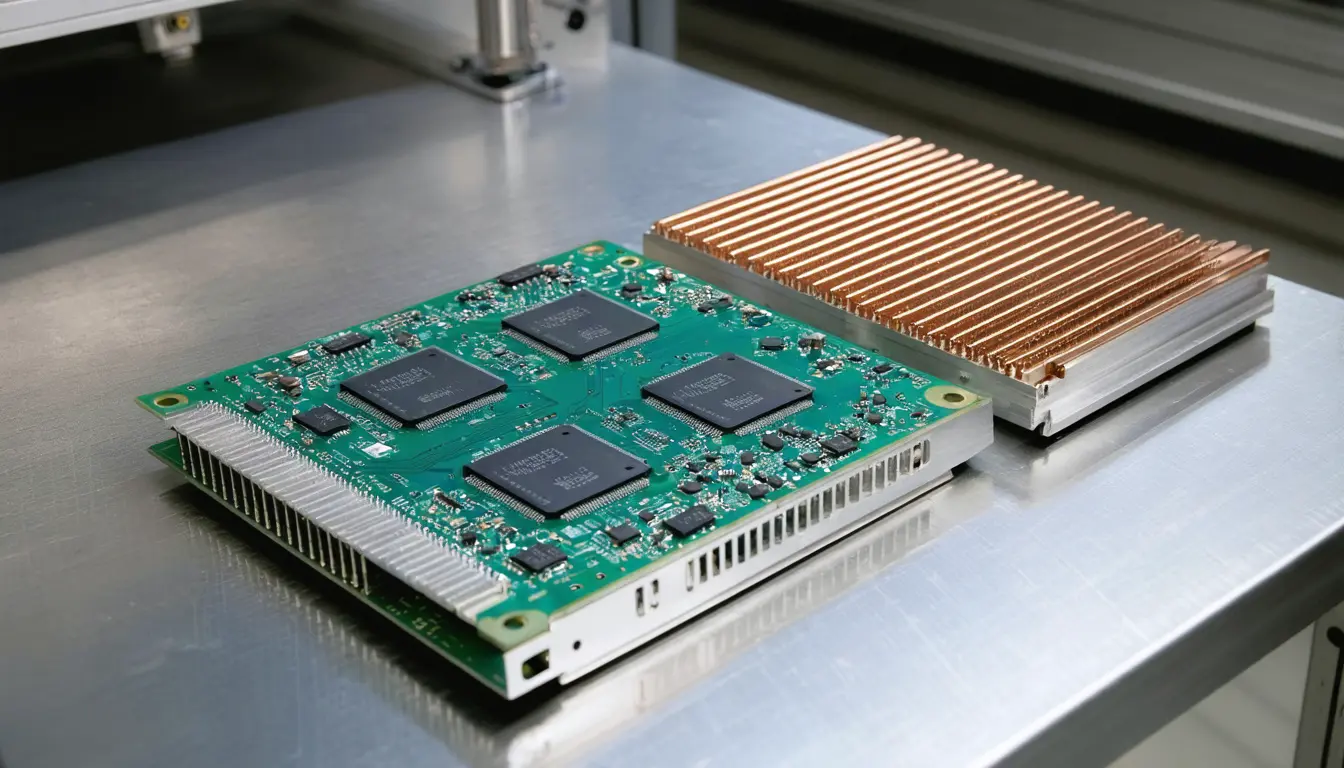
Chart showing SpaceX's estimated launch cost falling from about $20,000 per kilogram in 2008 to about $1,000 per kilogram now, a 95% cut, according to ARK Invest research.
| Measure | Value | As of | Claim |
|---|---|---|---|
| Launch cost in 2008 (implied) | 20,000 $/kg | 2008 | 16 |
| Launch cost now | 1,000 $/kg | 11 |
What happened
- The satellite, built in partnership with Planet Labs, is operating as expected, according to a Google blog post.
- Experiments in low Earth orbit will run for about a year, the New York Times reported.
- Startup Starcloud put a single Nvidia H100 in orbit last November and used it to run Google's Gemma model.
Why it matters
- cost Every kilogram of extra radiator added to lengthen the 15-minute runs costs about $1,000 to launch, so in orbit the cooling bill shows up in the launch bill.
- contradiction Musk's window for space becoming the cheapest place for AI closes in January 2029 at the latest, about 15 months after Google's year-long test is due to end with its chips still cycling off every 15 minutes.
- exposure A chip that radiation damages in orbit is much harder to repair than one on the ground, so solar events and cosmic rays bear directly on how many useful chip-hours each satellite delivers.
Space makes it hard to shed heat with water or fans, so Google's researchers built the satellite around heat pipes and radiators, with solar panels for power [5]. Even with that system, NPR reported, the chips will run for 15 minutes and then shut down to cool off [6]. NPR's account does not say how long each rest lasts, so the share of each hour the four chips spend computing cannot yet be calculated.
On the ground, data centres run into limits on power, water and land [20]. In orbit the added cost is mass. ARK Invest research puts SpaceX's launch cost at about $1,000 a kilogram after a 95% cut since 2008 [11], which puts the 2008 price at about $20,000 [16]. Jeff Thornburg, chief executive of Portal Space Systems, told Fortune that the large, heavy solar arrays an orbital data centre would need are expensive to transport [10]. A larger radiator to keep chips running past 15 minutes would be paid for at the same rate per kilogram [11].
The 15 minutes can be read in more than one way. It may be a property of a refrigerator-sized test craft [1] built to study launch vibration and what Google called the "radiation and thermal extremes of space" [3]. If so, a production design with more radiator lifts the cap. It may instead be an early look at the real trade-off: the radiator needed to run continuously weighs enough that launch price sets the cost of orbital compute. Or heat may matter less than failures. Google said ground tests showed its chips "can survive a radiation total ionizing dose greater than what they would receive during a five-year space mission," while acknowledging that solar events and cosmic rays pose a risk [12]. Repairing equipment is also much harder in space [14].
We think the second reading is the one Google's year of experiments in low Earth orbit [4] has to settle, because it decides price. Elon Musk said at the World Economic Forum in January: "The lowest-cost place to put AI will be space, and that will be true within two years, maybe three, three at the latest" [18]. If Google's experiment runs its full year from the Oct. 1 launch, it ends around October 2027. That is about three months before the early end of Musk's window and some 15 months before the late end [19]. SpaceX has filed with the FCC for up to 1 million data-center satellites [7], and Blue Origin has filed for 51,600 [8], about one-nineteenth as many [17].
The strongest case against our view is Starcloud, which ran Google's Gemma model on a single Nvidia H100 in orbit last November [13]. If useful jobs fit inside short windows, the cooling cycle matters less than we think. We would also be wrong if Google reports continuous operation, or a radiator light enough that the $1,000-a-kilogram launch price [11] stops being the larger cost.
Meanwhile, according to Fortune, companies are still putting billions of dollars into data centres on the ground [15]. Google's own orbital programme, started in November 2025 [9], has one satellite carrying four chips [1].
What to watch
- Whether Google discloses how long its chips rest between 15-minute runs, or reports continuous operation, during the year-long test.
- Radiation error data from solar events over the year, given Google's acknowledgement that cosmic rays and solar activity pose a risk.
- FCC action on SpaceX's filing for up to 1 million data-center satellites and on Blue Origin's 51,600-satellite Project Sunrise.
Clarity's read
What the record supports and how the coverage leans. The claims behind it follow.
Reality
- Evidence45
- Adoption10
- Hype gap+40
- Incentives60
- Confidence50
Claim ledger
Ranked by verification strength, evidence, and original report placement.
- [1]
Google's Project Suncatcher launched a refrigerator-sized satellite carrying four AI chips (Google's custom TPUs) into orbit on a SpaceX rocket; it took off on Oct. 1.
- [2]
The satellite was developed in partnership with Planet Labs and is operating as expected, according to a Google blog post.
- [3]
The point of the mission is to see how Google's TPU chips handle the intense vibrations of launch as well as the "radiation and thermal extremes of space," the company said.
- [4]
The satellite will conduct experiments in low Earth orbit for about a year, the New York Times reported.
- [5]
The satellite is powered by solar panels; because space makes it difficult to dissipate heat using water or fans, Google's researchers designed a system of heat pipes and radiators to keep the chips from overheating.
- [6]
The satellite's cooling capabilities mean Google will run its chips for 15 minutes at a time before shutting them down to cool off, NPR reported.
- [7]
In early 2026 SpaceX filed plans with the Federal Communications Commission to launch a network of up to 1 million data-center satellites.
- [8]
Blue Origin in March filed a proposal to deploy 51,600 satellites in a network dubbed Project Sunrise.
- [9]
Google launched Project Suncatcher in November 2025 to explore how an interconnected network of solar-powered satellites equipped with its TPU chips could harness the Sun's power.
- [10]
Jeff Thornburg, CEO of Portal Space Systems, told Fortune that the large and heavy solar arrays needed for space data centers, along with other equipment, would be expensive to transport to space.
- [11]
SpaceX has cut its estimated launch costs by 95% since 2008 to about $1,000 per kilogram, according to research from ARK Invest.
- [12]
Google said it tested its chips on Earth and found they "can survive a radiation total ionizing dose greater than what they would receive during a five-year space mission," but acknowledged that solar events and cosmic rays pose a risk.
- [13]
Last November, startup Starcloud launched a satellite carrying one Nvidia H100 chip and showed it could use the chip to run Google's lightweight AI model, Gemma.
- [15]
Companies are pouring billions of dollars into building out terrestrial data centers and have faced backlash from community members and politicians.
- [16]
A 95% cut to about $1,000 per kilogram implies a 2008 launch cost of about $20,000 per kilogram.
- [17]
Blue Origin's 51,600-satellite filing is about one-nineteenth the size of SpaceX's filing for up to 1 million satellites.
- [18]
"The lowest-cost place to put AI will be space, and that will be true within two years, maybe three, three at the latest," Musk said at the World Economic Forum in January.
ReportedContestedSource: Elon Musk, World Economic Forum, via Fortune2 sources— create a free account to open themView cited source - [19]
If Google's roughly one-year experiment runs from the Oct. 1, 2026 launch, it ends around October 2027, about three months before January 2028 (two years after Musk's January 2026 statement) and about 15 months before January 2029 (three years after).
- [20]
Orbital data centers could help meet AI's compute demand while avoiding constraints on resources like power, water, and land on Earth.
Sources
1 independent publisher whose own reporting we read for this story.
Topics and entities
Follow any of these and your For You feed starts watching them — no settings page required.
Topics
- Orbital data centersFollow
- Space launch costsFollow
- AI Data Center Energy DemandFollow
Entities
- GoogleFollow
- Project SuncatcherFollow
- Google TPUFollow
- SpaceXFollow
- Planet LabsFollow
- Blue OriginFollow
- Project SunriseFollow
- Elon MuskFollow
- StarcloudFollow
- Nvidia H100Follow
- GemmaFollow
- Ark InvestFollow
- Portal Space SystemsFollow
- Jeff ThornburgFollow
- James ManyikaFollow
- Cowboy Space Corp.Follow
- US Federal Communications CommissionFollow