Invest2 publishers3 min readPublished
Google's first orbital TPU test puts one server's worth of chips on a SpaceX rideshare
Google is flying four TPUs, roughly one server's worth of compute on a kilowatt of solar power, in Project Suncatcher's first orbital test. The satellite can show whether the chips survive heat and radiation in orbit, a smaller question than whether computing there is cheaper.
The Investor · Invest desk
What happened
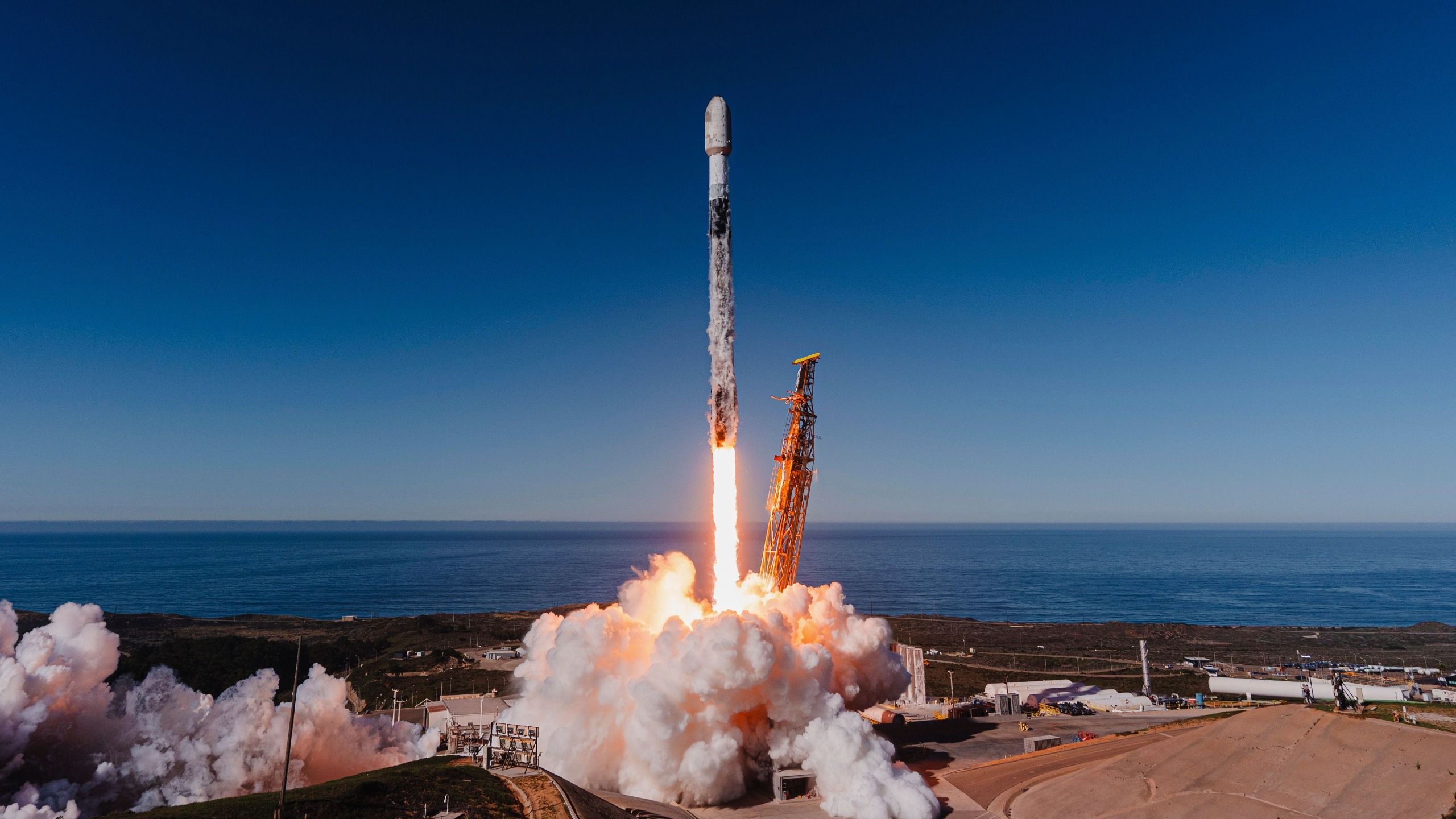
- The refrigerator-sized satellite, named MVP and built with Planet Labs, rides SpaceX's Transporter-18 rideshare mission out of Vandenberg in California.
- Its heat pipes and radiators currently keep the chips running for about 15 minutes before they must be switched off to cool, and radiation bit flips are handled by restarts.
- Google plans for MVP to answer simple AI queries for one year, and the satellite will stay in orbit for six years before burning up on reentry.
- Google intends to launch two more satellites in 2027 to test laser links between spacecraft, with an eventual goal of 80 satellites flying in close formation.
Compiled by The InvestorSomething wrong?How this is made
Why it matters
- contradiction SpaceX dates supercompute in space to 2027 and cost leadership to 2028 or 2029, while Google's research chief, whose chips are the ones on the rocket, expects nothing usefully operational for years.
- exposure Alphabet's SpaceX stake, valued above $82 billion, pays on launch demand for orbital compute even if SpaceX's own GPU satellites get there before Suncatcher does.
- constraint Investors cannot judge cluster economics from MVP because it flies alone; the earliest dated Google test of linked satellites working together is the 2027 pair.
Alphabet leads with the solar number. Satellites in low Earth orbit can "access near-constant sunlight, generating up to eight times more solar power than on Earth," the company said in its launch post [18]. Whether that power is usable, or rather usable for more than a quarter of an hour at a stretch, depends on heat, because MVP's current cooling forces a shutdown after about 15 minutes [7]. Radiation looks easier to manage. Google said its Trillium TPUs held up "remarkably well" in a proton beam at UC Davis against a dose larger than a five-year mission would typically deliver [9], and in orbit it plans to restart chips hit by bit flips [8].
"This first launch is about seeing what works, identifying points of failure, and applying those findings to future missions," Google said [19]. James Manyika, its senior vice president for research, told Engadget the company does not expect "anything usefully operational in the next few years" [12].
SpaceX's dates are earlier. Elon Musk said earlier this year that data centres in space would be the cheapest way to train AI, "and that will be true within two years, maybe three at the latest" [15]. Counted from 2026, that lands in 2028 or 2029 [2]. Gwynne Shotwell, SpaceX's chief operating officer, said in September the company will deploy "supercompute in space" in 2027 [16], on GPU satellites built in Redmond with solar arrays it plans to produce with Tesla [17].
At MVP's payload, the 80-satellite formation Google describes as its eventual goal [10] would carry about 80 servers' worth of TPUs on roughly 80 kilowatts [1]. Production satellites may be bigger. Brandon Lucia, an electrical and computer engineering professor at Carnegie Mellon, told the Times that scaling from one satellite to a network operating like a data center "will take years and enormous funds" [13].
The flight can go a few ways. Should the chips stay up and the cooling window stretch across MVP's year of service [6], the 2027 laser satellites [10] become the next test, this time of whether separate spacecraft can work as one cluster. A 15-minute limit that holds keeps Suncatcher a research line. SpaceX reaching orbit first with its own GPUs would still pay Alphabet, whose stake in the company is valued above $82 billion [14], although the two companies' AI divisions compete [21].
I think the cost claim in this story belongs to SpaceX. Google has not said what it is spending [11], and it is flying a satellite built with Planet Labs [4] on a rideshare mission [3]. On disclosed numbers, Alphabet's exposure to orbital compute runs mainly through its SpaceX shares [14]. That view would be wrong if Google puts a cost on each satellite before 2027, or if MVP runs its chips for hours at a time instead of minutes.
What to watch
- Whether Google's two 2027 laser-link satellites launch on schedule and carry more than MVP's four chips each.
- Whether SpaceX meets Gwynne Shotwell's 2027 date for "supercompute in space" and says how much power each of its GPU satellites draws.