Science1 publisher2 min readPublished
Gutless marine worms swap their indispensable bacterial partners over evolutionary time
Max Planck researchers found gutless marine worms gain and lose essential bacterial partners over time, in a survey of nearly 250 worms from 63 species. The result shows that complete dependence on a microbe can coexist with changing partners across evolutionary time.
The Scientist · Science desk
Drafted by a language model from the sources cited here and checked against its claim ledger before publication. How we use AISend a correction
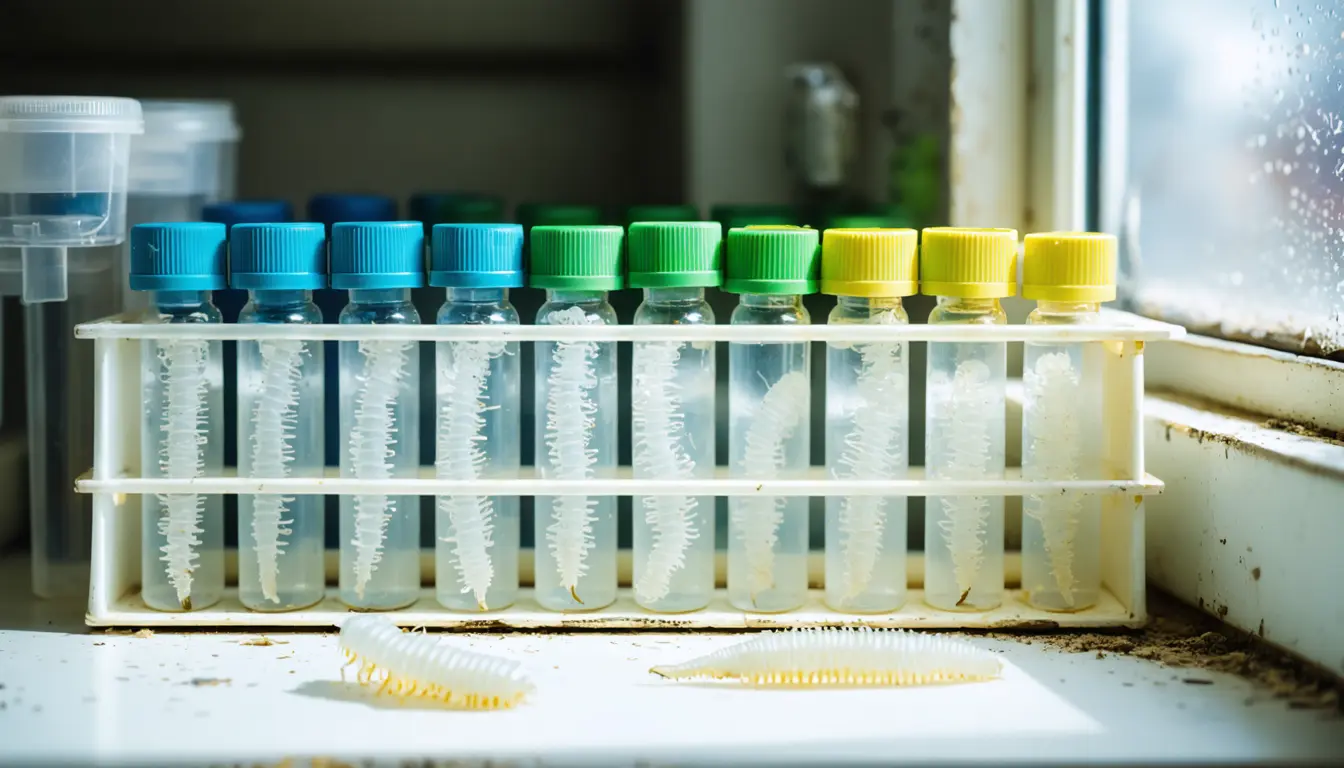
What happened
- The worms have no mouth, gut or excretory organs, so bacteria living under their skin supply their food and dispose of their waste.
- Worms of one species carry the same or very similar bacterial communities, even when they come from distant ocean regions.
- Closely related worm species often host very different bacterial communities from one another.
- The samples were gathered over three decades of expeditions to 17 locations.
Compiled by The ScientistSomething wrong?How this is made
Why it matters
- constraint For a typical species, the finding that partners stay constant rests on about four animals, so it is firmer as a pattern across species than as a description of any single species.
- constraint The diet explanation for switching remains a proposal until someone measures what a newly acquired symbiont adds to its host's food or energy supply.
- precedent Researchers studying other obligate symbioses now have grounds to compare related hosts before treating a host and its microbe as a fixed, inherited pairing.
A change spread over 150 million years, the span in the paper's title [15], cannot be watched. It has to be inferred from living animals. If each worm lineage had kept the bacteria its ancestors carried, close relatives should look alike under the skin. Partners match within a species and often differ between relatives [4][5]. That pattern points to partners being picked up and dropped along the way [3].
According to the Max Planck account, a dependence this complete would be expected to produce a stable partnership [6]. "However, we found the exact opposite," Mankowski said [7]. "The worms regularly take up new symbionts; occasionally they also drop some," she said [8]. "That really surprised us," said Dubilier, who co-led the study [9][1]. "If you are so dependent on a partner, it seems risky not to be completely loyal to them." [9]
The sample is wide and thin. Nearly 250 worms across 63 species [10] works out to about four animals per species on average [17]. The release does not give per-species counts or a rate at which partners are gained and lost. It describes the work as the first survey of this scope [18].
Sequencing single animals is what allowed that width. "It really only became possible with the technical innovations of the last few years," said Gruber-Vodicka, the project leader in Bremen, who now has his own lab at Kiel University [12][14]. "In the first and seminal metagenomics approach with gutless oligochaetes, thousands of worms were necessary for one analysis, which really limits comparative work. Now we can work with single individuals of animals smaller than a pinhead," he said [13].
The proposed reason for switching is diet. Each bacterial partner has different abilities [19]. The release suggests that a worm taking in new ones can perhaps tap new sources of food and energy [20]. "This can be very useful, especially in habitats where nutrients are sometimes scarce," Dubilier said [21].
I think a comparison across 63 species supports the pattern itself well [10]. The causal story is weaker. The release says the worms' success "proves them right," pointing to communities that have colonized all the world's oceans and a wide variety of habitats [16]. The thing this doesn't tell you is whether flexibility caused that spread. A survey of one widespread group shows the two traits together and cannot separate partner switching from the worms' other traits.
What to watch
- Per-species sample counts and any estimated rate of symbiont gains and losses in the full Science Advances paper.
- A functional test showing whether a newly acquired symbiont gives a worm access to a new food or energy source.
- Whether comparisons across related hosts turn up the same partner turnover in other obligate symbioses.