InvestNot yet confirmed elsewhere1 publisher2 min readPublished
Goldman says AI labs pay SpaceX a scarcity premium on $40 billion of yearly GPU rent
Goldman Sachs says AI labs renting SpaceX's GPU compute pay rents well above the revenue the industry needs to turn a profit. The same bank underwrote SpaceX's June listing and projects its AI revenue rising about 100-fold by 2030.
The Investor · Invest desk
What happened
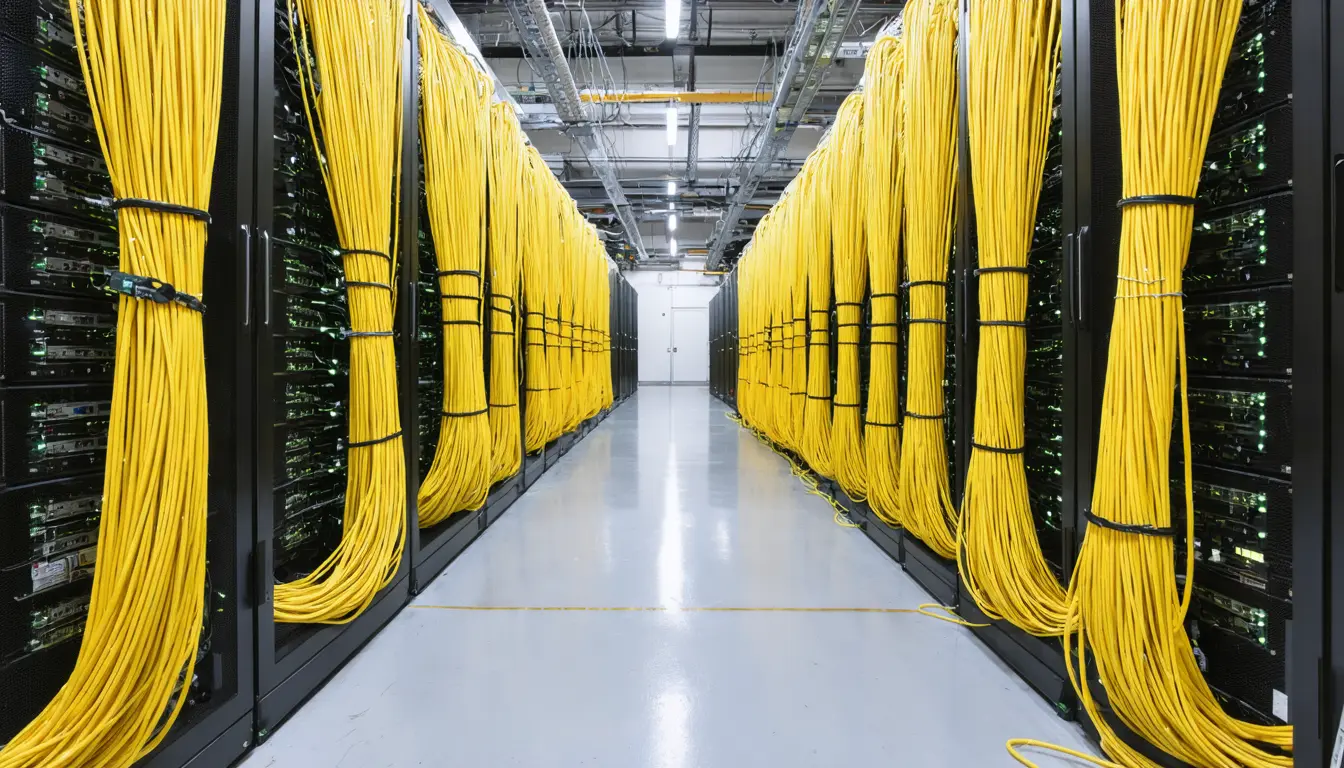
- SpaceX's AI segment booked $2.56 billion of revenue in the second quarter of 2026, up 247% on a year earlier, mostly from renting spare GPU capacity in its Colossus data centers.
- Anthropic pays SpaceX roughly $1.25 billion a month under a deal that runs through May 2029, and Google pays about $920 million a month.
- An undisclosed third customer has signed a $1.11 billion monthly contract starting in December 2026, taking annualized commitments past $40 billion.
- SpaceX had 1.4 GW of compute in June 2026 and plans more than 2 GW by year-end and 5 to 10 GW in 2027.
- Goldman also estimates that hyperscalers face a $230 billion annual revenue shortfall against their capital expenditure needs.
Why it matters
- contradiction If capacity tops out at 10 GW, Goldman's $322 billion forecast for 2030 needs about $32 billion per gigawatt-year, above today's roughly $20 billion, yet the same bank calls today's price a premium.
- exposure Three buyers hold about 98% of SpaceX's committed compute revenue, so the squeeze on lab profitability that Goldman describes is a direct risk to the segment's income.
- cost Anthropic has fixed about $15 billion a year of compute spending at today's prices through May 2029, so if rents fall as supply arrives, the lab pays the difference.
The three disclosed contracts come to $3.28 billion a month, or $39.36 billion a year [15]. Crypto Briefing puts the full commitment book past $40 billion [7], so those three buyers account for about 98% of it [16]. Reported revenue is much smaller. The segment's $2.56 billion second quarter annualizes to about $10.2 billion, roughly a quarter of the committed figure [17]. Anthropic's monthly rate alone, run for a full quarter, comes to $3.75 billion, which is more than the whole segment reported [18]. The report does not say when the Anthropic and Google contracts began billing. Even so, most of the rent Goldman is talking about has been signed and has not yet shown up in reported revenue [17].
Goldman attributes the premium to short-term demand and capacity constraints [9]. It says high rents make it harder for AI labs to turn a profit as infrastructure budgets tighten [10]. The bank's own forecast for SpaceX runs from $3.2 billion of AI revenue in 2025 to $322 billion in 2030 [12], growth of about 150% a year for five years [20]. Spread over the 2 GW SpaceX plans to have by year-end [13], today's commitments come to about $20 billion per gigawatt-year [21]. If capacity stopped at 10 GW, the top of the 2027 plan, $322 billion would take $32.2 billion per gigawatt-year [22]. So the forecast assumes one of two things. Either SpaceX builds far more capacity than it has announced, or rents per gigawatt climb while supply grows five-fold [23].
The premium could come out three ways. In the first, new supply pulls market rents down while SpaceX's signed rates hold to term, which in Anthropic's case means until May 2029 [4]. The labs would then carry the overpayment. In the second, lab revenue grows into the rent and today's premium becomes the market rate. The third is a buyer under strain asking to renegotiate. With about 98% of the book on three names [16], one such request would move the whole segment.
We think the first case is the most likely through 2027. The contracts already signed fix the old prices. The segment's first positive adjusted EBITDA, $1.1 billion, was a 43% margin on second-quarter revenue [19], and in our view that gives SpaceX room to sell new gigawatts for less. Against that stands Goldman's own 2030 number, which only works if rents per gigawatt hold or rise [22]. Goldman's thesis is wrong if the 5 to 10 GW planned for 2027 [13] signs at or above about $20 billion per gigawatt-year [21]. That would mean the shortage Goldman calls short-term had lasted well into 2027.
What to watch
- Whether the undisclosed customer's $1.11 billion monthly contract starts on schedule in December 2026.
- Whether SpaceX clears 2 GW of capacity by the end of 2026.
- SpaceX's next quarterly AI segment revenue, compared with the $3.28 billion a month the three disclosed contracts imply.
Clarity's read
What the record supports and how the coverage leans. The claims behind it follow.
Reality
- Evidence40
- Adoption65
- Hype gap+35
- Incentives70
- Confidence40
Claim ledger
Ranked by verification strength, evidence, and original report placement.
- [1]
SpaceX's AI segment brought in $2.56 billion of revenue in Q2 2026, a 247% jump from the same quarter a year earlier.
- [2]
SpaceX's AI segment posted its first positive adjusted EBITDA, at $1.1 billion.
- [3]
The AI segment's growth comes from renting surplus GPU compute out of SpaceX's Colossus data centers, which were originally built to train models for the company's xAI segment.
- [4]
Anthropic is paying SpaceX roughly $1.25 billion per month under a deal that runs through May 2029.
- [5]
Google is paying SpaceX approximately $920 million per month for compute.
- [6]
A third, undisclosed customer has signed a $1.11 billion monthly contract with SpaceX set to begin in December 2026.
- [7]
The undisclosed customer's deal pushes SpaceX's total annualized compute commitments past $40 billion.
- [8]
Goldman Sachs says compute rental prices sit well above the revenue the AI industry needs to reach profitability, suggesting customers are paying a scarcity premium rather than a sustainable market rate.
- [9]
Goldman attributes the rental premium to short-term demand and capacity constraints.
- [10]
Goldman notes that elevated rental costs create challenges for AI lab profitability, particularly as infrastructure budgets tighten.
- [11]
Goldman estimates hyperscalers face a $230 billion annual revenue shortfall relative to their capital expenditure needs.
- [12]
Goldman projects SpaceX's AI revenue will rise from $3.2 billion in 2025 to $322 billion by 2030, roughly a 100x increase.
- [13]
SpaceX had 1.4 GW of compute capacity as of June 2026, with plans to exceed 2 GW by year-end and expand to 5-10 GW in 2027.
- [14]
SpaceX listed on Nasdaq in June 2026 under the ticker SPCX, with Goldman Sachs as lead underwriter.
- [15]
The three disclosed contracts total $3.28 billion a month, or $39.36 billion a year.
- [16]
The three disclosed contracts account for about 98% of the $40 billion-plus annualized commitment book.
- [17]
Q2 2026 AI segment revenue annualizes to about $10.2 billion, roughly a quarter of the $40 billion-plus in annualized commitments, so most committed rent is not yet in reported revenue.
- [18]
Anthropic's monthly rate run for a full quarter is $3.75 billion, more than the AI segment's entire $2.56 billion Q2 revenue.
- [19]
The AI segment's $1.1 billion adjusted EBITDA is about a 43% margin on Q2 revenue.
- [20]
Goldman's projection from $3.2 billion in 2025 to $322 billion in 2030 implies compound growth of about 150% a year.
- [21]
Spread over the 2 GW planned by year-end 2026, the $40 billion-plus in annualized commitments works out to about $20 billion per gigawatt-year.
- [22]
If capacity stopped at 10 GW, the top of the 2027 plan, $322 billion of 2030 revenue would require $32.2 billion per gigawatt-year.
- [23]
Going from the 2 GW year-end target to the 10 GW top of the 2027 plan is a five-fold increase in capacity.
- [24]
Anthropic's contract annualizes to about $15 billion a year.
Sources
1 independent publisher whose own reporting we read for this story.
- cryptobriefing.comGoldman says SpaceX’s GPU rental boom exposes AI’s revenue gap
1 article · October 10, 2026
Topics and entities
Follow any of these and your For You feed starts watching them — no settings page required.
Topics
- GPU compute rentalFollow
- AI infrastructure and compute economicsFollow
- IPO underwritingFollow