Invest1 publisherNot yet confirmed elsewhere3 min readPublished
Goldman puts AI-related debt near $500 billion as Broadcom lines up financing for the labs it supplies
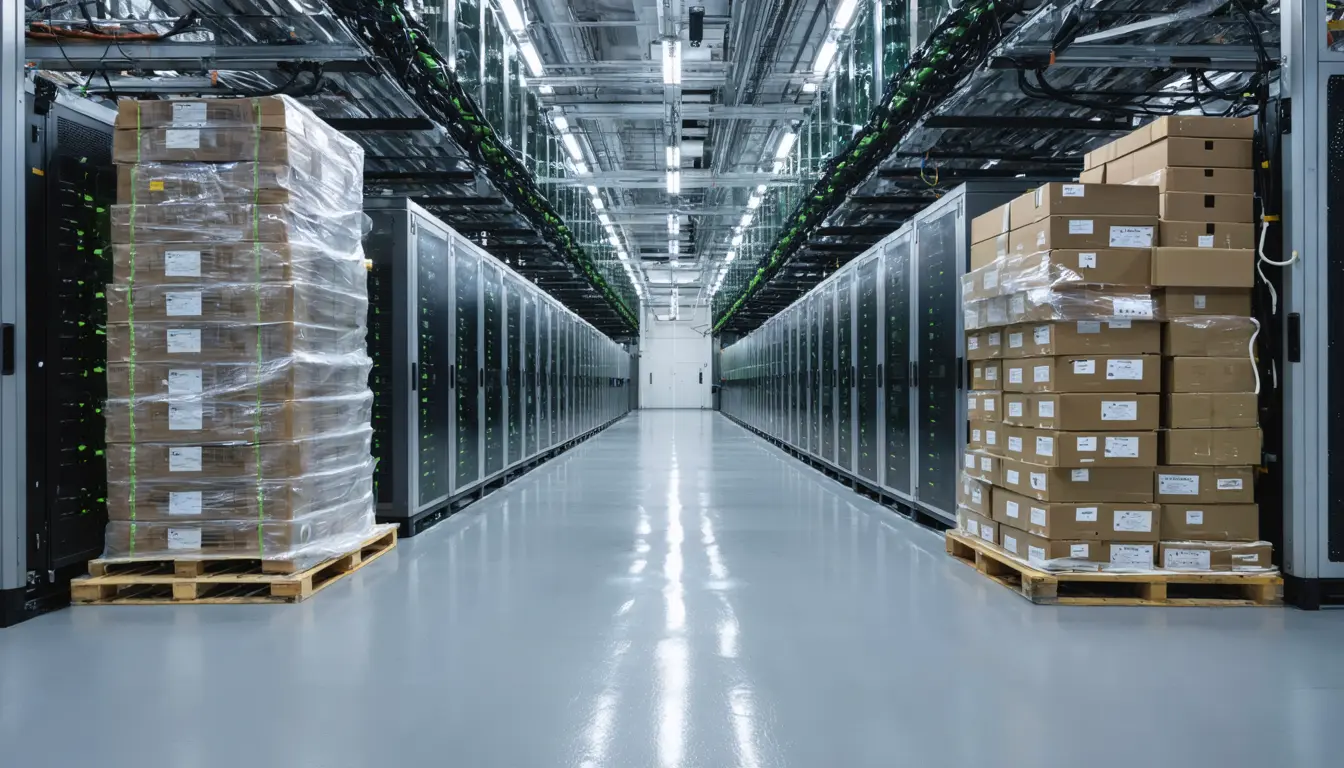
Goldman Sachs estimates nearly $500 billion in AI-related debt was issued through early August 2026. The money pays for computing capacity, so whether AI labs can turn a profit now matters to the wider lending market.
The Investor · Invest desk
What happened
- Broadcom is reportedly seeking more than $50 billion to finance chips for OpenAI.
- Bryan Musto estimates the five largest hyperscalers will face $390 billion to $530 billion of yearly depreciation by 2028.
- JPMorgan expects $4.1 trillion of total issuance through 2030, CNBC reported.
Compiled by The InvestorSomething wrong?How this is made
Why it matters
- exposure A chipmaker that finances its customers' purchases is repaid only if those labs can service the debt, so Broadcom's results become tied to OpenAI's and Anthropic's credit.
- cost The buildout pays off only if the five largest hyperscalers reach $675 billion to $785 billion of yearly revenue by 2028, the level Musto says covers depreciation and a 10% pretax return before power and staff.
- decision Funding chips with debt spares lab shareholders the up-front cost, but it leaves lenders and suppliers repaid only if revenue keeps outgrowing costs.
Two of the financings in Cryptopolitan's tally run through the chip supplier. Broadcom's reported OpenAI financing [26] and the $42 billion it is expected to provide Anthropic for its chip developments [28] come to at least $92 billion together [29]. That is about 18% of Goldman's count [30]. The Broadcom sums are sought or expected, while Goldman counts debt already issued [5]. The report describes the result as financial risk spread across lenders, suppliers and AI developers [12].
The customers' income statements are where that risk gets tested. OpenAI's second quarter works out to about $1.84 of operating loss for every dollar of revenue [21], and Anthropic's 2025 to about $1.75 [22]. Anthropic has since improved. CNBC reported an annualized run rate of $65 billion in July 2026, with $100 billion projected by year-end [7], about 14 times its 2025 sales [25]. 24/7 Wall St. reported a positive adjusted operating result for the second quarter [8], on a measure that leaves out certain costs [9].
OpenAI's figures fit together less neatly. Its second-quarter revenue annualizes to $26.8 billion [23], while Axios reported a pace towards $70 billion a year by September [1]. Either revenue grew about 2.6 times in roughly a quarter [20], or the two numbers measure different things.
Construction is only the first bill, the report notes [4]. One year of depreciation at the top of Bryan Musto's range for the five largest hyperscalers, $530 billion [2], is more than Goldman's whole count of AI-related debt through early August [19]. JPMorgan's issuance forecast is about 8.2 times that count [24]. Another paper sketches AI-related debt of $3 trillion to $7 trillion in 2029 under different scenarios, figures the report flags as forecasts, not borrowings [15].
A Bank for International Settlements warning says a downturn in AI investment may hit the wider financial market [13]. The report adds that heavily indebted small firms would be hit hardest and that tech giants with stronger finances would gain ground [14]. The borrowers it actually names sit at the top of the market: the two Broadcom arrangements, SpaceX seeking another $40 billion, and Oracle looking for data-center funding [26][28][27]. The report does not include any figure for small developers' debt. In my view the credit risk is concentrated in the largest labs and the suppliers financing them, the same group the report expects to come out ahead.
If Anthropic gets near its $100 billion projection [7] and its adjusted profit survives with the excluded costs put back [9], the debt gets serviced from revenue. A second outcome is revenue that grows but is absorbed by depreciation, the problem Musto's model measures for the hyperscalers [3]. The third is the BIS scenario of slowing investment [13], where the first losses fall on whoever financed the chips. The view above is wrong if OpenAI's unadjusted operating loss drops below its revenue within the next few quarters, from $1.84 a dollar in the second quarter [21].
What to watch
- Whether Anthropic's positive adjusted operating result survives once the excluded costs are counted, as its run rate heads for the projected $100 billion.
- Whether Broadcom closes the more than $50 billion it is reportedly seeking for OpenAI chips, and on what terms.
- OpenAI's next reported quarter, and whether the $70 billion pace Axios reported and the $6.7 billion second quarter measure the same thing.