Invest1 publisher3 min readPublished
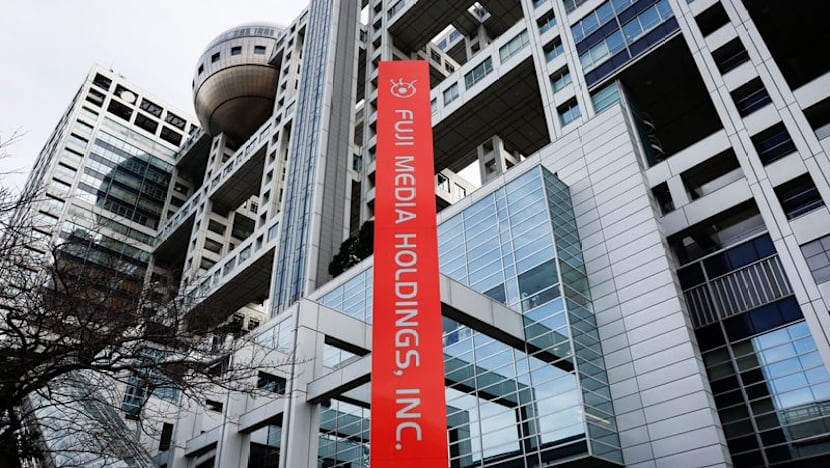
Fuji Media's Sankei Building auction tests whether four bidders can price 1 trillion yen of property
Blackstone, Bain, Warburg Pincus and BGO are preparing final bids for Fuji Media's Sankei Building, valued by Fuji at about 1 trillion yen including debt. Vasanta Master Fund, holding under 1%, argues that a buyer pool that narrow leaves too little upside for shareholders.
The Investor · Invest desk
Drafted by a language model from the sources cited here and checked against its claim ledger before publication. How we use AISend a correction
What happened
- Final bids are due by the end of October, according to two people with knowledge of the sale.
- Vasanta wants Fuji to disclose Sankei's asset values, the deal structure, the use of proceeds and options such as a partial sale, a spin-off or a phased sale.
- Fuji Media said the method, scale and timing of any deal are still being evaluated and that it will announce a decision once one is taken.
- Fuji is expected to seek shareholder approval after it picks a preferred bidder, according to two people familiar with the process.
- In February Fuji spent 235 billion yen buying back about 30% of its shares, letting major activists exit before it began weighing a property sale.
Compiled by The InvestorSomething wrong?How this is made
Why it matters
- cost Every 5% swing in the winning bid moves about 50 billion yen, roughly 6% of the equity value Fuji's own buyback implied, and the remaining minority holders absorb any shortfall from a thin auction.
- contradiction Lundy says a full sale fetches the better price while Vasanta warns a full sale shrinks the pool to a few private equity firms, so no single structure answers both concerns.
- decision Because Fuji is expected to put its preferred bidder to shareholders, it now has to choose how much asset-level valuation to publish before asking holders like Vasanta to approve a price.
The February buyback gives shareholders a yardstick. Fuji Media paid 235 billion yen for about 30% of its own shares [16]. At that price the whole company's equity was worth roughly 780 billion yen [18]. The property unit Fuji expects to sell for around 1 trillion yen including debt [4] is about 1.28 times that figure [19]. The comparison sets an enterprise value, debt included, against an equity value, so it overstates the gap. Even so, every 5% on the winning bid is 50 billion yen, or about 6% of what the company was worth when it bought back that stock [20].
The buyback also changed who gets to judge the price. Activists including Dalton Investments and funds linked to Yoshiaki Murakami pushed Fuji to sell real estate and unwind cross-shareholdings [14], and a Dalton affiliate said in 2024 that the company should consider going private [15]. The February purchase let the major activists exit [16]. Fuji is expected to put its preferred bidder to a shareholder vote [10], and the holders left to cast it include Vasanta Master Fund, with under 1% of the stock [7]. Vasanta has also asked Fuji to say how it would use the proceeds [7].
Vasanta's September 30 letter to group CEO Kenji Shimizu argued that a portfolio this large and complex could limit buyers to a handful of large private equity firms and leave too little upside for existing shareholders [6]. Four bidders are named so far [17]. One of them is outside private equity: BGO, a real estate investment firm owned by Sun Life Financial, plans a binding offer [2]. The people described Blackstone, Bain Capital and Warburg Pincus as among the bidders [1], so the field may be wider. The three firms declined to comment and BGO did not respond [3].
A full sale would be one of Japan's largest-ever real estate takeovers [5]. At the $6.3 billion the people put on the unit [4], one sale would equal about 41% of the $15.5 billion of Japanese real estate M&A that LSEG counted this year through October 5 [21]. That total is already up 45% on a year earlier and the highest for the period since 2013 [13].
The options Vasanta wants disclosed, a partial sale, a spin-off or a phased sale of individual assets [7], would each cut the size of the cheque or bypass the auction. Travis Lundy, an analyst at Quiddity Advisors who publishes on Smartkarma, said there is "a fair bit of uncertainty regarding Fuji Media's intentions," namely "whether they will sell 100 per cent or just a part" [8]. "The price will be better if they sell all of it," he said [9].
Fuji could sell the whole unit to one of the four near the 1 trillion yen it expects, sell part now and the rest asset by asset, or spin the unit off to its own shareholders. Its statement that "the method, scale, timing, and other details" are still being evaluated [11] leaves all three open. I think four final bidders, one of them from outside private equity, in a market where land prices have risen for five straight years [12], is enough competition to price the whole unit. Vasanta's stronger point is its first request, a disclosed value for Sankei's assets [7]. Without one, shareholders approving a preferred bidder have only the 1 trillion yen headline to measure it against. If fewer than three binding offers arrive by the end of October [1], or the winner bids well below 1 trillion yen, the handful-of-buyers argument is right and the phased sale deserves the study Vasanta asked for.
What to watch
- How many of Blackstone, Bain, Warburg Pincus and BGO file final offers by the end of October, and how close they come to 1 trillion yen.
- Whether Fuji publishes asset values or a use-of-proceeds plan before shareholders vote on its preferred bidder.
- Whether Fuji offers the whole unit or moves to a partial or phased sale of individual assets.