ScienceNot yet confirmed elsewhere1 publisher2 min readPublished
Former research council chief warns NSF's priority-led funding may embolden UK advocates of the same approach
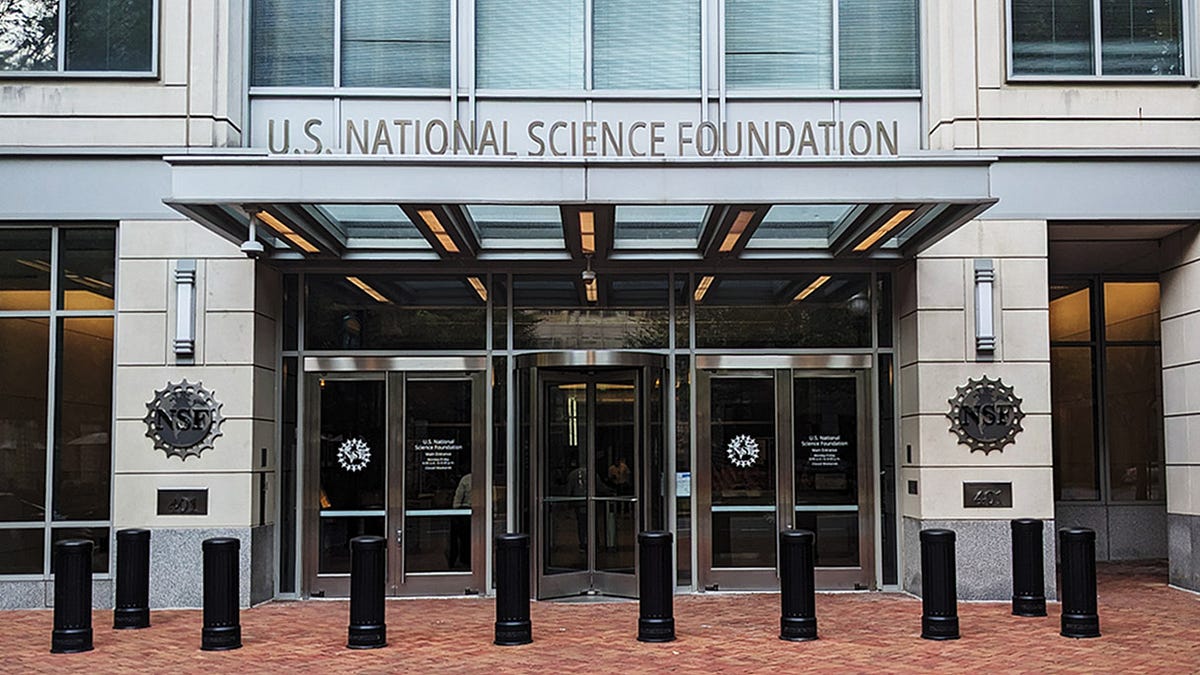
NSF, the main US basic research funder, has issued a 10-page memo steering money toward priorities such as the $1.5bn X-Labs program. Former UK research council chief John Womersley told Times Higher Education it may embolden UK supporters of directed funding.
The Scientist · Science desk
What happened
- X-Labs predates the memo and is aimed at developing new organisations to tackle technological challenges in artificial intelligence and quantum.
- On 4 October the UK joined Germany, Italy and Japan in backing a document called the Kyoto vision for a golden age of science. It condenses the US plan to experiment with new ways of organising research in the AI era.
- Last week NSF and UKRI pledged to collaborate on metascience, including improving funding and measuring productivity and impact, citing similarities between the memo and UKRI's 2026-31 strategy.
- UKRI's budget has been reorganised under chief executive Ian Chapman into areas for government and societal priorities, for helping companies grow, and for basic research.
Why it matters
- constraint Because X-Labs's $1.5bn predates the memo, it cannot stand in for the size of the shift, and the article gives no total for the money the memo redirects.
- contradiction Womersley expects US precedent to encourage UK advocates and Flanagan says the UK needs none, so influence is a forecast that a named academic disputes.
- exposure Universities are the group Neal Lane sees losing out: he expects the money to be directed toward markets and away from them, though that is a former NSF director's forecast.
John Womersley, a former adviser to the US Department of Energy and former chief executive of the Science and Facilities Council, argues from resemblance [9]. "We're seeing the exact same questioning of the way it has always been done in UK Research and Innovation," he said [10]. The shared thread, he told THE, is "the idea that some of the research funding ought to be tied to priorities that are endogenous to the research system and not just coming up from individual researcher's curiosity" [11].
He also splits the US programme in two. One half is what he called an "ideologically driven attack", in which hundreds of grants have been slashed [12]. The other half, he said, is a pragmatic approach that a government of a different ideology could also implement and support [13]. His example is an initiative like X-Labs, the vehicle NSF says it will use to channel more funding to administration priorities [2].
Keiron Flanagan, professor of science and technology policy at the University of Manchester, does not accept the influence argument [14]. "The UK has long been an international outlier in the extent of its concentration on basic research, and it doesn't need any US precedent to justify making a correction," he told THE [7]. His worry is execution: how to do more publicly funded applied research without damaging the capacity of the UK research base [8]. In our view, with the UKRI budget already divided into priority and basic areas [6], the live UK question is proportion. That holds only while the split stays as THE describes it.
Neal Lane, NSF director from 1993 to 1998, is far more critical, and more sweeping. He expects the move toward government-directed research "to continue in the US, UK and Europe" [15]. He puts AI behind it: a "huge unknown" that "is very likely to determine what research gets done and how" [16]. On security, he said "it is not clear how new security concerns require research investments", though he has admitted that "cybersecurity, AI and quantum may be exceptions" [18].
The thing this doesn't tell you is whether directed funding produces better research than investigator-led grants. All three views are forecasts or judgements, and all of them come from one THE report. The one item built to generate evidence on funding and productivity is the metascience collaboration, which NSF and UKRI announced last week [5].
What to watch
- Whether the NSF-UKRI metascience work produces any measurement of productivity or impact that compares directed funding with investigator-led grants.
- Whether NSF puts a dollar figure on the money the memo redirects, beyond the pre-existing $1.5bn X-Labs program.
- Whether UKRI changes the share of its budget going to basic research versus government and company-facing priorities.
Clarity's read
What the record supports and how the coverage leans. The claims behind it follow.
Reality
- Evidence40
- Adoption
- Insufficient
- Hype gap+10
- Incentives
- Insufficient
- Confidence45
Claim ledger
Ranked by verification strength, evidence, and original report placement.
- [1]
The National Science Foundation (NSF) has issued a 10-page memo signalling a shift away from its traditional role in giving grants to individual researchers, often in universities.
- [2]
The NSF will instead channel more funding to the Trump administration's research priority areas through initiatives such as X-Labs.
- [3]
X-Labs is a $1.5 billion pre-existing initiative focused on developing new organisations to tackle technological challenges in artificial intelligence and quantum.
- [4]
On 4 October, the UK joined countries including Germany, Italy and Japan in support of the 'Kyoto vision for a golden age of science', a document distilling the US plan to experiment with new ways of organising research for the age of AI.
- [5]
Last week the NSF and UKRI announced they have pledged to collaborate on metascience, including improving funding and measuring productivity and impact, citing similarities between the memo and the UK agency's 2026-31 strategy.
- [6]
UKRI's budget has been reorganised under chief executive Ian Chapman into areas supporting government and societal priorities and supporting companies to grow, as well as funding basic research.
- [7]
Flanagan told THE: "The UK has long been an international outlier in the extent of its concentration on basic research, and it doesn't need any US precedent to justify making a correction."
- [8]
For Flanagan, the UK's challenge is not whether it is right or wrong to do more publicly funded applied research but how to achieve that while avoiding damage to the capacity of the UK research base.
- [9]
John Womersley, a former adviser to the US Department of Energy and former chief executive of the Science and Facilities Council (part of UKRI), told THE the US shift could influence UK supporters of directing most resources towards government priorities.
ReportedContestedSource: Times Higher Education, quoting John Womersley2 sources— create a free account to open themView cited source - [10]
Womersley said: "We're seeing the exact same questioning of the way it has always been done in UK Research and Innovation."
ReportedContestedSource: John Womersley, to Times Higher Education2 sources— create a free account to open themView cited source - [11]
Womersley described the similar thread as "the idea that some of the research funding ought to be tied to priorities that are endogenous to the research system and not just coming up from individual researcher's curiosity".
ReportedContestedSource: John Womersley, to Times Higher Education2 sources— create a free account to open themView cited source - [12]
Womersley said a key difference is the Trump administration's "ideologically driven attack" at the NSF, where hundreds of grants have been slashed.
ReportedContestedSource: John Womersley, to Times Higher Education2 sources— create a free account to open themView cited source - [13]
Womersley said "there's a pragmatic approach that even a government with a different ideological flavour could well be implement[ing] and supporting", such as establishing initiatives similar to X-Labs.
ReportedContestedSource: John Womersley, to Times Higher Education2 sources— create a free account to open themView cited source - [14]
Keiron Flanagan, professor of science and technology policy at the University of Manchester, disagreed with Womersley that the US shift could influence officials at UKRI.
ReportedContestedSource: Times Higher Education2 sources— create a free account to open themView cited source - [15]
Neal Lane, NSF director from 1993 to 1998, said he expects the trend towards funding government-directed research "to continue in the US, UK and Europe".
- [16]
Lane sees the trend as driven by AI, which he called "a huge unknown" but said "is very likely to determine what research gets done and how".
- [17]
Given the huge amount of money involved, Lane expects the funding "to be directed toward markets" and away from universities.
- [18]
Lane said "it is not clear how new security concerns require research investments", although he has admitted that "cybersecurity, AI and quantum may be exceptions".
Sources
1 independent publisher whose own reporting we read for this story.
- Will US’ shift away from university-based research catch on?
timeshighereducation.com
1 article · October 11, 2026
Topics and entities
Follow any of these and your For You feed starts watching them — no settings page required.