BuildNot yet confirmed elsewhere1 publisher3 min readPublished
Price forecasters call a DRAM peak in 2027 while chipmakers say supply stays short through 2028
Tom's Hardware data cited by dev.to puts a 64GB DDR5 kit at $1,118 in August 2026, up 485% from $191 a year earlier. Chipmakers say supply stays tight into 2028, but Citi expects prices to peak in Q2 2027.
The Engineer · Build desk
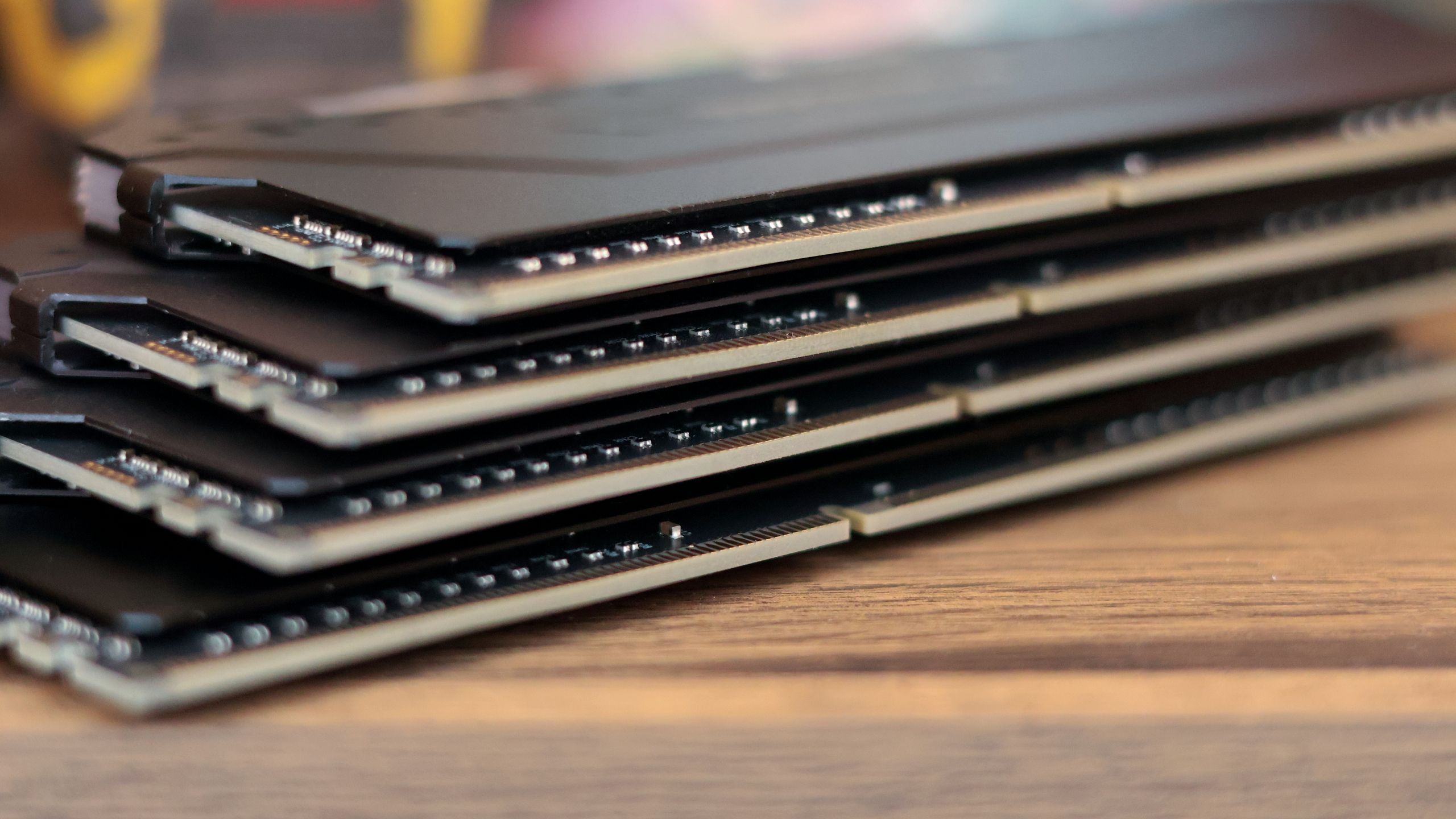
Three key figures: a 64GB DDR5 kit averaged $1,118, up from $191 in August 2025, a rise of about 485%; a single DDR4 8-gigabit chip hit a record $42.50 spot price on August 10, 2026, an all-time high for that chip class.
| Figure | Value | Note | Claim |
|---|---|---|---|
| 64GB DDR5 kit average price | 1,118 $ | up from $191 in August 2025 | 1 |
| Rise in 64GB DDR5 kit average | 485% | approximate | 16 |
| DDR4 8Gb chip record spot price | 42.5 $ | August 10, 2026 | 5 |
What happened
- TrendForce recorded DRAM contract prices up 90 to 95% quarter over quarter in Q1 2026, then 13 to 18% by Q3, so prices are still rising but more slowly.
- Micron announced in December 2025 that it was exiting its Crucial consumer business, and Crucial shipments stopped at the end of February 2026.
- Used DDR4 modules in China reportedly fell more than 30% from their early-2026 peak by July, yet still cost five to six times what they did a year earlier.
Why it matters
- contradiction Citi's Q2 2027 price peak and SK hynix's supply gap beyond 2030 describe different quantities, so a purchase plan cannot treat them as one forecast.
- constraint The $191-to-$1,118 series is a retail kit price. A team buying on contract has to check the contract series before reusing the multiplier.
- cost A memory line budgeted at August 2025 prices now buys about 17% as many 64GB kits.
The squeeze starts at the fab. According to the dev.to post, High Bandwidth Memory uses far more wafer capacity per bit than ordinary DDR5 because of the extra cost of making and packaging it [3]. When Samsung, SK hynix or Micron sell an HBM stack to an AI data center, standard PC memory slips further back in line for the same fabrication capacity [4]. That allocation explains why a standard most of the industry had written off still set a record: a single DDR4 8-gigabit chip hit a $42.50 spot price on August 10, 2026, per TrendForce DRAMeXchange data [5]. Being declared dead has not made DDR4 cheap.
The headline kit number comes from the retail channel. The post's other examples are the same kind of part: a 32GB DDR5-6000 kit that sold for under $90 in early 2025 now lists between $409 and $529 [7]. J.P. Morgan Research uses a longer window: it estimates that by the end of 2026, DRAM prices will be up more than 400% on where they stood at the start of 2024 [2]. For those multipliers to transfer to your budget, you would have to be buying retail-channel kits at spot. A team buying under supply contracts will, we'd expect, track the contract series, where the quarterly increase has already slowed sharply. The post does not report a server-memory price.
The post says the people who make the chips expect it to get worse before it gets better [15]. Their own words are blunt. Sumit Sadana, Micron's Chief Business Officer, said "AI-driven growth in the data center has led to a surge in demand for memory and storage" [9]. Micron now expects conditions in calendar 2027 and 2028 to be much tighter than they were in 2026 [10]. Samsung told investors the shortage will persist through 2028 [11]. SK hynix's CEO went furthest, saying 2027 will be the worst year in the industry's history from a supply perspective, with demand exceeding supply "even beyond 2030" [12].
The price forecasters give earlier dates. Citi expects DRAM and NAND prices to peak in Q2 2027 [19]. The post compiled its forecast summary from twenty public predictions tracked by BuySellRam.com [20]. Both camps can be right, because a price peak means the rate of increase stops and says nothing about whether supply has caught up. In our view the "worse before better" claim is supported for supply by the makers' statements and is unproven for price.
For a purchase plan, that leaves a narrower conclusion than the headline suggests. Neither forecaster has prices falling soon: Gartner says they may stabilize by early 2027 [18], and Citi says they peak in Q2 2027 [19]. We'd buy the capacity a project needs inside that window and treat anything later as unpriced, since the makers' dates run to 2028 and one runs past 2030. If a platform accepts either type, DDR4 is cheaper per gigabyte at $6 to $10, against $9 to $16 for DDR5 [13], from a market whose chip spot price just set a record [5].
What to watch
- Whether TrendForce's contract-price growth keeps slowing from the 13 to 18% quarterly pace recorded for Q3 2026, or turns up again.
- Whether Gartner's early-2027 stabilization call and Citi's Q2 2027 peak call hold as 2027 contract quarters report.
- Whether the reported 30% drop in used DDR4 prices in China shows up in the retail trackers for new DDR4 kits.
Clarity's read
What the record supports and how the coverage leans. The claims behind it follow.
Reality
- Evidence55
- Adoption
- Insufficient
- Hype gap+15
- Incentives
- Insufficient
- Confidence55
Claim ledger
Ranked by verification strength, evidence, and original report placement.
- [1]
A 64GB DDR5 kit averaged $191 in August 2025 and averaged $1,118 a year later, according to Tom's Hardware.
- [2]
J.P. Morgan Research estimates that DRAM prices will have risen more than 400% from the start of 2024 to the end of 2026.
- [3]
High Bandwidth Memory, the stacked memory packaged next to AI accelerators, uses far more wafer capacity per bit than ordinary DDR5 because of its manufacturing and packaging overhead.
- [4]
Every HBM stack Samsung, SK hynix or Micron sells to an AI data center pushes ordinary PC memory down the queue for the same fabrication capacity.
- [5]
A single DDR4 8-gigabit chip hit a record $42.50 spot price on August 10, 2026, an all-time high for that chip class, per TrendForce DRAMeXchange data via Capital and Compute.
ReportedSupportedSource: TrendForce DRAMeXchange data via Capital and Compute, as cited in the dev.to postView cited source - [6]
TrendForce recorded DRAM contract prices up 90 to 95% quarter over quarter in Q1 2026, cooling to 13 to 18% by Q3, still rising.
- [7]
A 32GB DDR5-6000 retail kit that sold for under $90 in early 2025 now sits between $409 and $529.
ReportedSupportedSource: Tom's Hardware and Shattered.io trackers, as cited in the dev.to postView cited source - [8]
In December 2025 Micron announced it is exiting its Crucial consumer business, ending 29 years of selling RAM and SSDs to PC builders; shipments stopped at the end of February 2026.
- [9]
Sumit Sadana, Micron's Chief Business Officer, said: "The AI-driven growth in the data center has led to a surge in demand for memory and storage".
- [10]
Micron now expects conditions to be "much tighter in calendar 2027 and 2028 than they were in 2026" and sees no line of sight to balance.
- [11]
Samsung told investors the memory shortage will persist through 2028.
- [12]
SK hynix's CEO said 2027 will be "the worst year in the industry's history from the supply perspective," and that demand will exceed supply "even beyond 2030."
- [13]
Current price trackers show DDR4 around $6 to $10 per gigabyte versus $9 to $16 for DDR5, so DDR4 remains the cheaper path per gigabyte.
- [14]
Used DDR4 modules in China reportedly fell over 30% from their early-2026 peak by July, but still cost five to six times what they did a year earlier.
- [15]
The post says the people who make the chips say the shortage gets worse before it gets better.
- [16]
The 64GB DDR5 kit average rose about 485% from $191 to $1,118.
- [17]
A budget set at August 2025 prices buys about 17% as many 64GB DDR5 kits at August 2026 prices.
- [18]
Gartner suggested in March 2026 that DRAM prices may stabilize by early 2027.
ReportedContestedSource: Gartner, as cited in the dev.to post2 sources— create a free account to open themView cited source - [19]
Citi expects DRAM and NAND prices to peak in Q2 2027.
ReportedContestedSource: Citi, as cited in the dev.to post2 sources— create a free account to open themView cited source - [20]
The post's forecast summary is compiled from twenty public predictions tracked by BuySellRam.com.
- [21]
Up to 70% of memory produced in 2026 is expected to go to data center customers, according to industry reports.
Sources
1 independent publisher whose own reporting we read for this story.
- dev.toRAM Prices Are Insane Right Now: DDR4 vs DDR5 and When to Buy
1 article · October 11, 2026
Topics and entities
Follow any of these and your For You feed starts watching them — no settings page required.
Topics
- PC hardware buyingFollow
- Semiconductor Supply ChainFollow
- AI Data Center DemandFollow
- DRAM memory pricingFollow