Build2 publishers3 min readPublished
Sustained transcription on the iPhone 18 Pro settles about 28% below its peak
Matt Birchler's iPhone 18 Pro transcription test peaked at 447.9 words per second, then held just over 320 from the seventh run on. Only cooling from outside the phone lifted the sustained rate, so long on-device inference jobs should be sized to the lower number.
The Engineer · Build desk
What happened
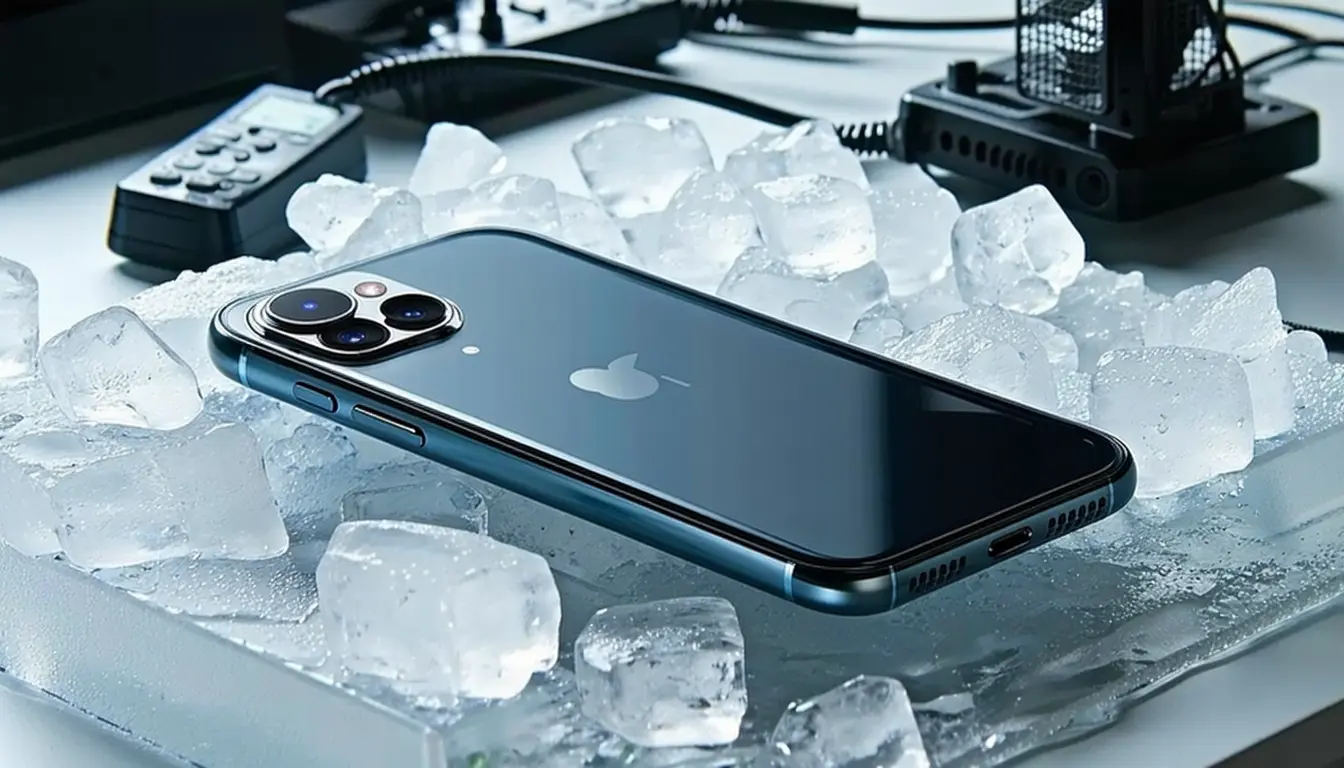
- With an ice-cold can of La Croix on its back, the phone averaged 400.4 words per second over 20 runs, after a first run of 429.5.
- Tom's Hardware credits the can with about 25% higher sustained performance, with the phone lying face down for the whole heavy load.
- According to mezha.net, the phone lowers the A20 Pro's clock frequency as it heats up so its components do not overheat.
- Birchler, a developer, ran the cooled test after noticing persistent thermal throttling in his other benchmarks of the phone.
Compiled by The EngineerSomething wrong?How this is made
Why it matters
- decision Throughput budgets for long on-device transcription jobs belong at about 71% of the peak figure, the rate this phone held once warm.
- constraint The only demonstrated fix is cooling from outside with the phone face down, so any recovered speed depends on the user's physical setup.
- cost Users who want the cooled numbers pay for them in accessory weight and shorter battery life, according to Tom's Hardware.
The plateau is about 71% of the peak [1]. Put as a loss, the uncooled phone gave up roughly 28% of its best transcription throughput [2]. It reached that level within the first six runs and stayed there for the last 14 [3].
Thermal management explains the drop. According to mezha.net, the system lowers the chip's frequency and caps performance to keep components from overheating [9]. Tom's Hardware calls a late-run slowdown normal for nearly every portable device [10]. Birchler described what he saw mildly. "I did some benchmarking today and saw how the newest iPhone thermal throttles, which isn't severe, but does happen," he said [7].
Birchler's follow-up was well designed. He changed one variable, the temperature at the back of the phone, and ran another 20-run session [4]. The cooling rig came out of his fridge [4]. "I know from experience that if you put a cold beverage on the back of your phone, it will cool down really quick, so I thought...the test is obvious," he said [8].
Cooling slowed the decline but did not restore the peak. The cooled phone's first run, 429.5 words per second, came in about 4% under the uncooled best [5][7]. Its 20-run average of 400.4 sat about 11% below that best [4]. According to mezha.net, the can kept the phone cooler for longer and throttling happened much less often [11].
The 25% gain Tom's Hardware reports matches 400.4 divided by 320 [6][5]. Those figures measure different things. The first is a mean over all 20 cooled runs, its 429.5 opening run included [5]. The second is the uncooled plateau from run seven onward [3]. Over all 20 runs, the uncooled mean has to sit above 320, because the runs before the plateau were faster. An average-to-average gain would therefore come in under 25% [6].
Birchler's evidence is a single 20-run session on one phone running one transcription workload [1][4]. The reports do not give the uncooled 20-run mean, the ambient temperature, the length of a run or the model behind the test. For the curve to carry over to an app, the app's load has to run about as long as this session and work the chip the way this benchmark does. A job that finishes before the equivalent of run seven would see speeds nearer the peak [3].
For sustained on-device inference, I would size features to the plateau [1]. The only demonstrated way above it put the phone face down with a cold can on its back [6]. Clip-on coolers exist, and Tom's Hardware says they add performance at the cost of weight and battery life [14]. mezha.net reports that Apple presented the phone with improved cooling [13]. The same outlet judges that the phone's compact cooling system is not built to hold peak speed through long loads [12].
What to watch
- An uncooled 20-run average from Birchler, which would give a like-for-like figure for the cooling gain.
- Repeat runs on other iPhone 18 Pro units at a stated ambient temperature, showing whether the 320 plateau holds beyond one phone and one session.
- Any Apple statement on the improved cooling mezha.net says the phone ships with, and whether it names a sustained-performance figure.