Science1 publisher3 min readPublished
Warming aggravated by El Niño drives tuna and anchovy from Latin America's Pacific coast
Jonathan Cedeno's Guayaquil survey found water off Ecuador up to 6°C warmer at 40 meters over ten weeks, as fishers along the Pacific coast land less. Surface water warmed 2.5 to 3°C, and so far the damage is recorded in skippers' own accounts from four countries, with El Niño's peak still ahead.
The Scientist · Science desk
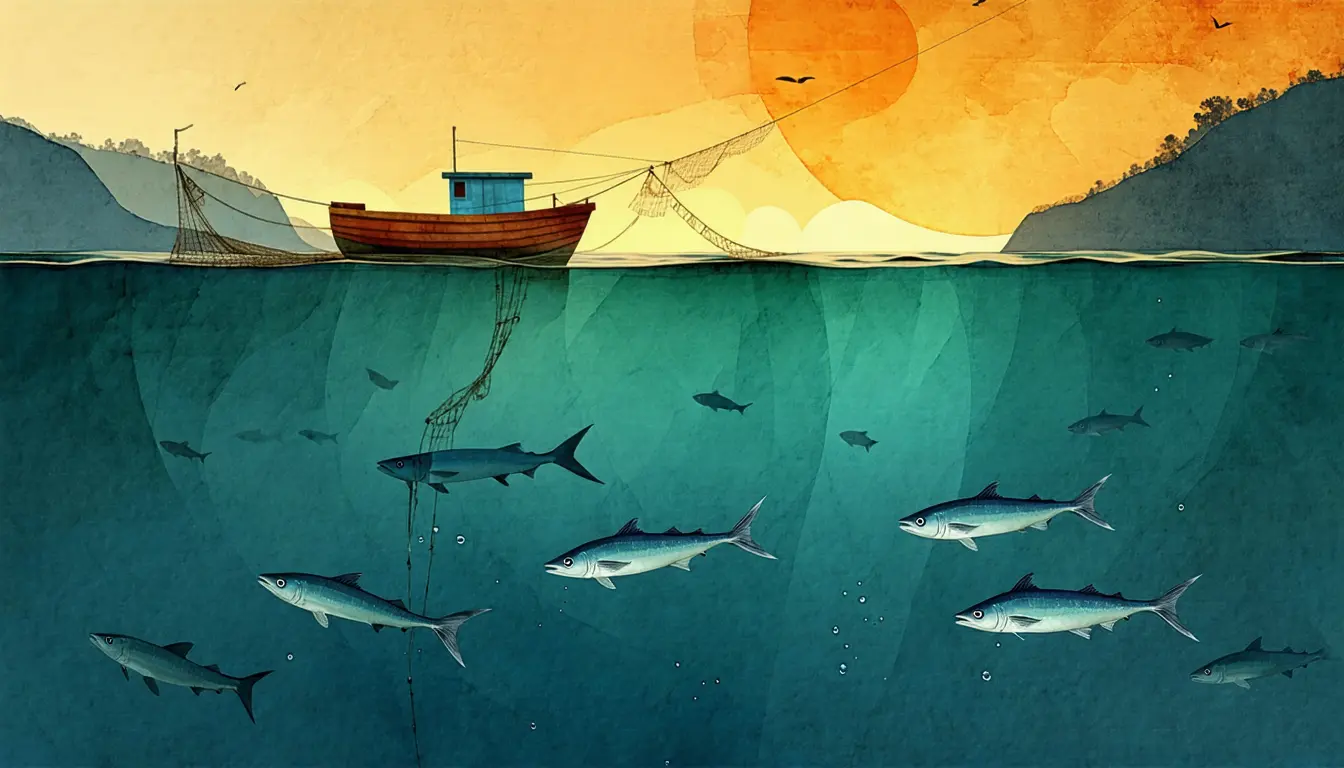
What happened
- Hundreds of idle fishing boats are crammed into the small port of Santa Rosa in southwestern Ecuador.
- Some Panama City fishermen have stopped going out, and the head of Panama's artisanal fishermen's union says they cannot keep losing money.
- In Ecuador, the world's second-largest tuna producer after Thailand, the industry says mahi-mahi and swordfish prices have doubled.
- In Peru, the world's biggest anchovy catcher, fishermen are turning to construction work to feed their families.
- The same El Niño is already causing drought in Central America that is endangering animals and stunting crops.
Compiled by The ScientistSomething wrong?How this is made
Why it matters
- contradiction AFP's lead calls the coast's water up to 6°C above normal, but Cedeno's figure is a ten-week rise measured 40 meters down, so it cannot stand in for a coast-wide surface anomaly.
- cost Crews and vendors are paying for the shortage before consumers do: a Panamanian trip can leave $12.50 a worker after fuel, while Panama's fish prices have barely moved.
- exposure Small-scale Guatemalan boats face the shortfall without the state support commercial fisheries get, and they face it with the event's peak forecast for later this year.
AFP's report puts the coastal sea at "up to 6 degrees Celsius above normal" [2]. The measurement behind that figure is narrower [6]. Jonathan Cedeno, the oceanographer who led a mission from Guayaquil's Polytechnic University, said average temperatures off Ecuador rose by 2.5 to 3°C at the surface and by up to 6°C at a depth of 40 meters over the past 10 weeks [6]. The rise at 40 meters is two to 2.4 times the rise at the surface [3]. A ten-week rise measures change from wherever the water started. "Above normal" compares the water with the usual temperature for the season.
I think the surface figure is the safer one to quote for the region. The 6°C is a subsurface maximum from one survey, off one country [6].
AFP attributes the fish movement to ocean warming "aggravated by El Niño" [1]. The ocean El Niño is adding to was already at record warmth [8]. The EU's Copernicus observatory put August's average sea surface temperature, excluding polar regions, at 21.07°C, tying March 2024 as the hottest on record [8]. The report does not separate how much of the warming off Ecuador comes from El Niño and how much from that background.
The evidence of damage to the fisheries comes from interviews with skippers and vendors, and their accounts agree. "The water is warm," Juan Ollague told AFP in Santa Rosa, Ecuador [4]. A night at sea had brought him six small tuna [5]. In Iztapa, Guatemala, Eliseo Ovando said it now takes three days to catch what he used to land in one [12]. That puts his catch per day at about a third of what it was [2].
On Panama's Pacific coast, Rigoberto Gonzalez said he has to sail farther from shore, spending more on food, ice and fuel [10]. "We go out with $100 worth of gas, and when we come back, we earn $150," he said [9]. AFP reports that the earnings are divided among four workers [9]. If what is left after fuel is split four ways, each man clears $12.50 before food and ice [1]. At the Panama City wholesale market, vendor Carlos Nieto said he spends about $600 a month on ice, "practically a whole salary" [15]. Panama's vendors have not yet passed those costs on to customers as significantly higher prices [16].
Ovando said only commercial fisheries receive government assistance to ride out the shortages [12]. "The big fish eat the little ones," he said [13]. Back in Santa Rosa, Francisco Orlando, who fillets fish for a living, said he is hoping the boats come back with a catch [18]. "If they do, we work. If they don't, we don't," he said [18].
What to watch
- Copernicus monthly sea surface readings for September and October, which will show whether August's tied record is broken as El Niño moves toward its forecast peak.
- Official landing statistics from Ecuador and Peru, which would test whether the interview accounts of thinning catches hold across whole fleets.
- Whether Panama's fish vendors start passing ice and supply costs on to customers, as Ecuador's industry says has already happened for mahi-mahi and swordfish.