Science1 publisherNot yet confirmed elsewhere2 min readPublished
JPL-led study puts Earth's seasonal centre-of-mass swing at half the earlier estimate
JPL-led researchers estimate Earth's centre of mass swings back and forth each year about half as far as scientists believed eight years ago. That centre anchors satellite navigation and elevation measurements, so the size of its seasonal motion feeds into positions measured from orbit.
The Scientist · Science desk
Drafted by a language model from the sources cited here and checked against its claim ledger before publication. How we use AISend a correction
What happened
- The two most recent international estimates of the centre's seasonal motion, produced in 2017 and 2023, differ from each other by 7 millimetres.
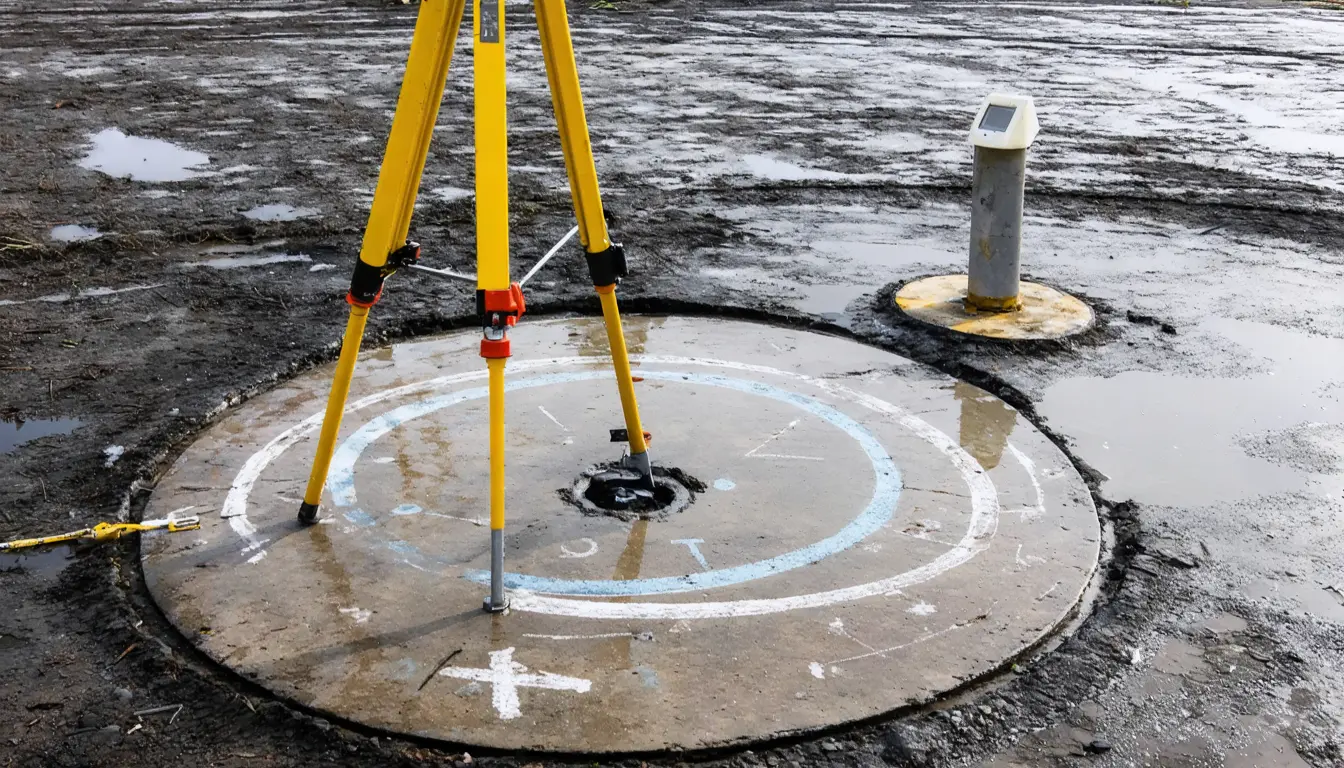
- The core tracking comes from LAGEOS 1 and 2, 408-kilogram satellites covered in reflective prisms, launched in 1976 and 1992 and ranged by lasers from stations in more than 20 countries.
- The new method adds GPS tracking and orbit data from several low-Earth-orbit satellites to the laser ranges, and models how seasonal water and ice loads bend the crust under the stations.
- Donald Argus of JPL led the work with JPL's orbit team and researchers at Nevada, Montana and Germany's Helmholtz Centre for Geosciences, publishing in Geophysical Journal International.
Compiled by The ScientistSomething wrong?How this is made
Why it matters
- constraint If the smaller swing holds, it caps how much water and air can be moving between the hemispheres each season, and seasonal mass-budget estimates would have to fit under that cap.
- decision Anyone tying satellite positions or surface heights to the centre of mass now has to choose between the existing international figures and a JPL value about half the older belief.
- capability Where laser stations happen to sit now weighs less on where the centre is placed, because GPS and low-orbit satellites fill in the tracking geometry.
Satellites orbit Earth's centre of mass, because gravity holds them around it [8]. When that centre moves, the distances between orbiting satellites and tracking stations on the ground change by minute amounts, and those changes are the signal [8]. Over the seasons the centre circles the planet's geometric centre by up to several millimetres [4], pushed by melting snow, moving ocean water and dense winter air [17].
The weak point in the older approach was on the ground. The laser stations are not spread evenly around the globe [11], so the network sees the centre from a lopsided set of positions. The stations also move, because the seasonal weight of water and ice bends the crust beneath them [12]. A station that sinks slightly under a winter load changes its distance to a satellite for reasons unrelated to the centre of mass. An analysis that ignores the load can count crustal motion as centre-of-mass motion [12].
The JPL additions map onto those two problems [13]. GPS and low-orbit tracking reduce the reliance on two laser spheres, the older of which has been in orbit for 50 years [18]. The loading model handles the second problem [12]. I think the loading model is the more important of the two, because it is the step that separates a moving station from a moving centre.
The answer comes out smaller. "We're now estimating the size of the movement of Earth's mass center back and forth each year to be about half of what we believed it to be eight years ago," Argus said [1].
The thing this doesn't tell you is the new amplitude in millimetres, or its error bar; the NASA release reports the result only as a fraction of the earlier belief [1]. That matters here. The release describes the spread between the 2017 and 2023 international estimates as nearly as large as the motion being measured [6]. A halved estimate settles the question only if its own uncertainty sits well inside that spread.
Argus also drew a physical conclusion. "Our findings suggest that the mass of Earth's water and air moving between the hemispheres is smaller than previously thought," he said [2].
Felix Landerer, a JPL coauthor, said that "while these movements might appear tiny, our modern world relies on extremely accurate positioning measurements" [15].
In my view the design is sound against the two biases the release names, uneven station coverage and stations that ride up and down with the seasonal load [11][12]. So far it is one study's better-argued estimate of a single input to the reference frame [7].
What to watch
- Whether the next international estimate of Earth's centre-of-mass motion moves toward JPL's smaller seasonal amplitude.
- Independent seasonal water and air mass budgets that confirm or contradict a smaller transfer between the hemispheres.
- Reanalysis by other orbit-determination groups combining laser, GPS and low-orbit tracking with a crustal-loading model.