Product2 publishers2 min readPublished
Apple swaps the iPhone 18 Pro's fixed aperture for four settings behind a six-dot button
MacRumors puts the iPhone 18 Pro main camera's range at f/1.48 to f/4.0 in four steps, with manual selection three taps deep and only the widest of those steps gathering more light than last year's fixed f/1.78.
The Product Desk · Product desk
What happened
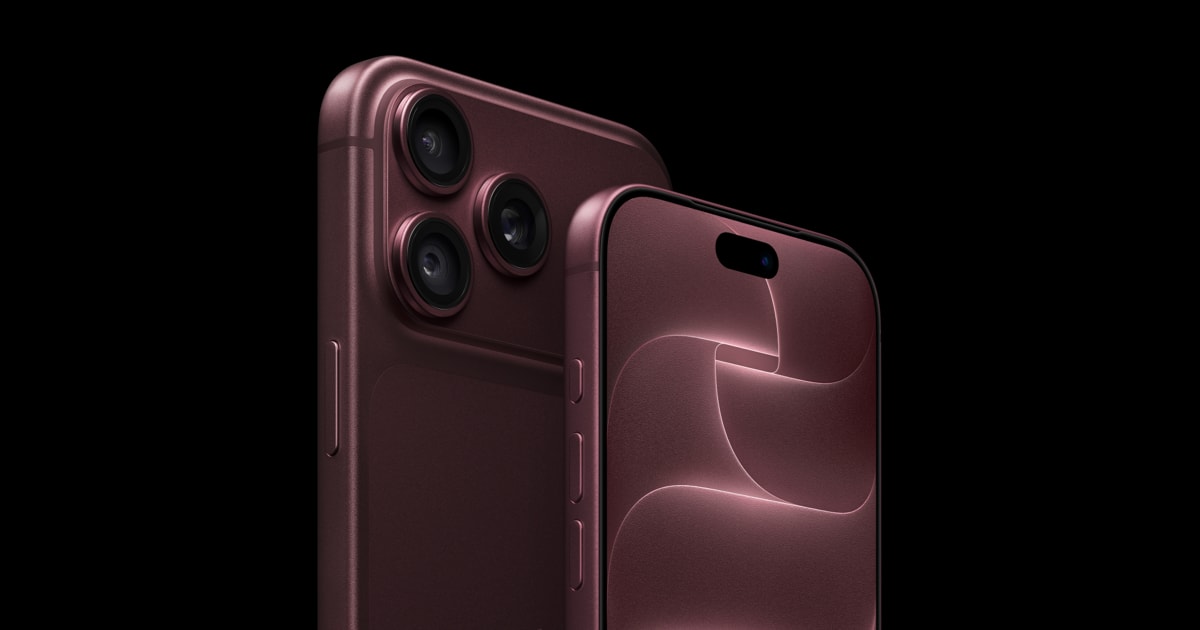
- Apple's iPhone 18 Pro and 18 Pro Max replace the main camera's fixed f/1.78 aperture with a variable one that MacRumors lists as running from f/1.48 to f/4.0.
- The rest of the rear camera set carries over from the iPhone 17 Pro: three 48MP lenses at the same focal lengths and resolutions, including the 8x telephoto.
- MacRumors puts the low-light gain at around 50 percent and says the phone gives photographers optical control over depth of field that no earlier iPhone offered.
- Manual selection sits behind the six-dot button at the bottom right of the Camera app, in a Lens Aperture pane with four circles and an Auto button on the left.
Compiled by The Product DeskSomething wrong?How this is made
Why it matters
- constraint The setting that keeps a whole group or a flat document in focus is also the darkest one, so buying depth of field at f/4.0 hands back the long shutter and Night Mode that the wider apertures were meant to avoid.
- decision Anyone producing a consistent set of images now has to choose between the phone's per-shot judgement and setting the aperture by hand at the start of every session.
- capability A shot list can name an aperture and the operator can honour it on the main camera; on the fixed-f/1.78 models there was no such control to set.
Light reaching the sensor scales with the square of the f-number, so the four positions MacRumors lists are not evenly spaced. f/1.48 to f/1.8 is about 0.6 of a stop. f/1.8 to f/2.8 is about 1.3 stops, and f/2.8 to f/4.0 about another stop [12]. End to end the lens covers roughly 7.3 times as much light, about 2.9 stops [11]. MacRumors calls it a four-stop variable aperture [2]; four is the count of positions.
The 50 percent low-light figure MacRumors cites [3] belongs to the wide end. Against last year's fixed f/1.78, f/1.48 takes in about 45 percent more light: 1.78 squared over 1.48 squared is 1.45 [9]. Stop the same camera down to f/4.0 and it gets about a fifth of what the fixed lens got, roughly 2.3 stops darker [10]. MacRumors' own explanation of why variable aperture helps is that a starved sensor forces a longer shutter or Night Mode, and blur follows [8].
So the deep-focus shot is the one that needs a brighter room. At f/4.0 more of the scene stays in focus and less light arrives. MacRumors suggests that setting for landscapes and group shots [7].
The people this changes are the ones shooting to a spec: a listing photo where the far wall has to be sharp, a parts image where the whole object sits in focus. For them, Auto is the problem. MacRumors describes the automatic mode as letting more or less light in depending on the shot [6], so depth of field can differ between frame four and frame five of the same set. Pinning a value by hand costs three taps, and handing control back costs one tap on Auto [13].
The walkthrough covers Apple's Camera app and does not address third-party capture apps [14]. It documents a manual control in Apple's own app, sitting under a pane called Lens Aperture [5].
The line that matters runs between shots where the plane of focus carries information and shots where it only looks nice. Where it carries information, the aperture is a hand setting and the scene has to be lit for it. Where it is decoration, Auto covers it and the aperture choice does not matter. Each step toward the deep end costs light: about 1.3 stops from f/1.8 to f/2.8, and about another stop to f/4.0 [12].
What to watch
- Whether the chosen aperture is written into image metadata, so a team can check which setting a shot actually used.
- Whether a manual aperture selection survives closing and reopening the Camera app, or resets to Auto.
- Whether Apple adds intermediate positions between f/1.8 and f/2.8, currently the widest gap in the set.