Cutting battery demand would avoid more emissions by 2050 than cleaner production, a Melbourne-led model finds
Melbourne-led modeling in One Earth finds a 20-fold rise in lithium-ion battery demand by 2050 would lift supply-chain emissions tenfold. Cleaner production alone could not contain that growth, the authors found, so they want policy to reach battery size and lifetime.
The Scientist · Science desk
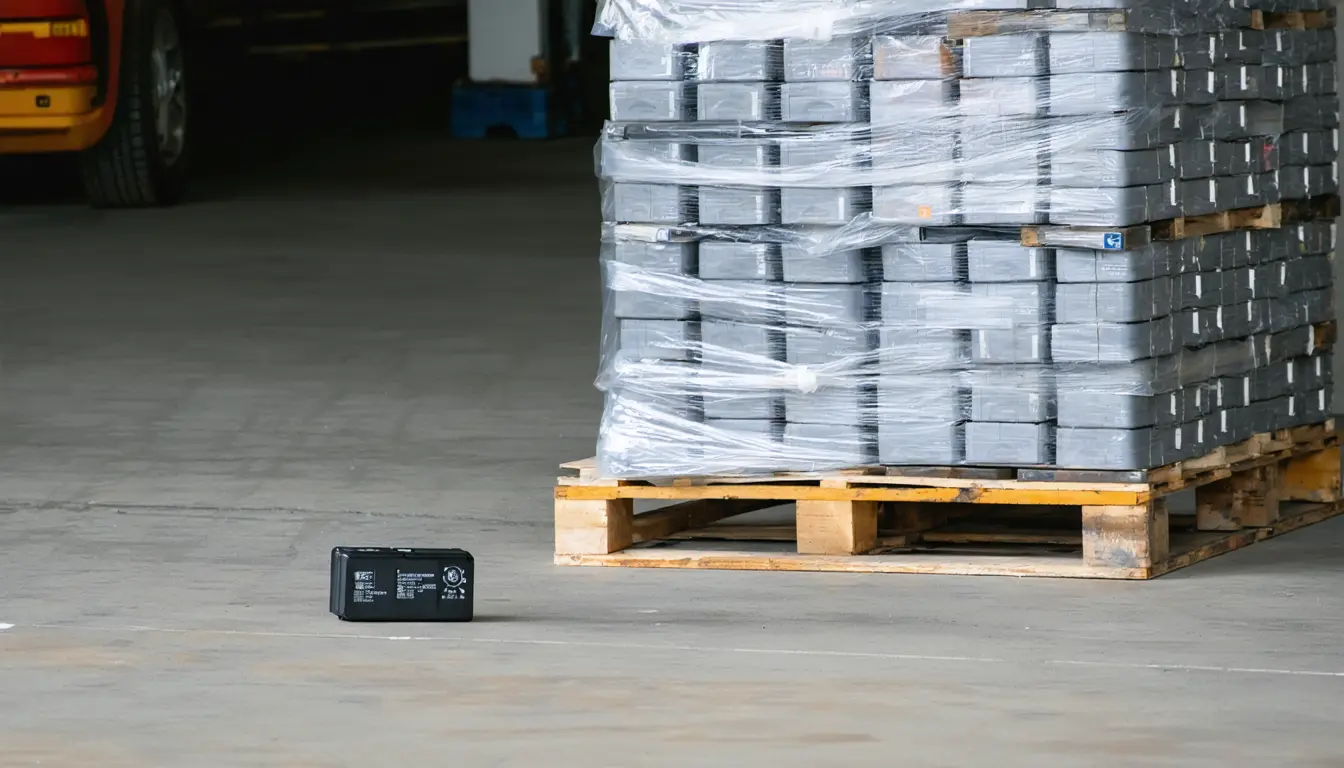
Per Wen Li, demand-side strategies account for around 6 to 7 billion tonnes of mitigation and supply-side measures for around 3.5 to 4.7 billion tonnes. Without the extra measures, the supply chain could emit around 19 to 23 billion tonnes of CO2-equivalent through 2050.
- at least 6 bn t Demand-side strategies' mitigation, around, per Li, claim 5 up to 7 billion tonnes
- at least 3.5 bn t Supply-side measures' mitigation, around, per Li, claim 5 up to 4.7 billion tonnes
- around, at least 19 bn t Emissions through 2050, no added measures, claim 4 up to 23 billion tonnes CO2e
| Figure | Value | Note | Claim |
|---|---|---|---|
| Demand-side strategies' mitigation, around, per Li | 6 bn t, at least | up to 7 billion tonnes | 5 |
| Supply-side measures' mitigation, around, per Li | 3.5 bn t, at least | up to 4.7 billion tonnes | 5 |
| Emissions through 2050, no added measures, around | 19 bn t, at least | up to 23 billion tonnes CO2e | 4 |
What happened
- Without the extra measures tested, Li said, the supply chain could emit around 19 to 23 billion tonnes of CO2-equivalent through 2050, and the combined package cuts that to roughly 9 to 12 billion.
- The model covered battery material production, component production, battery manufacturing and end-of-life treatment, year by year from 2024 through 2050.
- On the demand side, the researchers modeled how many batteries are needed, how large they are, how long they last and how often they are replaced.
- Phys.org's account describes the study, whose authors include researchers at the Chinese Academy of Sciences and the University of Sheffield, as the first to set several demand-side strategies directly against ambitious supply-side efforts.
Why it matters
- What it limits constraint Caps on production emissions reach only the smaller of the two modeled levers, so they cannot deliver the package's savings by themselves.
- Who has to decide decision Fleet and storage buyers who specify pack size and service life are working the lever the model weights most, and have an emissions case for sizing to need.
- What it sets up precedent The team plans to test whether the same supply-versus-demand pattern holds for wind turbines and solar panels; a positive result would extend the argument beyond batteries.
Divide the tenfold rise in emissions by the 20-fold rise in demand and the quotient is 0.5 [16]. If both multiples run from the same starting year, emissions per unit of battery demand roughly halve over the period, and the total still climbs tenfold [1].
The two packages of measures are not equal in size. On the supply side, the team counted switching battery chemistries, greener factories and recovering materials from used batteries, which the study calls essential but not enough [14]. Wen Li, who led the work, put the mitigation from those measures at 3.5 to 4.7 billion tonnes and from demand-side strategies at 6 to 7 billion tonnes [2][5]. Against the baseline with no additional measures, that works out to roughly 26% to 37% for demand-side and 15% to 25% for supply-side, taking the extremes of each range [17][18]. The halving is the two packages together [4].
Li said reducing demand was "another very large mitigation opportunity" [6]. He said supply-side decarbonization remained essential, with cleaner electricity especially important and recycling increasingly valuable [7].
We'd treat the ordering of the two packages as the finding and the tonnages as scenario outputs. The ordering holds against supply-side efforts that the study describes as ambitious and introduced over time [13]. Li compared the reductions to EU emissions: "These are emissions reductions on the scale of the annual emissions of a major global economy such as the EU." [15] Phys.org's account does not say whether that compares a single year or the total to 2050. It also does not give the assumptions behind each lever, or what smaller packs would cost users.
Lead author Haiwei Zhou said the team hopes to improve the model's regional resolution, because mining, refining, electricity and environmental pressures vary greatly between locations [9].
"For policy and industry, battery decarbonization should move beyond regulating production emissions alone," Zhou said [8]. Co-author Prakash Singh, of the University of Melbourne Faculty of Business and Economics, agreed that new policies could help. "Policies can also encourage longer battery lifetimes, appropriate battery sizing, higher utilization and second-life applications," Singh said [11].
What to watch
- Whether the team's higher-resolution regional version changes the supply-side share, since mining, refining and grid electricity differ by location.
- Whether the planned wind turbine and solar panel runs show demand-side measures again outweighing cleaner production.
- Whether any regulator adds battery lifetime, sizing or second-life requirements alongside production-emissions rules.
Clarity's read
What the record supports and how the coverage leans. The claims behind it follow.
Reality
- Evidence50
- Adoption
- Not scored
- Hype gap+15
- Incentives
- Not scored
- Confidence50
Claim ledger
Ranked by verification strength, evidence, and original report placement.
- [1]
By 2050, demand for lithium-ion batteries used in electric cars, vans, buses, trucks and battery energy storage systems could rise 20-fold, leading to a tenfold increase in their supply-chain greenhouse gas emissions, according to the study's modeling.
- [2]
The study, published in One Earth, was led by University of Melbourne associate professor Wen Li, who is the corresponding author.
- [3]
The global supply chain modeling covered battery material production, component production, battery manufacturing and end-of-life treatment from 2024 through 2050.
- [4]
Li said that without the additional measures tested, the global battery supply chain could generate around 19 to 23 billion tonnes of CO2-equivalent emissions through 2050, and that combining ambitious supply- and demand-side strategies cuts this to around 9 to 12 billion tonnes, roughly half.
- [5]
Li said supply-side measures account for around 3.5 to 4.7 billion tonnes of mitigation, while demand-side strategies account for around 6 to 7 billion tonnes.
- [6]
Li said reducing demand was "another very large mitigation opportunity."
- [7]
Li said supply-side decarbonization remained essential, that cleaner electricity was especially important and that recycling was increasingly valuable.
- [8]
Zhou said: "For policy and industry, battery decarbonization should move beyond regulating production emissions alone."
- [9]
Zhou said the team hopes to improve the model's regional resolution, as mining, refining, electricity and environmental pressures vary greatly between locations.
- [10]
Zhou said the team wants to test whether the same supply-versus-demand dynamic appears in other rapidly growing clean-energy supply chains such as wind turbines and solar panels.
- [11]
Co-author Prakash Singh of the University of Melbourne Faculty of Business and Economics agreed that new policies could help. Singh said: "Policies can also encourage longer battery lifetimes, appropriate battery sizing, higher utilization and second-life applications."
- [12]
On the demand side, the researchers modeled how many batteries will be needed, their size, their longevity and their replacement needs through 2050.
- [13]
The study, with researchers from the Chinese Academy of Sciences and the University of Sheffield, was described as one of the first detailed global assessments to examine both supply-side and demand-side factors, and the first to examine several demand-side strategies and directly compare them with ambitious supply-side decarbonization efforts that could be introduced over time.
- [14]
On the supply side, cleaner production, such as switching battery chemistries, greener factories and recovering materials from used batteries, was essential but not enough to mitigate predicted emissions increases through 2050.
- [15]
Li said: "These are emissions reductions on the scale of the annual emissions of a major global economy such as the EU."
- [16]
Dividing the tenfold rise in emissions by the 20-fold rise in demand gives 0.5, so emissions per unit of battery demand roughly halve if both multiples share a starting year.
- [17]
Demand-side mitigation is roughly 26% to 37% of the no-additional-measures baseline, using the extremes of the reported ranges.
- [18]
Supply-side mitigation is roughly 15% to 25% of the no-additional-measures baseline, using the extremes of the reported ranges.
Get this ledger inside ChatGPT. Ask about any of our stories and the answer brings its figure, each claim’s verdict and the sources. Free, no account.
Sources
1 independent publisher whose own reporting we read for this story.
- phys.orgWider approach needed to mitigate rising rechargeable battery emissions
1 article · October 16, 2026
Topics and entities
Follow any of these and your For You feed starts watching them — no settings page required.
Topics
- Battery supply-chain emissionsFollow
- Demand-side decarbonizationFollow
- Lithium-ion batteriesFollow