Czech counter-intelligence chief warns Russia may hit Ukraine's backers harder within months
Czech counter-intelligence chief Michal Kudelka said Russia may escalate against states backing Ukraine within months, not years. He named arms-plant sabotage and drone or missile strikes as the risks, and said a military operation against a NATO state is not an immediate threat.
The Engineer · Build desk
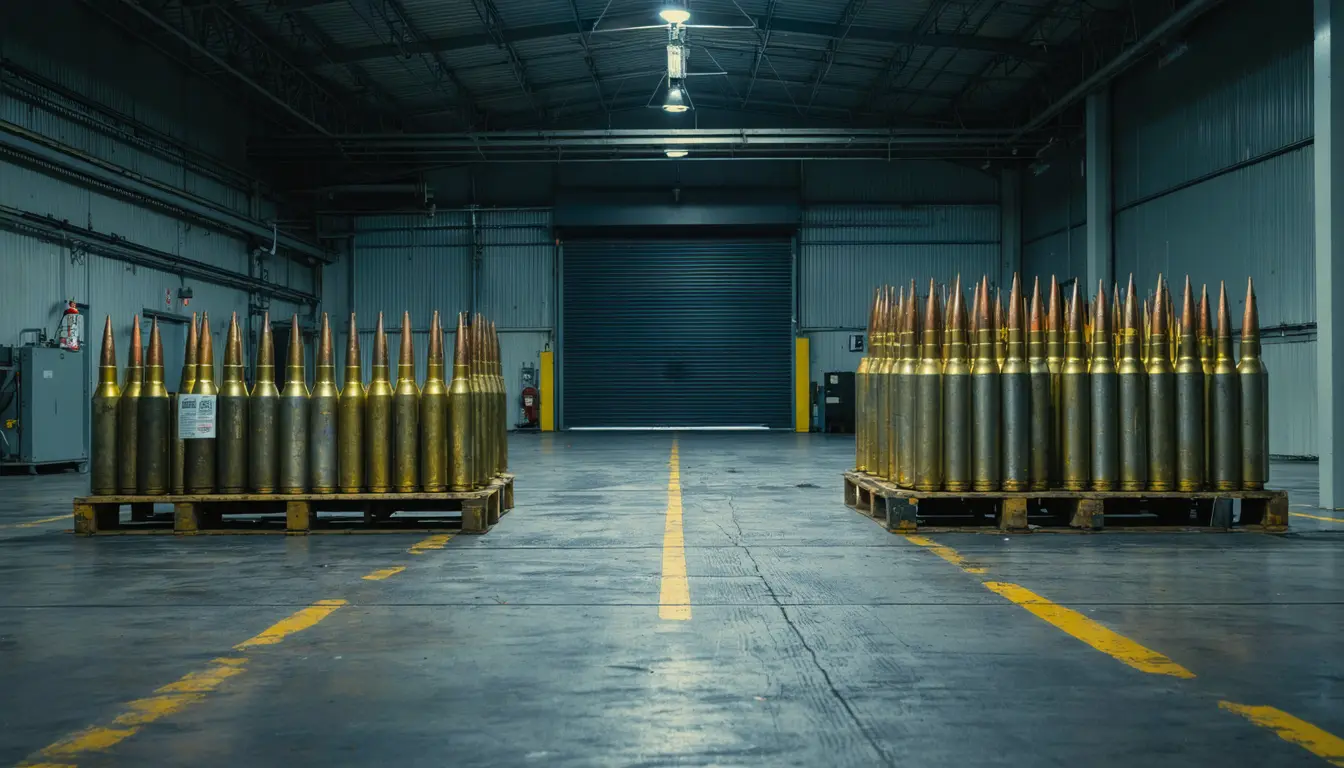
NATO-country makers of weapons for Ukraine face possible sabotage; states that support Ukraine, possible drone or missile strikes on facilities; one NATO country, a possible limited military operation, which Kudelka called not an immediate threat as Russia has concentrated forces on Ukraine.
- exposure NATO arms makers for Ukraine Possible sabotage at military-industry enterprises that produce weapons for Ukraine, claim 5
- exposure States that support Ukraine Possible drone or missile strikes on facilities, claim 5
- exposure One NATO country A possible limited military operation, the third risk Kudelka named, claim 5
- constraint NATO countries A military operation is not an immediate threat, as Russia has concentrated forces on Ukraine, claim 16
| Who | How | Kind | Claim |
|---|---|---|---|
| NATO arms makers for Ukraine | Possible sabotage at military-industry enterprises that produce weapons for Ukraine | exposure | 5 |
| States that support Ukraine | Possible drone or missile strikes on facilities | exposure | 5 |
| One NATO country | A possible limited military operation, the third risk Kudelka named | exposure | 5 |
| NATO countries | A military operation is not an immediate threat, as Russia has concentrated forces on Ukraine | constraint | 16 |
What happened
- Kudelka, a lieutenant general who directs the Czech Security Information Service (BIS), spoke on Monday at the conference "Current Security Threats VII." in the lower house of parliament.
- He said the warning rests on information that has been arriving over recent weeks.
- He described Russia's partners in hostile actions as an "axis of evil" of China, Iran and North Korea, united by a common adversary in the democratic countries.
- He also cited attacks on Ukrainian refugees, which he said aim to provoke hostility toward Ukrainians and the aid given to them.
Why it matters
- capability Attackers who arrive with specific targets and plans can aim at a particular plant. A site whose controls were built for an anonymous recruit setting fires is, in our view, now facing a different adversary.
- exposure The target set is wide: any NATO-country arms maker supplying Ukraine, plus unspecified facilities in any state that backs it.
- decision Planners get one concrete indicator. Kudelka tied any change in the 'not immediate' verdict to something like a Russian mobilisation announcement.
According to mezha.net, which relays an Ukrinform correspondent's account of the speech [15], Kudelka described the sabotage as a progression. At first, agents recruited through Telegram set fire to warehouses or caused fires, trying to sow chaos and destabilise [8]. Later cases involved perpetrators who were no longer primitive: trained attackers with specific targets and plans [9].
Kudelka said Russian sabotage operations against some European countries that support Ukraine are today one of the most serious threats. He said the trend is getting worse and called that obvious [10]. His remarks are translated here from the Ukrainian text.
His explanation for the timing is Russia's position in the war. He said things are going badly for Russia in Ukraine and that Russian officials have evidently decided on a tactic he called escalation for the sake of de-escalation [11]. The report does not say what the information from recent weeks consisted of, so the timetable cannot be checked against it.
His own list holds a tension. It includes a limited military operation against one NATO country [5]. The reason he gave for not treating that item as immediate is that Russia has concentrated its forces on the war against Ukraine [16].
Kudelka also told the audience not to underestimate Russia and not to give way to hysteria [12]. In his assessment Russia lacks the strength to defeat the West militarily or economically, so it tries to divide and weaken democracies. He believes the West and Europe can counter these threats effectively [17].
What to watch
- Whether Russia announces any form of mobilisation, the event Kudelka named as able to change his assessment.
- Whether further fires or attacks at arms plants in NATO countries are tied to trained operatives rather than Telegram recruits.
- Whether BIS or the Czech government publishes anything on the recent-weeks information behind the warning.
Clarity's read
What the record supports and how the coverage leans. The claims behind it follow.
Reality
- Evidence30
- Adoption
- Insufficient
- Hype gap−10
- Incentives
- Insufficient
- Confidence40
Claim ledger
Ranked by verification strength, evidence, and original report placement.
- [1]
Michal Kudelka, a lieutenant general and director of the Czech Security Information Service (BIS), spoke on Monday at the conference 'Current Security Threats VII.' in the lower house of the Czech parliament.
- [2]
Kudelka said Russia may resort to more serious actions against countries that support Ukraine.
- [3]
Kudelka said more dangerous actions could occur 'within the coming months, not years'.
- [4]
Kudelka based his warning on information that had been arriving in recent weeks.
- [5]
Kudelka named three possible risks: sabotage at military-industry enterprises in NATO countries that produce weapons for Ukraine; drone or missile strikes on facilities in states that support Ukraine; and a limited military operation against one NATO country.
- [6]
Kudelka stressed that a military operation against a NATO country is currently not an immediate threat.
- [7]
Kudelka said the risk could change in the coming months, for example if some form of mobilisation is announced.
- [8]
According to Kudelka, agents recruited through Telegram at first set fire to warehouses or caused fires, trying to sow chaos and destabilise the situation.
- [9]
According to Kudelka, later cases involved perpetrators who were no longer primitive but trained attackers with specific targets and plans.
- [10]
Kudelka said: 'Today one of the most serious threats is Russian sabotage operations against some European countries that support Ukraine. This trend is getting worse, and that is obvious.' (translated from Ukrainian)
- [11]
Kudelka said: 'Things are going badly for Russia in Ukraine, and Russian officials have evidently decided to choose a tactic we can call escalation for the sake of de-escalation.' (translated from Ukrainian)
- [12]
Kudelka urged the audience not to underestimate Russia and also not to give in to hysteria or needless intimidation.
- [13]
Kudelka said hostile actions come from Russia and its partners in an 'axis of evil', which he said includes China, Iran and North Korea, united by a common adversary: the democratic countries of the world.
- [14]
Kudelka mentioned attacks on Ukrainian refugees, whose aim he said is to provoke hostility and hatred toward Ukrainians and the aid given to them.
- [15]
mezha.net's report is based on an account by an Ukrinform correspondent at the conference.
- [16]
Kudelka said a military operation against a NATO country is not an immediate threat because Russia has concentrated its forces on the war against Ukraine.
- [17]
Kudelka said Russia lacks enough strength to defeat the West militarily or economically and therefore tries to divide and weaken democracies; he believes the West and Europe can counter these threats effectively.
Get this ledger inside ChatGPT. Ask about any of our stories and the answer brings its figure, each claim’s verdict and the sources. Free, no account.
Sources
1 independent publisher whose own reporting we read for this story.
- mezha.netКуделка: російські диверсії в Європі можуть посилитися найближчими місяцями
1 article · October 12, 2026
Topics and entities
Follow any of these and your For You feed starts watching them — no settings page required.