Product1 publisher3 min readPublished
Crew-13's record 7-hour-55-minute trip to the ISS came down to where the station sat at launch
SpaceX's Crew-13 Dragon reached the ISS 7 hours 55 minutes after launch, 6 hours 48 minutes under the previous crewed record. NASA credited luck in where the station sat, so docking-day plans should still assume the longer catch-up path.
The Product Desk · Product desk
Drafted by a language model from the sources cited here and checked against its claim ledger before publication. How we use AISend a correction
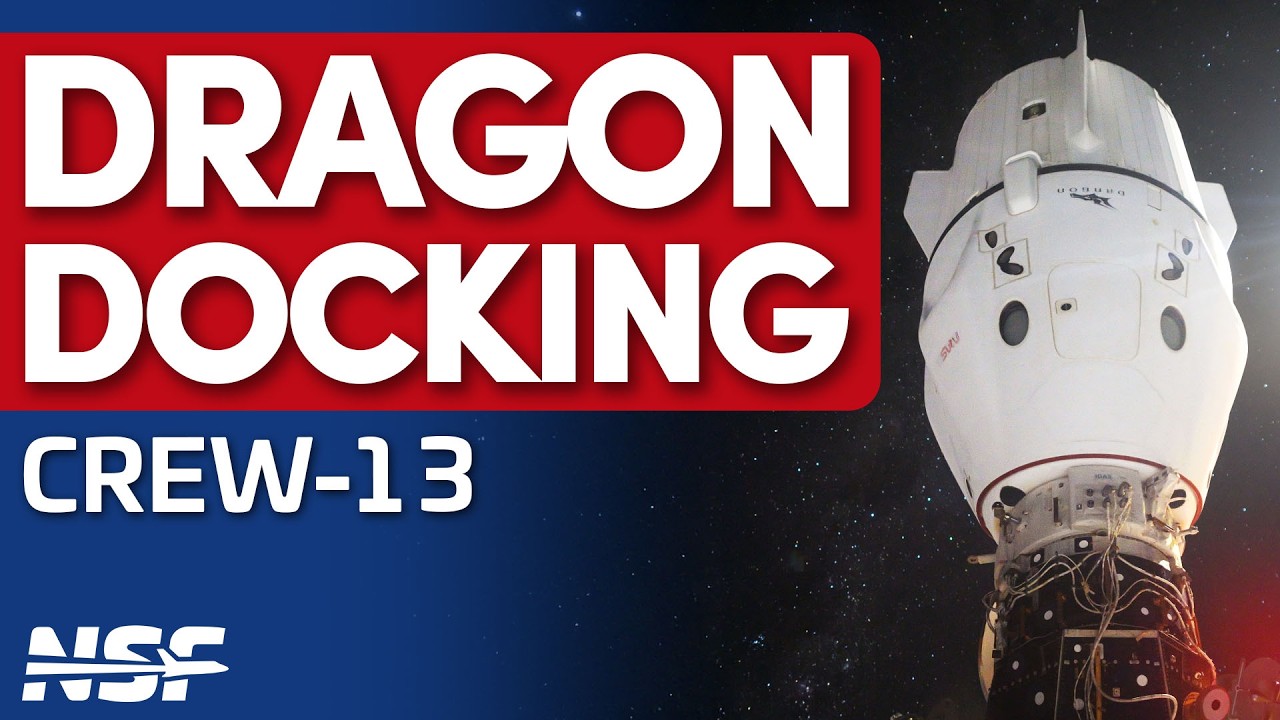
What happened
- The crewed record Crew-13 replaced was Crew-11's 14 hours 43 minutes, set in August 2025.
- NASA puts the previous record for any US spacecraft at about 12 hours 33 minutes, set by the CRS-31 Dragon cargo flight in November 2024.
- A Russian Soyuz made the trip in about 3 hours 3 minutes in May 2020, so Crew-13's time is not the fastest on record.
Compiled by The Product DeskSomething wrong?How this is made
Why it matters
- decision Teams scheduling around crew arrival have to pick between the fast time and the long catch-up profile, and the program's own explanation favors planning on the long one.
- cost A program that books crews onto fast phasing windows pays at every scrub, falling back to a longer profile or a new launch date.
- constraint With the time already near the physical limit, later flights can at best match it on an equally favorable day, so it works as a ceiling.
Somebody has to build the docking-day timeline for the next Dragon crew. That person is now looking at a crewed arrival that came in 6 hours 48 minutes under the old record [1], and has to decide whether to move the schedule up.
The people who flew it describe a lucky day. "We got lucky this time," Julianna Scheiman, whom Interesting Engineering identifies as director of NASA science and SpaceX's Dragon program, said at the post-launch press conference [4]. "The space station was in an opportune spot in space, and the orbital mechanics, the physics of it all, worked out for it to be the shortest launch-to-docking time we've had to date," she said [5].
The station circles Earth about every 90 minutes at around 28,000 kph [7]. Dragon has to launch when the station's orbital plane passes over the pad, and the station also has to be at a favorable point along that orbit [8]. Controllers tend to put the capsule in a slightly lower orbit so it gains on the station lap by lap, and a handful of 90-minute laps adds hours [9]. Crew-13 launched with the station positioned so Dragon could start catching it almost immediately [13]. The 6 hours 48 minutes it saved is about four and a half laps [3].
The headline on Interesting Engineering's report says SpaceX "smashes US record" [14]. The same report's explanation says Crew-13 "happened to launch when the geometry was unusually favorable" [13]. A planner can only schedule against the second version. Scheiman's account does not credit any change to the vehicle [5].
Short trips can be made routine, and the Russian program shows how. Russia has historically flown Soyuz on tight launch windows that put it in the right place after just a few orbits [11]. The cost is flexibility. A fast-track rendezvous needs precise phasing between capsule and station, and any delay loses the window, leaving a longer fallback plan or a new date [12].
I'd keep docking-day plans on the long catch-up profile. Every earlier crewed trip took at least as long as Crew-11's 14 hours 43 minutes, since that was the crewed record before this flight [4]. The tradeoff is idle time on the ground: on a day the geometry lines up, the plan runs hours behind a crew that has already docked. I think that is cheaper than a timeline that breaks the first time a launch slips and the fast window goes with it [12].
Two questions decide whether a record time belongs in a planning team's baseline. One is whether the gain came from the vehicle or from conditions on the day. The other is whether it would survive a one-day launch slip. Gains from conditions can be scheduled deliberately, as Russia did with tight Soyuz windows, and they cost flexibility [11][12]. On Scheiman's account, Crew-13's time came from conditions on the day [5], and the phasing it depended on does not survive a delay [12].
What to watch
- The next crewed Dragon flight's launch-to-docking time, which will show whether trips return to the old range above 14 hours.
- Whether NASA or SpaceX starts booking Dragon launches on tight Soyuz-style phasing windows, trading launch-date flexibility for short trips.