ScienceNot yet confirmed elsewhere1 publisher2 min readPublished
Christa Pike's failed execution is unlike any since 1976, the Death Penalty Information Center says
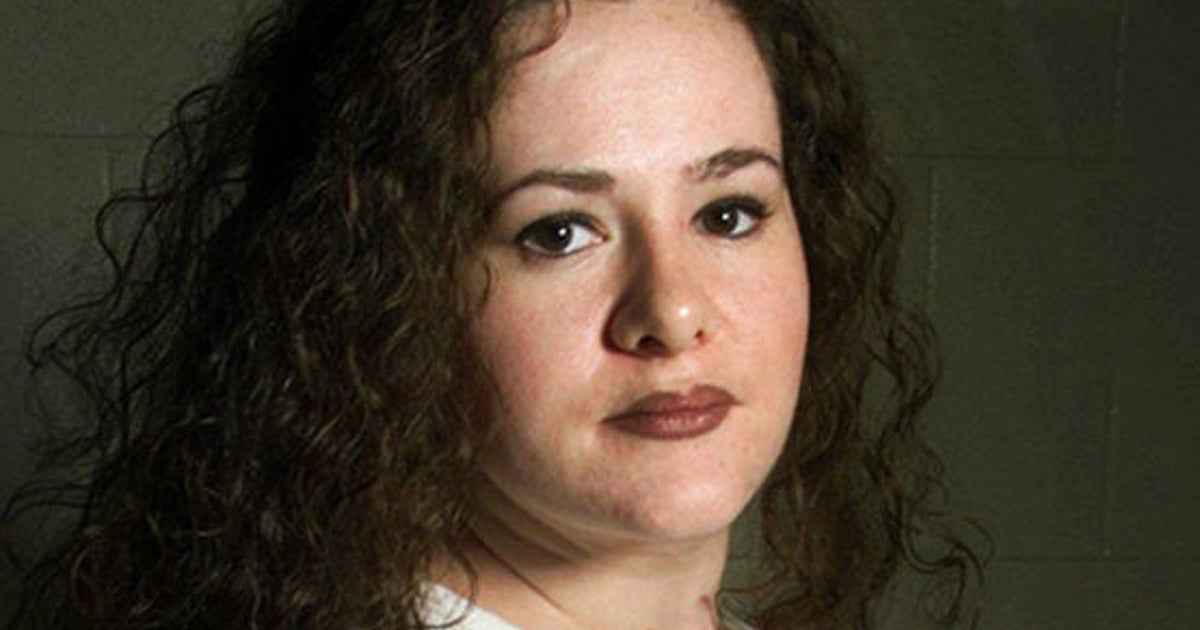
The Death Penalty Information Center says Christa Pike's failed execution has no precedent since 1976, according to a STAT opinion piece. Its author argues it could end lethal injection, a method that depends on IV skill that medical associations tell clinicians not to supply.
The Scientist · Science desk
Key figures: 55 women executed in the U.S. since 1900, 0.6% of people executed; about 7,000 people executed between 1900 and 1976; 1,683 people executed after 1976.
| Figure | Value | Note | Claim |
|---|---|---|---|
| Women executed in the U.S. since 1900 | 55 women | 0.6% of people executed since 1900 | 3 |
| Executed 1900–1976, about | 7,000 people | 2 | |
| Executed after 1976 | 1,683 people | 2 |
What happened
- In 1953 the Supreme Court overturned Ethel Rosenberg's stay on June 18, and her electric chair execution the next day failed to kill her in the first round.
- A 2022 report found that more than a third of executions are botched because of unskilled personnel, the author writes.
- NPR reported just before Pike's planned execution that Tennessee's opaque protocol involves health care providers, and that physician Mark Fowler took part in Tony Carruthers's failed execution in May.
- The American Medical Association and the American Nurses Association say it is unethical for medical providers to take part in executions in any way.
Why it matters
- constraint A method that needs IV skill has to draw on the clinicians whose professional bodies forbid taking part. A state cannot close that gap by hiring skill without asking people to break their own profession's rules.
- exposure People facing execution with hard-to-access veins carry the physical cost of that staffing gap, according to the author's account of how attempts fail.
- precedent If Pike did survive a complete attempt, challengers to the method have a case in which the attempt ended with the prisoner alive. The Rosenberg account in the same piece describes physicians ordering further electrocution instead.
The Death Penalty Information Center limits its claim to the modern era, which it dates from 1976 [1]. The author's claim is wider: the first time in medical and legal history that a prisoner has "survived a complete execution attempt in the U.S." [18].
The nearest earlier case in the piece is Ethel Rosenberg's in 1953 [5]. The attempt did not stop when it failed. A doctor examined her and told the state she was not dead [7], and United Press International and The New York Times reported that two physicians "ordered" more electrocution [15]. Rosenberg's biographer is quoted as saying "she was removed from the electric chair after three charges, only for it to be discovered her heart was still beating, so, gruesomely, she had to be strapped back into it" [8].
The denominators are small. The author counts about 7,000 executions from 1900 to 1976 and 1,683 after [2], and puts women at 55 since 1900, or 0.6% [3]. Adding the first two gives roughly 8,700, and 55 of that is about 0.63% [16], so the figures agree. The piece pairs two women's botched executions. Rosenberg's chair settings were not adjusted for a woman of her size [6], while the author's account of lethal injection failures turns on intravenous access [9]. A botch rate is only as informative as its definition and its denominator. The thing the excerpt doesn't tell you is what went wrong in Pike's execution, how the 2022 report defined "botched", or which executions it counted [10].
Tennessee is where the medical argument is sharpest. Mark Fowler reportedly took part in Pike's attempt too [20]. The author says the Carruthers case opened a split in which, in the words the piece quotes, "dozens of Tennessee medical professionals told the governor that health care professionals shouldn't help with executions, ever. No matter the method." [13]
We think "may even end" [19] is the right strength for the claim, since an opinion essay cannot show that a court or a medical body will move. A survived attempt is a stronger exhibit than the earlier failures, and if the facts of what went wrong become public we'd expect it to be cited in challenges to the method. The record so far is failures that raised questions without ending the practice. Lee Hamm's failed attempt raised numerous questions about the role of health care providers [14]. The Carruthers failure in May did the same in Tennessee [12], and Pike's attempt went ahead after it [17].
What to watch
- Whether any court is asked to review Tennessee's protocol or its use of clinicians after a survived attempt.
- Whether Tennessee discloses what went wrong in Pike's execution and what role Mark Fowler played, since NPR describes the protocol as opaque.
- Whether the AMA, the ANA or Tennessee clinicians add to their existing positions after Pike.
Clarity's read
What the record supports and how the coverage leans. The claims behind it follow.
Reality
- Evidence38
- Adoption
- Insufficient
- Hype gap+40
- Incentives
- Insufficient
- Confidence40
Claim ledger
Ranked by verification strength, evidence, and original report placement.
- [1]
According to the Death Penalty Information Center, Christa Pike's failed execution was "the worst we've seen and unlike any other botched execution in the modern era (since 1976). There is no precedent."
ReportedSupportedSource: Death Penalty Information Center, as quoted in a STAT opinion pieceView cited source - [2]
About 7,000 people were executed in the U.S. between 1900 and 1976, and 1,683 people after 1976.
- [3]
Since 1900, only 0.6% (55) of people executed in the U.S. have been women.
- [4]
The author writes that Pike is now the second woman on death row the U.S. Supreme Court declined to rescue from a botched execution.
- [5]
The Supreme Court overturned Ethel Rosenberg's stay of execution on June 18, 1953; her electric chair execution on June 19, 1953 failed and she did not die after the first round of electrocution.
- [6]
In Rosenberg's execution the settings were not properly adjusted for a woman of her size.
- [7]
A doctor examined Rosenberg and informed the state she was not dead and that they needed to electrocute her a second time.
- [8]
Rosenberg's biographer is quoted as saying "she was removed from the electric chair after three charges, only for it to be discovered her heart was still beating, so, gruesomely, she had to be strapped back into it."
- [9]
Lethal injection requires an intravenous line, so the person administering it has to be competent in IV infusion, but people facing execution often have veins that are tricky to access.
- [10]
A 2022 report found that more than a third of executions are "botched" because of unskilled personnel.
- [11]
The American Medical Association and the American Nurses Association state that it is unethical for medical providers to participate in any way in executions, and state prisons struggle to find skilled personnel for lethal injection, resulting in many failed attempts.
- [12]
Just prior to Pike's planned execution, NPR reported that the opaque Tennessee protocol involves health care providers, and that physician Mark Fowler was involved in the failed execution of Tony Carruthers in May; the Carruthers case created a bioethics chasm.
- [13]
In the Carruthers case, "dozens of Tennessee medical professionals told the governor that health care professionals shouldn't help with executions, ever. No matter the method."
- [14]
The case of Lee Hamm, another failed attempt at lethal injection, raised numerous questions about the role of health care providers after a botched procedure.
- [15]
United Press International and The New York Times reported on Rosenberg's execution and the role of two physicians involved who "ordered" more electrocution.
ReportedSupportedSource: Author of the STAT opinion piece, citing UPI and The New York TimesView cited source - [16]
Using the author's own totals, 55 women out of roughly 8,683 executions since 1900 is about 0.63%, consistent with the stated 0.6%.
- [17]
Tennessee went ahead with Pike's execution attempt after the Carruthers failure in May.
- [18]
The opinion piece's author writes that for the first time in medical and legal history, a prisoner has "survived a complete execution attempt in the U.S."
ReportedContestedSource: Author of the STAT opinion piece2 sources— create a free account to open themView cited source - [19]
The author writes that the case is a bioethics case that "may even end lethal injection."
- [20]
Fowler reportedly was involved in Pike's failed execution as well.
Sources
1 independent publisher whose own reporting we read for this story.
- statnews.comOpinion: Lethal injection will never be the same after Christa Pike’s botched execution
1 article · October 13, 2026
Topics and entities
Follow any of these and your For You feed starts watching them — no settings page required.