LeadershipNot yet confirmed elsewhere1 publisher2 min readPublished
Chinese court sentences three Wei family members to death over Myanmar scam compounds
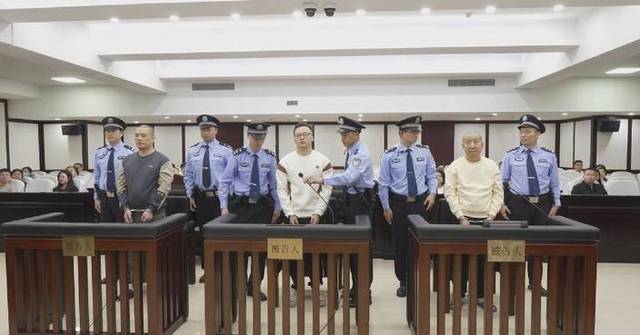
Quanzhou Intermediate People's Court sentenced three Wei family members to death over scam compounds in Myanmar that netted more than 12.2 billion yuan ($1.8 billion). It follows executions of Ming and Bai clan members in January and February.
The Board Room · Leadership desk
Key figures: the Wei case produced 61 sentences in total. Another three gang members got life sentences, 55 more got prison terms, and the longest of those terms was 24 years.
| Figure | Value | Note | Claim |
|---|---|---|---|
| Sentences in the Wei case, in total | 61 sentences | 14 | |
| Life sentences | 3 members | 3 | |
| Given prison terms | 55 members | 3 | |
| Longest prison term | 24 years | 3 |
What happened
- Three more gang members received life sentences, and 55 others got prison terms ranging from 24 years down to three years and three months, the court said.
- The court said the gang also took part in drug trafficking, organized prostitution, illegal casinos, telecommunications fraud and the murder of at least two Chinese citizens.
- CCTV said the gang operated 14 large-scale scam compounds and lured large numbers of Chinese to Myanmar with fake promises of high wages.
- Members of the Wei family were first indicted in October 2025.
Why it matters
- precedent Analysts call the Wei clan one of four families running Kokang syndicates. If the others face charges, the death sentences and executions so far set the expected outcome.
- constraint UNODC says the industry has already spread to South America, Africa, the Middle East, Europe and some Pacific Islands.
- decision This quarter, a fraud-risk team has no reported basis to lower its scam-volume assumptions. The U.N. puts proceeds at tens of billions of dollars a year.
In January China executed 11 people, among them members of the "Ming family criminal gang" [8]. The following month it executed four members of the Bai clan [9]. That is 15 executions across two cases [13]. The Wei verdict now adds three death sentences in a third.
Wei Huairen, identified as one of the group's leaders, was found guilty of several crimes including murder, the court said [5]. The Bai clan members were executed for crimes including "fraud, intentional homicide, intentional injury, kidnapping, extortion" [9]. Homicide appears in both cases where CBS lists charges [15]. CCTV said police found remains of victims bound with iron chains and with bullet holes in their skulls [18]. We think killings, more than fraud revenue, are what carry a defendant to a capital sentence in these cases, though that reading rests on only two cases.
The 61 sentences in this case are small against an industry the U.N. estimates employs hundreds of thousands of people worldwide [14][12]. The two figures measure different things. The 61 belong to one organisation, while the U.N. figure counts workers, some of them trafficked foreign nationals held in prison-like compounds [21].
The case goes after a different layer. CCTV said the Wei family created an "iron triangle of political, military, and business criminal activities" [16]. CBS, citing experts it does not name, reports that Myanmar's junta, in power since the 2021 coup, has long turned a blind eye to the compounds, and that their profits are believed to go to militia allies who are crucial in its fight against rebels [19]. China, irked at its citizens both taking part in and being targeted by the scams, has pressed the junta to shut them down [20]. In our view, a court verdict is the one lever in that arrangement that Beijing controls directly.
The CBS report has no comparison with earlier years that would show whether the pace of these cases is rising, and it did not disclose the charges against Chen Dawei or Liao Jingfang, whether any of the 14 compounds has closed, or when the Wei sentences would be carried out.
What to watch
- Whether the Wei death sentences are carried out, as the Ming and Bai ones were, and on what timeline.
- Whether China brings cases against the other Kokang families that analysts say make up the 'four families'.
- Any reported closure of the 14 Wei compounds, or Myanmar junta action on scam centers under Chinese pressure.
Clarity's read
What the record supports and how the coverage leans. The claims behind it follow.
Reality
- Evidence50
- Adoption
- Insufficient
- Hype gap
- Insufficient
- Incentives60
- Confidence55
Claim ledger
Ranked by verification strength, evidence, and original report placement.
- [1]
Quanzhou Intermediate People's Court sentenced Wei Huairen, Chen Dawei and Liao Jingfang to death for their involvement in the 'Wei family criminal gang', which operated scam centers in Myanmar's Kokang region on the border with China.
ReportedSupportedSource: CBS News, citing the Quanzhou Intermediate People's Court statementView cited source - [2]
The Wei gang's operations netted more than 12.2 billion yuan ($1.8 billion).
- [3]
Another three gang members were handed life sentences, while 55 more were given prison terms ranging from 24 years to three years and three months.
- [4]
The court said the gang was involved in drug trafficking, organizing prostitution, operating illegal casinos, telecommunications fraud, and the murder of at least two Chinese citizens.
- [5]
Wei Huairen was identified as one of the group's leaders and found guilty of several crimes including murder, the court said.
- [6]
Analysts describe the Wei clan as one of the 'four families' running crime syndicates in Kokang.
- [7]
Members of the Wei family were first indicted in October 2025.
- [8]
In January, China executed 11 people, including members of the 'Ming family criminal gang.'
- [9]
The month after the Ming executions, four members of the notorious Bai clan were executed for crimes including 'fraud, intentional homicide, intentional injury, kidnapping, extortion.'
- [10]
The United Nations warned that Chinese and Southeast Asian gangs are raking in tens of billions of dollars a year through cyber scam centers.
- [11]
While Myanmar's border region has been a hotbed of the illegal activity, the industry has spread to South America, Africa, the Middle East, Europe and some Pacific Islands, according to the U.N. Office on Drugs and Crime.
- [12]
The U.N. estimates that hundreds of thousands of people are working in scam centers globally.
- [13]
Fifteen people were executed across the Ming and Bai cases.
- [14]
The Wei case produced 61 sentences in total.
- [15]
In both cases for which CBS lists charges (Bai and Wei), murder or intentional homicide is among them.
- [16]
China's state broadcaster CCTV called the Wei family the 'most violent criminal force in northern Myanmar', having created an 'iron triangle of political, military, and business criminal activities.'
- [17]
CCTV described the gang as operating 14 'large-scale' scam compounds and luring 'large numbers' of Chinese to Myanmar through fake promises of high wages.
- [18]
Police had discovered remains of victims bound with iron chains and with bullet holes in their skulls, CCTV said.
- [19]
Experts say Myanmar's junta, since seizing power in the 2021 coup, has long turned a blind eye to the scam centers, profits from which are believed to go to its militia allies, who are crucial collaborators in their fight against rebels.
- [20]
The junta has faced pressure to shut down scam operations from its military backer China, irked at its citizens both participating in and being targeted by the scams.
- [21]
Those conducting the online scams are sometimes willing con artists and other times trafficked foreign nationals, many Chinese, tricked into work and held in prison-like compounds.
Sources
1 independent publisher whose own reporting we read for this story.
- cbsnews.comChina sentences 3 people to death for running brutal scam centers in Myanmar - CBS News
1 article · October 13, 2026
Topics and entities
Follow any of these and your For You feed starts watching them — no settings page required.