Invest2 publishersIndependently confirmed2 min readPublished
Won strengthens for a fifth session as exporters sell dollars into a firmer greenback
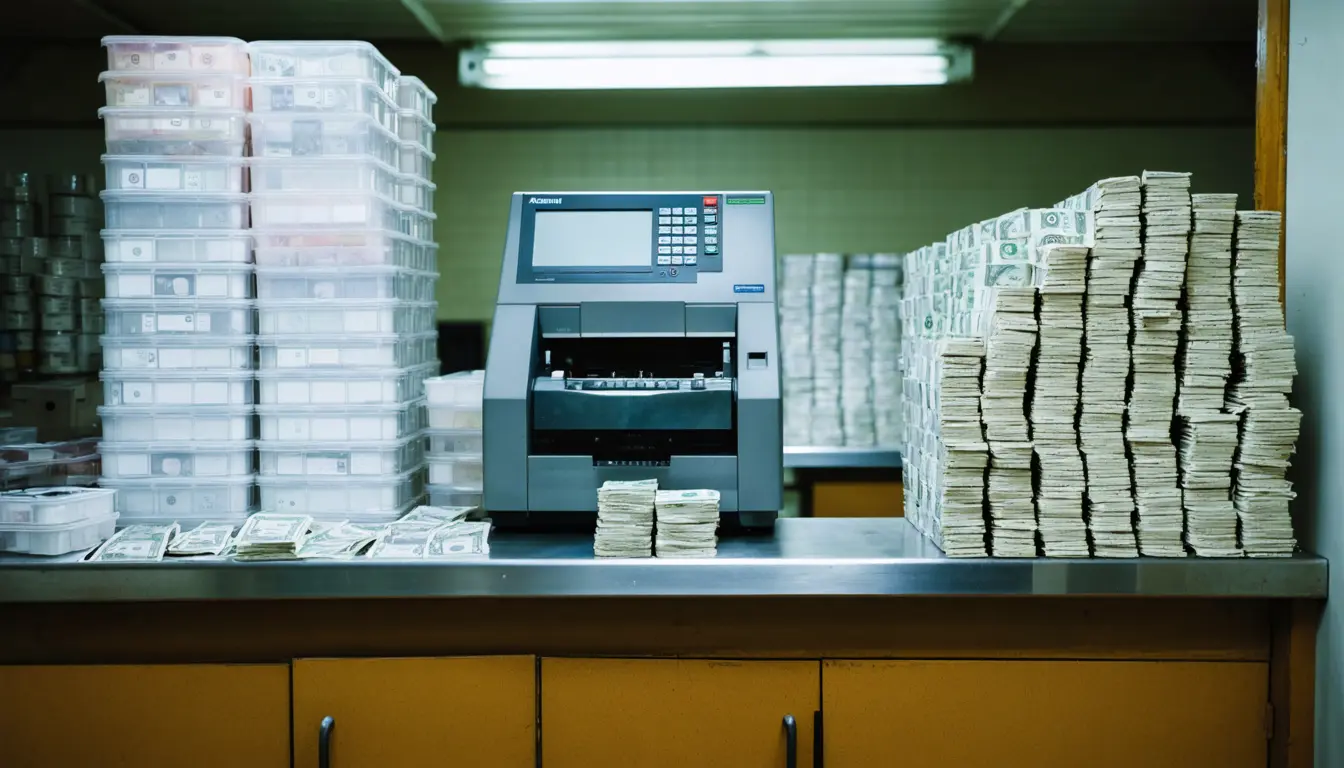
South Korea's won rose for a fifth straight session to 1,338.5 per dollar on Oct. 8 even as foreigners sold about 2 trillion won of Korean shares. Seoul Economic Daily credits exporters converting chip-export dollars, so the rally holds only as long as that selling outweighs a firmer greenback.
The Investor · Invest desk
What happened
- The won touched 1,336.3 per dollar in morning trading, its strongest level since Sept. 10, before paring part of the gain.
- Bank of Korea data showed an August current account surplus of $46.11 billion, the second-largest monthly figure on record and the third straight month above $40 billion.
- Samsung Electronics disclosed the same day that third-quarter operating profit rose 782% from a year earlier to 107.4 trillion won.
- U.S. 10-year and 30-year Treasury yields climbed overnight to 5.36% and 5.73%, their highest since 2002.
- The KOSPI fell 2.62% to 6,625.93 as foreign and institutional investors sold together.
Compiled by The InvestorSomething wrong?How this is made
Why it matters
- constraint Foreign stock sales on the Oct. 8 scale are too small to undo the won's gains by themselves while exporters keep converting a surplus running above $40 billion a month.
- exposure Part of the support came from foreign sales of dollar futures, a position traders can unwind in any session, so the won is exposed to positioning as well as to trade flows.
- decision Dollar buyers waiting for a much stronger won are betting against market participants who, citing high oil prices and elevated rates, expect trading around the upper 1,330s instead of a sharp rally.
The move was small, and its direction was the odd part. The won gained 1.9 won from a previous close of 1,340.4, about 0.14% [18]. The dollar index rose 0.175 point to 102.288 the same day, roughly 0.17% against six major currencies [c8, d2]. Against that basket the won outperformed by about 0.3 percentage points [20].
Scale explains most of it, or rather the scale of the surplus does, if exporters convert it. Yonhap put the day's foreign equity sale at about $1.5 billion [3]. Set against August's $46.11 billion surplus [11], the sale equals about 3% of one month [21], and selling at that pace would take roughly 31 sessions to match it [22]. With the surplus above $40 billion for three straight months, the total since June exceeds $120 billion [23].
A surplus is an accounting total. It becomes demand for won only when exporters sell their dollars. Seoul Economic Daily reported that they did, saying strong semiconductor exports kept a lid on the dollar-won rate as exporters converted proceeds [6]. The same report named a second seller, foreign investors in dollar futures [7]. It said the won rose because the two together exceeded market demand for dollars [8], but it did not split that total between them. Yonhap described the gain as coming amid broad dollar strength, with Fed minutes signaling inflation risks [9].
In my view the exporter explanation is right about direction, given the size of the surplus. The stronger claim, that chip conversion dominates the won, rests on that size alone. Exporters are also converting while holding dollars pays well: U.S. 10-year yields above 5% [13] are a return they give up on every dollar they sell. Samsung's profit jump implies a year-earlier operating base near 12.2 trillion won [24]. Seoul Economic Daily said strong exports and improving earnings raised expectations that dollar selling could continue for some time [14].
If conversion continues, the won tests the 1,334 range that market participants cite as the next support, 3.9 won from the close and set by the year's best of 1,334.6 on Sept. 9 [c15, d8]. A Fed increase, a possibility the September minutes reaffirmed for this year [10], would lift yields and push the dollar-won rate back above 1,340. A longer run of foreign equity selling is the third route.
The exporter thesis has a plain failure test. If the next current account release stays above $40 billion and the won still drifts back above 1,340, exporters were not the marginal seller on Oct. 8, and the support came from foreign futures sellers.
What to watch
- Policy signals from Prime Minister Sanae Takaichi's government, which has distanced itself from reflationary policy and is seen as a variable for Asian currencies including the won.
- Demand at coming U.S. Treasury auctions, since long yields at their highest since 2002 are the main force pulling the other way on the won.