carrier-explode turns iPhone, Pixel and Galaxy firmware into a searchable index of carrier settings
Alec Dusheck's carrier-explode decodes carrier settings from iPhone, Pixel and Galaxy firmware into a searchable site, an API and an 8.39 MiB daily dataset. Its decoders are still in development, so each result is a lead to verify on a real phone and network.
The Engineer · Build desk
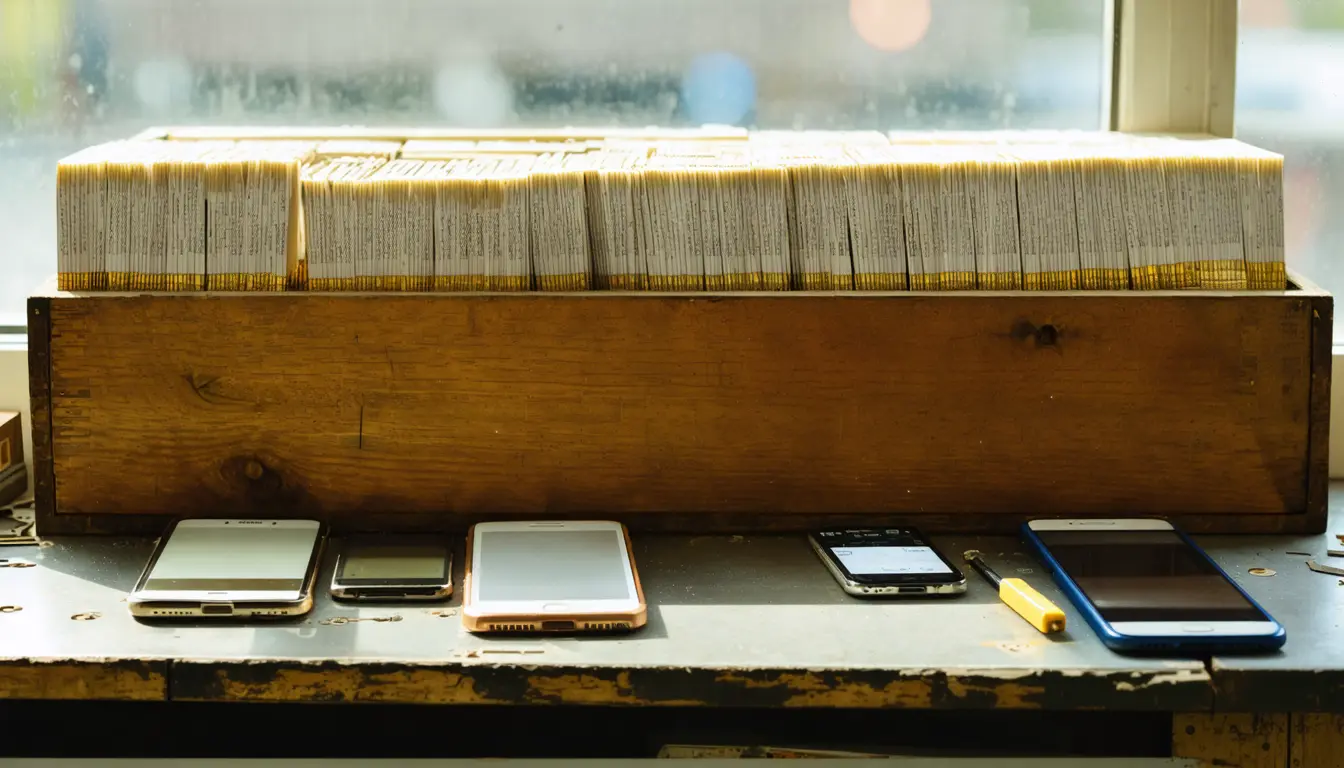
A refreshed index supports build comparisons. The dataset omits Apple's native settings files. A yes-or-no field shows firmware configuration, not that a feature works on a live network. The v2.1 API returns a 403 to unnamed default clients. Contributors can inspect and extend methods.
- capability Anyone comparing builds A refreshed index can support comparisons as builds change, where a one-off extraction answers one question, claim 12
- constraint Dataset users The dataset documentation says it does not include Apple's native settings files, claim 15
- exposure Anyone reading a feature field A yes-or-no field shows what firmware contains or supports, not that it works for every phone, SIM, account and network, claim 17
- constraint API clients A v2.1 API change requires a descriptive User-Agent and returns a 403 to unnamed default clients, claim 7
- capability Contributors The public repository makes the methods inspectable and offers contributors a route to extend them, claim 19
| Who | How | Kind | Claim |
|---|---|---|---|
| Anyone comparing builds | A refreshed index can support comparisons as builds change, where a one-off extraction answers one question | capability | 12 |
| Dataset users | The dataset documentation says it does not include Apple's native settings files | constraint | 15 |
| Anyone reading a feature field | A yes-or-no field shows what firmware contains or supports, not that it works for every phone, SIM, account and network | exposure | 17 |
| API clients | A v2.1 API change requires a descriptive User-Agent and returns a 403 to unnamed default clients | constraint | 7 |
| Contributors | The public repository makes the methods inspectable and offers contributors a route to extend them | capability | 19 |
What happened
- Dusheck started the project while studying how iOS handles cell-broadcast alerts for Indian carriers, work that meant reading Apple's CommCenter software and carrier bundles by hand.
- The website looks up a carrier's APN, VoLTE, Wi-Fi Calling and 5G settings by platform, compares carriers or software versions, and shows what changed in a build.
- Its pipeline starts from public firmware and update downloads published by Apple, Google and Samsung, then extracts and decodes the carrier files inside them.
- The API documentation adds routes for SIM-based configuration lookup and for modem data.
Why it matters
- capability Mobile and telecom engineers can compare carriers and builds from one refreshed index, so nobody has to repeat a per-vendor extraction in a different file format to answer a single question.
- exposure A decoder that misreads a vendor or device format would still produce a clean-looking field, so an error surfaces only when someone checks the setting against its source file.
- constraint Anyone studying iPhone carrier bundles in bulk still has to start from Apple's firmware, because the daily download leaves Apple's native settings files out.
According to the project's documentation as Runtimewire summarised it, the whole pipeline runs on Cloudflare. Workers handle ingestion and serving, R2 holds the objects, and a D1 database holds the index [11]. Access costs nothing and needs no key [6]. I think that stack is the right tradeoff for a free public API. Ingestion, storage and serving all sit on managed services, so a daily refresh has no host of its own to keep alive [11][13].
The v2.1 API change adds one condition. Clients must identify themselves with a descriptive User-Agent, and unnamed default clients get a 403 [7]. Asking callers to say who they are is about the cheapest abuse control a keyless API can run. A script that still sends its HTTP library's stock header will fail until someone edits one string [7]. The version labels disagree. The homepage announces version 2.0 with a much-improved backend, while a GitHub commit is titled v2.1 [3][4].
The bulk dataset holds carrier and country records, feature states, builds, and decoded Pixel and Galaxy settings [14]. Its page dates the current archive to October 9 [13]. Users get decoded data plus references to where it came from, not a mirror of every original file [16]. The licensing is the part I would copy. The code is MIT and the dataset is CC0 [5].
The website presents a carrier feature as what looks like a simple yes-or-no field, Runtimewire noted [17]. I would treat that field the way I treat a benchmark table from someone else's lab. The configuration files show what a device's firmware contains or is configured to support [17]. For a Wi-Fi Calling or 5G flag to hold for a real subscriber, the phone, SIM, account and live network all have to line up [17]. Carrier policy and device compatibility also shape the result [17].
The repository is public, so the methods can be inspected and extended, and the site asks for contributions [19]. Runtimewire found that the current materials establish a working web product, an API and a dataset, but not a customer base or a commercial model [20].
What to watch
- Whether the decoders leave development, and whether the project publishes per-vendor notes on what each decoder can parse.
- Whether the daily dataset adds Apple's native settings files or decoded iPhone settings alongside the Pixel and Galaxy data.
- Whether outside users contribute decoder fixes through the public repository, the test Runtimewire set for the project.
Clarity's read
What the record supports and how the coverage leans. The claims behind it follow.
Reality
- Evidence40
- Adoption
- Insufficient
- Hype gap+5
- Incentives
- Insufficient
- Confidence45
Claim ledger
Ranked by verification strength, evidence, and original report placement.
- [1]
carrier-explode turns carrier configuration files buried in iPhone, Pixel and Galaxy firmware into data people can search and compare.
- [2]
Maintainer Alec Dusheck built carrier-explode while investigating how iOS handles cell-broadcast alerts for Indian carriers; per the README, that meant inspecting Apple's CommCenter software and carrier bundles manually, and a small viewer grew into a cross-platform tool.
- [3]
The project's homepage says version 2.0 is out with a much-improved backend, while its decoders remain in development.
- [4]
A separate GitHub commit is titled v2.1.
- [5]
The code is MIT-licensed and the daily dataset is released under CC0.
- [6]
The API documentation describes access as available at no charge and without a key.
- [7]
A v2.1 API change requires clients to identify themselves with a descriptive User-Agent and returns a 403 to unnamed default clients.
- [8]
The web interface lets users look up a carrier's access-point names, voice-over-LTE, Wi-Fi Calling and 5G settings by phone platform, compare carriers or software versions, filter for features, and inspect what changed in a build.
- [9]
The API documentation adds routes for SIM-based configuration lookup and modem data.
- [10]
The work starts with public firmware and update downloads from Apple, Google and Samsung; carrier-explode extracts and decodes those files, then organizes the results behind a website and API.
- [11]
The project's documentation describes an automated pipeline using Cloudflare Workers for ingestion and serving, with R2 object storage and a D1 database for indexing.
- [12]
Source files are spread across vendor downloads and arrive in different formats; a one-off extraction would answer one question, while a refreshed index can support comparisons as builds change.
- [13]
The daily dataset page lists the archive at 8.39 MiB and says it was updated October 9.
- [14]
The dataset format includes carrier and country records, feature states, builds, and decoded Pixel and Galaxy settings.
- [15]
The dataset documentation says it does not include Apple's native settings files.
- [16]
Users get decoded data and references to its source, not a wholesale mirror of every original file.
- [17]
The interface can make a carrier feature look like a simple yes-or-no field; the configuration files show what a device's firmware contains or is configured to support, and do not prove a feature will work for every combination of phone, SIM, account and live network. For Wi-Fi Calling and 5G, carrier policy and device compatibility also shape the result.
- [18]
A decoder can expose settings only when it can interpret them correctly, and firmware formats vary by vendor and device.
- [19]
The public repository makes the methods inspectable and offers contributors a route to extend them, and the site invites contributions.
- [20]
The current materials establish a working web product, an API and a reusable dataset; they do not establish a customer base or commercial model.
Get this ledger inside ChatGPT. Ask about any of our stories and the answer brings its figure, each claim’s verdict and the sources. Free, no account.
Sources
1 independent publisher whose own reporting we read for this story.
- runtimewire.comcarrier-explode makes phone firmware searchable for carrier settings
1 article · October 9, 2026
Topics and entities
Follow any of these and your For You feed starts watching them — no settings page required.