Caine Prize reviews its winner after an AI detector scored the story almost entirely machine-written
Caine Prize is reviewing Simbarashe Kundizeza's winning story after The Atlantic reported that Pangram software scored it as almost completely AI-generated. Any ruling would rest on a tool that, by the critic's own account, has little independent testing behind it.
The Board Room · Leadership desk
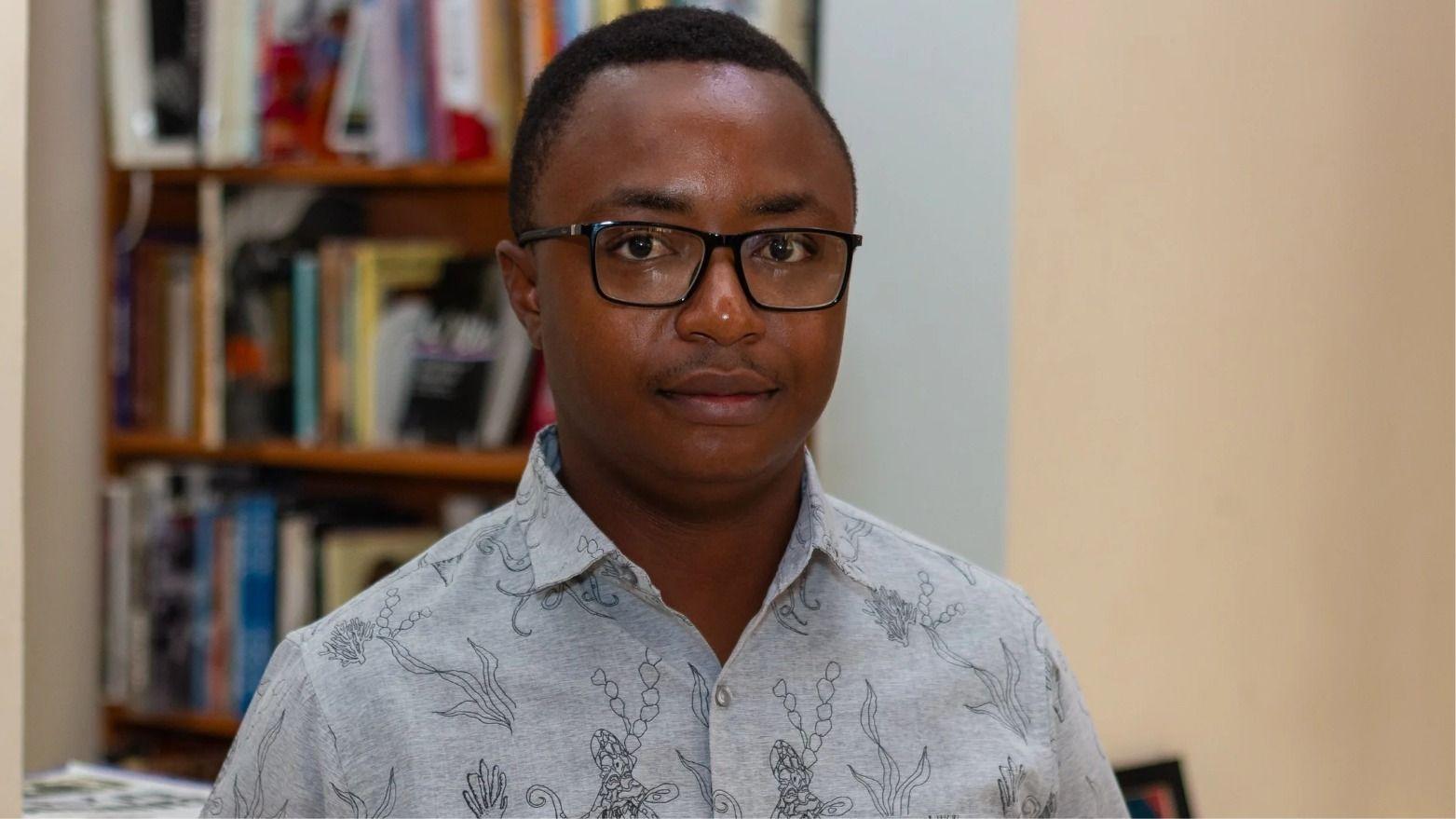
Caine Prize is reviewing the allegations. Kundizeza says he wrote it without generative AI. Vara says Pangram deemed it almost completely AI-generated; she concedes little third-party accuracy research. The Goncourt removed Orélien's novel from its longlist over an AI allegation.
- decision Caine Prize Reviewing allegations that Kundizeza used AI; aims for a human centred approach that supports writers, claim 4
- exposure Simbarashe Kundizeza Says he wrote The Blue Fighter, did not use generative AI to write it, and it is entirely his own work, claim 3
- capability Vauhini Vara, The Atlantic Ran the story through Pangram, which deemed it almost completely artificially generated, claim 2
- constraint AI detection software Vara acknowledged relatively little third-party research on its accuracy, claim 14
- precedent Goncourt Removed Orélien's novel from its longlist after an anonymous account alleged it was almost entirely AI, claim 8
| Who | How | Kind | Claim |
|---|---|---|---|
| Caine Prize | Reviewing allegations that Kundizeza used AI; aims for a human centred approach that supports writers | decision | 4 |
| Simbarashe Kundizeza | Says he wrote The Blue Fighter, did not use generative AI to write it, and it is entirely his own work | exposure | 3 |
| Vauhini Vara, The Atlantic | Ran the story through Pangram, which deemed it almost completely artificially generated | capability | 2 |
| AI detection software | Vara acknowledged relatively little third-party research on its accuracy | constraint | 14 |
| Goncourt | Removed Orélien's novel from its longlist after an anonymous account alleged it was almost entirely AI | precedent | 8 |
What happened
- The Atlantic published Vauhini Vara's article five days after the 6 October announcement, under a headline saying yet another literary prize winner seems to be AI.
- Kundizeza denied the claim in a statement on X, saying he wrote the story himself and used no generative AI.
- The Caine Prize said it is looking into the allegations and aims to take a human centred approach that supports and cares for writers.
- Prize chair Ellah Wakatama told the BBC she is not against AI but is against its use as a final arbiter, and said The Atlantic had branded the winner a cheater without investigating.
Why it matters
- exposure A prize that acts on a detector score takes on the dispute over the score itself, and the critic who cites the tool concedes thin independent research on its accuracy.
- decision Each body must now choose what a flag is worth: the Goncourt removed a novel on an anonymous allegation, while the Caine Prize has opened a review of a winner it already announced.
- constraint The accuracy evidence cited is the vendor's own research plus a study of mock academic papers, which limits how far a score on a short story can carry a verdict.
- precedent Whichever way the review goes, it will show other prizes whether a detector result alone can sustain a finding against a writer who denies it and defends his stylistic change.
Two earlier cases show how differently institutions have answered the same kind of accusation. In July, the Commonwealth Foundation gave its short story prize to Jamir Nazir for The Serpent In The Grove, even though critics on social media said the story had "obvious markers" of AI writing [7]. Last month the Goncourt removed Thélyson Orélien's novel from its longlist after an anonymous online account alleged the book was "almost entirely" written by AI [8]. The Guardian's report does not say what evidence the Goncourt weighed.
The trade-off is plain. Acting on a flag risks stripping an innocent writer of a prize. Ignoring it risks leaving a machine-written winner in place. Ellah Wakatama, who chairs the Caine Prize, put the first risk in her own terms when she told the BBC's Front Row: "I am not happy for the work of writers, and in this case especially black writers, to form the testing ground for something that is at best still rough and ready." [6] She also speaks for the institution that chose the story.
The critic has an answer. Vauhini Vara ran the story through Pangram, which itself uses AI [2]. She pointed to Pangram's own research finding that false positives were rare, including for non-native English speakers writing in English, and to a peer-reviewed journal article that found "strong accuracy" on mock academic papers that were fully, partly or not at all AI-written [13]. One of those sources is the vendor's. The other tested academic papers, and the story at issue is fiction. Vara acknowledged to the BBC that there was "relatively little third-party research" on the accuracy of such software [14].
Her case does not rest on the score alone. She wrote that she "was struck by the proliferation of language that is common in AI-produced writing: the not x, but y sentence constructions; the glut of metaphors; the platitudinous aphorisms." [10] She also said: "Taste is subjective, but trust me, this story is bad - maudlin and full of tired tropes." [11] That is a human judgement of style, and she concedes it is a matter of taste.
She added a comparison with a 2021 story by Kundizeza that she found tonally and stylistically different [12]. Kundizeza answered that to suggest a writer cannot write in different styles or genres, or improve substantially after five or more years, "fundamentally misunderstands the craft of writing." [9]
In our view, a score of this kind can open a review but cannot settle one. The decision the Caine Prize makes this quarter will be read by other prizes next quarter as a template for what a flag is worth. If it clears Kundizeza, the next accuser will need more than a detector result. If it withdraws the award, it will have done so on a tool whose error rate, by Vara's own account, has little third-party research behind it.
What to watch
- The Caine Prize review outcome, and whether it names evidence beyond the Pangram score, such as drafts or process records.
- Any independent, third-party test of Pangram on literary fiction, since Vara herself says such research is thin.
- Whether the Commonwealth Foundation or other prizes publish a policy on what an AI flag triggers.
Clarity's read
What the record supports and how the coverage leans. The claims behind it follow.
Reality
- Evidence30
- Adoption
- Insufficient
- Hype gap+35
- Incentives
- Insufficient
- Confidence40
Claim ledger
Ranked by verification strength, evidence, and original report placement.
- [1]
Simbarashe Kundizeza's story The Blue Fighter was announced as the winner of the Caine prize for African writers on 6 October; five days later The Atlantic published an article by Vauhini Vara titled 'Yet Another Literary prize winner Seems to Be AI.'
- [2]
Vauhini Vara said she ran the story through the AI-detection software Pangram, which itself uses AI, and it deemed the story almost completely artificially generated.
- [3]
Kundizeza said in a statement posted on X: 'For the avoidance of doubt, I wrote The Blue Fighter. I did not use generative AI to write it. It is entirely my own work.'
- [4]
The Caine Prize said in a statement that it was reviewing the allegations that Kundizeza had used AI, and said it aims to take a human centred approach ensuring that writers are supported and cared for during the process.
- [5]
Caine Prize chair Ellah Wakatama told the BBC's Front Row she is not against AI but is against it being used as a final arbiter, and said The Atlantic had already proclaimed the winner a cheater without investigating it properly.
- [6]
Wakatama said: 'I am not happy for the work of writers, and in this case especially black writers, to form the testing ground for something that is at best still rough and ready.'
- [7]
In July, Trinidadian writer Jamir Nazir won the Commonwealth Foundation's short story prize with The Serpent In The Grove, despite critics on social media claiming it had 'obvious markers' of AI writing.
- [8]
Last month, Canadian-Haitian writer Thélyson Orélien's novel C'était Ça Ou Mourir was removed from the longlist of the Goncourt after an anonymous online account alleged the book was 'almost entirely' written by AI.
- [9]
Kundizeza responded: 'To suggest that a writer cannot write in different styles or genres, or improve his writing substantially after five or more years fundamentally misunderstands the craft of writing.'
- [10]
Vara said that when she read the story she 'was struck by the proliferation of language that is common in AI-produced writing: the not x, but y sentence constructions; the glut of metaphors; the platitudinous aphorisms.'
- [11]
Vara said: 'Taste is subjective, but trust me, this story is bad - maudlin and full of tired tropes.'
- [12]
Vara said in her article, and repeated in a Front Row interview, that she had read a 2021 story by Kundizeza that was tonally and stylistically different from The Blue Fighter.
- [13]
Vara pointed to Pangram's own research finding that false positives were rare, including for non-native English speakers writing in English, and to a peer-reviewed journal article that found Pangram had 'strong accuracy' assessing mock academic papers created fully, partly or with no AI.
- [14]
Vara acknowledged to the BBC that there was 'relatively little third-party research' on the accuracy of AI detection software.
Get this ledger inside ChatGPT. Ask about any of our stories and the answer brings its figure, each claim’s verdict and the sources. Free, no account.
Sources
1 independent publisher whose own reporting we read for this story.
- theguardian.comZimbabwean author Simbarashe Kundizeza denies using AI to write prize-winning story
1 article · October 14, 2026
Topics and entities
Follow any of these and your For You feed starts watching them — no settings page required.
Topics
- Literary prizes and AIFollow
- AI Text DetectionFollow