Invest2 publishers3 min readPublished
GPTZero's sale to Superhuman returned at least 10x on $13.5 million raised, a source says
Superhuman's purchase of AI detector GPTZero returned at least 10 times the $13.5 million it raised, a source told Fortune. Treated as a price, that puts a floor of $135 million under a deal with undisclosed terms.
The Investor · Invest desk
What happened
- Superhuman, the productivity company formerly known as Grammarly, agreed in June to acquire GPTZero.
- Edward Tian's first version, built over a Princeton winter break, crashed its free hosting page within a week as 30,000 people arrived.
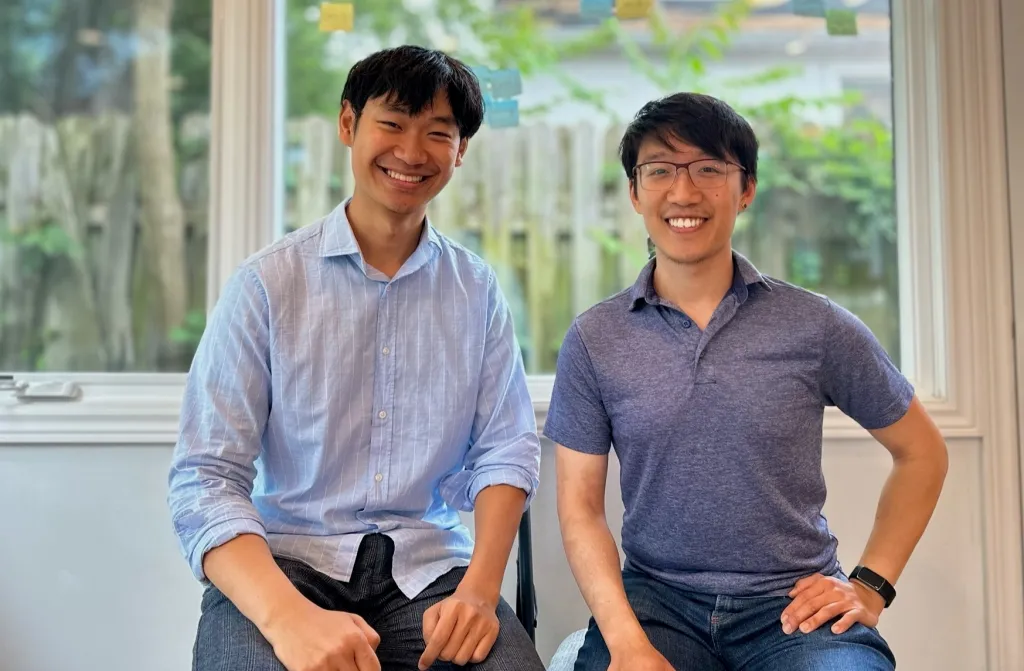
- Tian and cofounder Alex Cui now lead an 'authenticity' team inside Superhuman, building detection into a tool used by tens of millions of writers.
Compiled by The InvestorSomething wrong?How this is made
Why it matters
- contradiction The two available value markers set different floors, 6.5 times capital raised from PitchBook and at least 10 times from an unnamed source, so the size of the exit stays contested until terms are published.
- precedent At about $2.22 of recurring revenue per dollar raised, GPTZero gives founders of narrow AI tools a reference case for selling early to a company that already reaches the users.
- constraint Tian's own description of detection as a 'band-aid' limits how far this price can be taken as a valuation of detection as a standalone category.
A return on capital raised converts to a price with one multiplication: 10 times $13.5 million is $135 million [7][1]. The figure is a floor under either reading of "return". If the source meant headline price over total funding, the price is at least $135 million; if the source meant what investors collected, the full price is higher, because the founders' stake sits on top [1]. At $135 million, Superhuman would be paying about 4.5 times GPTZero's $30 million of annual recurring revenue [2].
PitchBook data valued GPTZero at more than $88 million [6], about 6.5 times what the company raised [3]. The source's floor sits roughly 1.5 times above PitchBook's [4]. Superhuman agreed to the deal for undisclosed terms [5], and Fortune did not name the person behind the 10x figure [7].
Fortune reports the operating figures without qualification. GPTZero reached $30 million of recurring revenue [4] on $13.5 million of funding, about $2.22 of annual revenue per dollar raised [5]. It took less than four years from a project Tian posted on a free Streamlit page over winter break at Princeton [1][3]. Spread over more than 20 million registered users [3], that revenue averages no more than $1.50 per user a year [6].
Cui's account of the launch starts with an earlier venture. Open Mind, a browser extension against fake news he helped build in late 2017 [14], failed to turn its attention into a bigger product, he said: "We waited way too long to put out something" [12]. When Tian's project took off, Cui remembered thinking, "Drop everything, launch something." [13]
Once terms surface, the 10x could shrink if part of the payment is Superhuman stock or tied to targets, since the realized return would then depend on Superhuman. It could also describe the buyer more than the category. Tian, 26, and Cui now lead an "authenticity" team building detection into a tool used by tens of millions of writers [8]. Cui is a director of engineering at Superhuman as well as GPTZero's chief technology officer [9]. Tian himself calls detection an "initial response" and a sort of "band-aid" for larger questions about writing [10].
I think the angle holds for GPTZero on the numbers available. A narrow detector built on $13.5 million sold at a price one source puts at $135 million or more [1]. The lesson is about selling a capital-light tool to a company that already has the writers, or rather, to one that has assigned the founders to put the tool in front of them [8]. "I never wanted to be a founder," Tian told Fortune [11]. Selling now means he and Cui build inside Superhuman instead of raising a larger round to stay independent. A disclosed price under $135 million, or a payout weighted toward contingent payments, would undo the 10x reading.
What to watch
- Whether Superhuman or GPTZero's investors publish the price and the split between cash, stock and contingent payments.
- Whether Superhuman reports GPTZero's revenue or user counts once detection ships inside its writing tool.