Product1 publisherNot yet confirmed elsewhere3 min readPublished
Boeing tests its MQ-25 drone-teaming software on two stand-in aircraft over Link 16
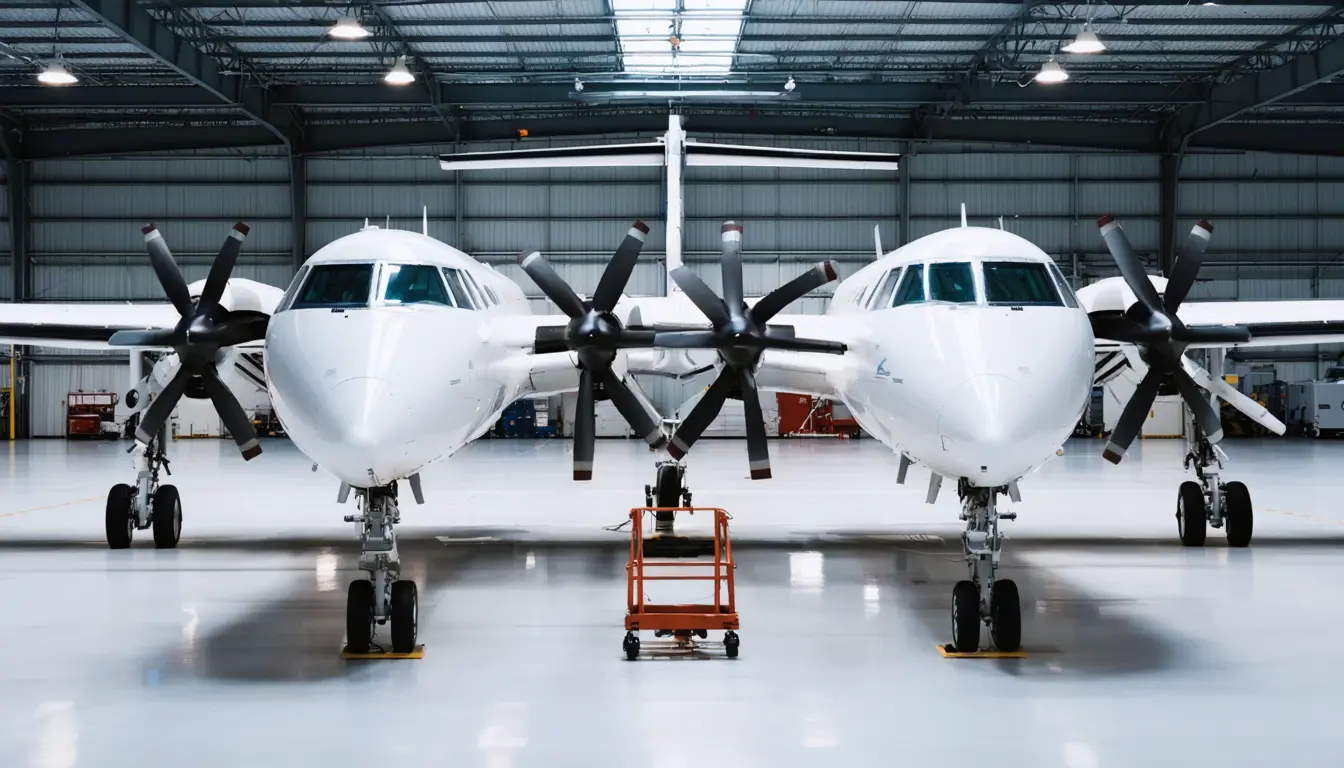
Boeing ran its crewed-uncrewed teaming software over Link 16 on a Beechcraft 1900D and an E90 King Air, a step before it goes on the Navy's MQ-25A tanker. The software is designed to work across aircraft types, a claim that gets its real test only when the code moves into operational aircraft.
The Product Desk · Product desk
Drafted by a language model from the sources cited here and checked against its claim ledger before publication. How we use AISend a correction
What happened
- The test ran during the Emerald Flag exercise at Eglin Air Force Base in Florida, and the MQ-25A itself took no part in it.
- Boeing plans to put the software first on the MQ-25A Stingray and the F/A-18 Super Hornet once testing and evaluation are complete.
- In September the Navy awarded Boeing $562 million for the first low-rate production lot of MQ-25As, covering three aircraft plus advance procurement for three more.
- The Stingray first flew as an operational MQ-25A in April 2026, taxiing, taking off, flying and landing autonomously under Navy and Boeing supervision.
Compiled by The Product DeskSomething wrong?How this is made
Why it matters
- capability If the portability holds in service, any compatible aircraft on Link 16 could be a candidate to direct the tanker without a teaming build written for that one airframe.
- constraint Interesting Engineering's account says the scope of control and the missions covered depend on what is finally tested. Crews cannot yet plan around specific refueling decisions they will be allowed to make.
- decision The Navy is buying tankers on a fixed delivery schedule while the teaming layer has no integration date. Carrier refueling plans have to be built for a Stingray that may arrive without it.
Boeing says the goal of its Manned Unmanned Teaming software is to let a Super Hornet crew direct the Navy's MQ-25A tanker to a new requirement from their own aircraft when the refueling plan changes halfway through a mission [8]. The MQ-25A exists to take tanking work off Super Hornets, so that more of them can fly strike missions [9]. The Navy calls the Stingray a key step toward running uncrewed aircraft alongside crewed fighters at sea, including the procedures for doing it [10].
"Integrating this software into the MQ-25A will give manned platforms control of aircraft, turning the tanker into a force-multiplier that streamlines refueling operations and expands mission reach," said Kayla Stice, Boeing's MQ-25 Advanced Design program manager [17]. Mark Dunn, who leads the MQ-25 avionics integrated product team, said putting the software in the Stingray would enable autonomous coordination with crewed platforms and raise carrier strike group operational tempo [18]. In the test itself, two crewed test aircraft exchanged airborne command-and-control messages with each other [2].
The design choice is what makes the small test relevant. According to Boeing, the software sends open-architecture command-and-control messages over Link 16, a tactical data network that U.S. and allied forces already use between compatible platforms [4]. It is built to support teaming across several aircraft types instead of living inside one airframe [5]. Flying it first on two aircraft that are neither the tanker nor the fighter it is meant for [2][7] is a modest check of that claim. The team came from Boeing's Phantom Works, MQ-25, F/A-18 and F-22 programs, working with the Navy [6]. The F-22 is not on the first-integration list [7].
The airframe is further along than the teaming layer. The Navy expects first deliveries from the initial production lot in 2029 [12]. That is about three years after the Stingray's first flight as an operational MQ-25A [16]. The teaming software is still a separate capability, and it has to pass more flight tests before Boeing can fold it into the tanker's operational software [14].
For anyone judging a claim that software works on any aircraft, two axes sort the evidence. One is whether the software has run on an aircraft that will carry it in service. The other is whether it has run on more than one type. The Eglin test puts Boeing's software in the box with more than one type and no service aircraft [2][3]. If it lands on just one service aircraft, teaming is a feature of that aircraft. Boeing's claim of airframe independence [5] holds up only in the box where two or more service aircraft run the same code. The planned MQ-25A and Super Hornet pair is the first chance to get there [7].
What to watch
- The first flight test of the teaming software on an MQ-25A or a Super Hornet, and which control functions it actually exercises.
- Whether Boeing or the Navy names a third integration target beyond the MQ-25A and Super Hornet, given the F-22 team's involvement.
- Whether the teaming software is in the MQ-25A's operational load when first-lot deliveries begin in 2029.