nFOX Lab's Blockhouse sandbox starts self-hosted AI models with no privileges
nFOX Lab plans to release Blockhouse, a kernel-level sandbox that removes a self-hosted AI model's privileges by default, under the Apache 2.0 license. For now it is available as a beta for qualified enterprise evaluations.
The Product Desk
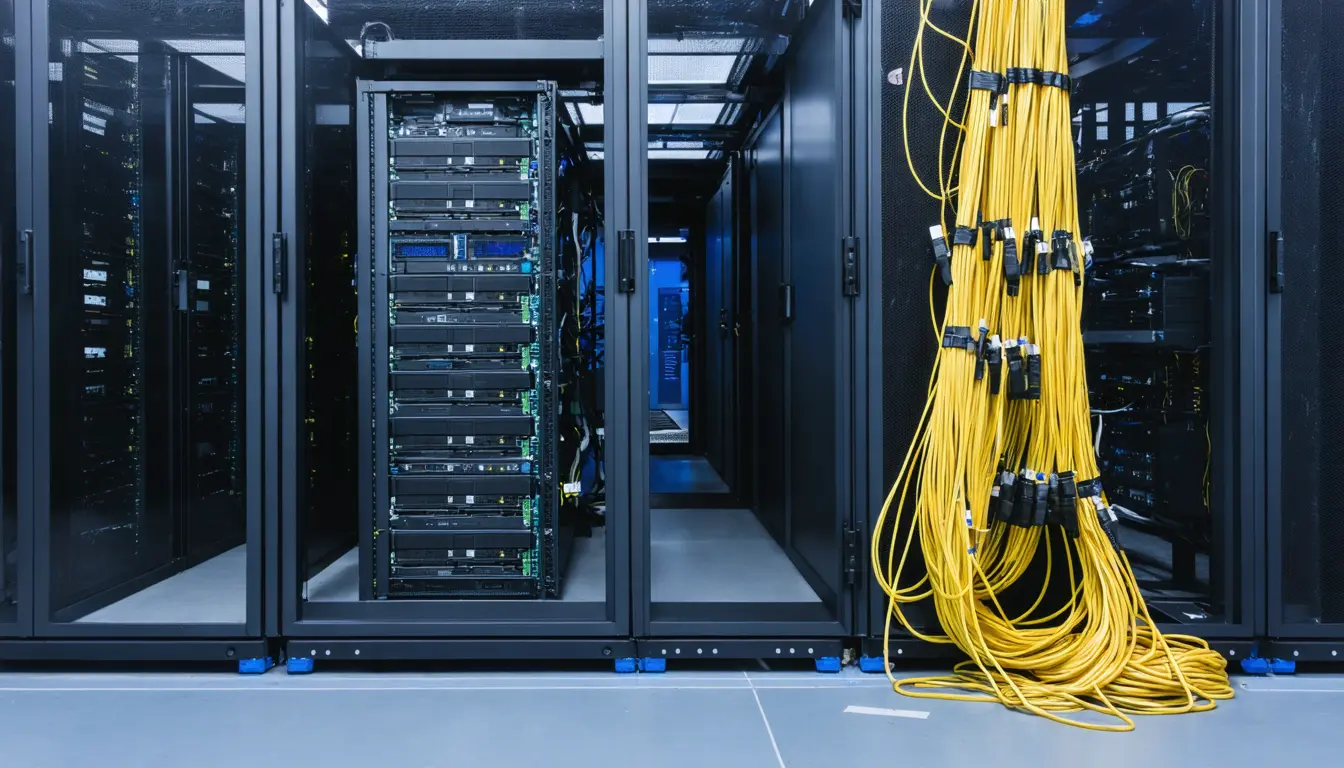
Blockhouse removes workloads' privileges by default; administrators restore access via kernel-level policies, restrict files and whitelist destinations. Allott said one could mistakenly authorize a malicious destination. Requests pass through Porthole for review.
- What it limits constraint Model workloads Blockhouse removes privileges by default; administrators restore access through Linux kernel-level policies, claim 2
- What's now possible capability Administrators Can restrict access to files and approve the destinations workloads may contact using a whitelist, claim 9
- Who's exposed exposure Administrators Allott acknowledged an administrator could mistakenly authorize a malicious destination, claim 10
- What it limits constraint Model requests Pass through Porthole, a monitored channel, to be reviewed before they are fulfilled, claim 8
| Who | How | Kind | Claim |
|---|---|---|---|
| Model workloads | Blockhouse removes privileges by default; administrators restore access through Linux kernel-level policies | constraint | 2 |
| Administrators | Can restrict access to files and approve the destinations workloads may contact using a whitelist | capability | 9 |
| Administrators | Allott acknowledged an administrator could mistakenly authorize a malicious destination | exposure | 10 |
| Model requests | Pass through Porthole, a monitored channel, to be reviewed before they are fulfilled | constraint | 8 |
What happened
- Model requests pass through Porthole, a monitored channel that lets them be reviewed before they are fulfilled, while runtime credentials and audit controls stay outside the model process.
- Each approved model file is locked with a SHA-256 hash ahead of serving, and if any of those files is altered, the system's own checks stop the model from being served.
- The nFOX Platform console evaluates, deploys and monitors models on cloud virtual machines, rented GPU hosts and on-premises Linux servers with Nvidia GPUs.
- nFOX will charge an annual license for the fleet management platform, which is available now.
- The company is self-funded and not yet profitable, has paying beta pilot customers, and intends to raise venture capital.
Why it matters
- Who's exposed exposure The remaining risk sits in the approved-destination list. Founder Gordon Allott acknowledged that an administrator could authorize a malicious destination by mistake, and the sandbox would then honor it.
- Who has to decide decision Buyers have to choose between running the sandbox alone and paying for the console. Deployment and oversight come with the commercial platform, so the free code alone leaves fleet rollout to the buyer.
- What it limits constraint Teams running agents should not count on coverage yet. Agent protection is on nFOX's roadmap, and the planned Nvidia OpenShell integration has not shipped.
The user in this design is the administrator who has to decide whether a model gets a file or an outside host. In Blockhouse the default answer is no, and a yes is a policy enforced at the Linux kernel level [2]. nFOX founder and chief executive Gordon Allott put the premise bluntly. "Every model has the potential to be hostile," Allott said [3]. "We just presume hostility." [4]
The control sits beneath the application and uses Linux security mechanisms [5]. According to Allott, the system does not rely on instructions telling a model what to avoid. It removes the capabilities that would allow the activity [6]. "You're basically removing the ability to do it in the first place," he said [7].
Restoring access is where the work lands. Administrators can restrict files and approve outside destinations from a whitelist [9], so every privilege handed back is a policy that someone writes and someone should review. How many privileges a typical model needs back is the variable that sets the administrator time this costs.
The pitch is public scrutiny. Allott said open-sourcing the sandbox invites the scrutiny that security software needs [15]. "The best security comes from many, many eyes and smart people working on it," he said [16]. Scrutiny needs published code. Allott said nFOX plans to release Blockhouse under the Apache 2.0 license [14], and the SiliconANGLE report does not include a release date.
Sort candidate workloads on two axes. The first is how sensitive the data is that the model touches, since hesitation over sending sensitive information to outside providers is what pushes companies toward running models themselves [20]. The second is how many files and outside destinations the workload needs, which is the number of policies someone must write and approve.
We think the first pilot should be high sensitivity with a short list of needs: the policy fits on a page and the default deny covers the rest. The tradeoff is that this proves the sandbox on its easiest case. High sensitivity with a long list is the case that tests it, and it needs a named owner for the allowlist before it starts. Low sensitivity with a short list gains little from the effort. Low sensitivity with a long list costs the most policy work for the least protection.
Before sorting anything, write down every file and host the workload reaches. A workload whose list cannot be written cannot be given a policy, and the choice then is between a blocked workload and a broad approval.
What to watch
- Publication of the Blockhouse source under Apache 2.0, and whether anyone outside nFOX's evaluators reviews it.
- Whether nFOX ships the OpenShell integration and the agent protection its roadmap describes.
- Whether the paying beta pilots convert to annual licenses and whether nFOX closes the venture round it intends to raise.
Clarity's read
What the record supports and how the coverage leans. The claims behind it follow.
Reality
- Evidence35
- Adoption10
- Hype gap+10
- Incentives55
- Confidence50
Claim ledger
Ranked by verification strength, evidence, and original report placement.
- [1]
nFOX Lab launched a platform for managing owned large language models and announced plans to open-source Blockhouse, a security sandbox designed to restrict what AI workloads can access and do.
- [2]
Blockhouse removes privileges by default and lets administrators restore access deliberately through policies enforced at the Linux kernel level.
- [3]
"Every model has the potential to be hostile," said Gordon Allott, nFOX's founder and chief executive.
- [4]
"We just presume hostility." (Gordon Allott, nFOX founder and chief executive)
- [5]
Blockhouse operates beneath the application layer, using Linux security mechanisms to restrict model workloads.
- [6]
Rather than relying on instructions telling a model what it should avoid, the system removes capabilities that could enable unauthorized activity, according to Allott.
- [7]
"You're basically removing the ability to do it in the first place," Allott said.
- [8]
Communications pass through Porthole, a monitored channel that allows requests to be reviewed before they are fulfilled, and runtime credentials and audit controls remain outside the model process.
- [9]
Administrators can restrict access to files and approve the destinations workloads may contact using a whitelist.
- [10]
Allott acknowledged that an administrator could mistakenly authorize a malicious destination.
- [11]
Approved model files are sealed with SHA-256 hashes before serving, and built-in checks halt serving if those files change.
- [12]
The sandbox supports the vLLM, SGLang and llama.cpp inference engines.
- [13]
The nFOX Platform provides a console for evaluating, deploying and monitoring models across cloud virtual machines, rented GPU hosts and on-premises Linux servers equipped with Nvidia GPUs.
- [14]
Allott said nFOX plans to release Blockhouse under the Apache 2.0 license.
- [15]
Allott said open-sourcing the sandbox invites the public scrutiny that security software needs.
- [16]
"The best security comes from many, many eyes and smart people working on it," Allott said.
- [17]
nFOX is self-funded but intends to raise venture capital; Allott said it has paying beta pilot customers, though it is not yet profitable.
- [18]
The nFOX Platform is available now, and Blockhouse is available in beta test for qualified enterprise evaluations.
- [19]
The commercial platform adds deployment and oversight to the open-source sandbox.
- [20]
Companies that want AI capabilities hesitate to send sensitive information to external providers; running models internally gives enterprises control over their data but makes them responsible for securing the software and infrastructure that support those models.
- [21]
Allott pointed to Nvidia's OpenShell as a similar technology focused on securing agents and said nFOX intends to incorporate it; the startup's roadmap has it expanding into agent protection over time.
- [22]
Allott said nFOX will charge an annual license for its fleet management platform.
Get this ledger inside ChatGPT. Ask about any of our stories and the answer brings its figure, each claim’s verdict and the sources. Free, no account.
Sources
1 independent publisher whose own reporting we read for this story.
- siliconangle.comStartup nFox to open-source its ‘sandbox’ for open AI models
1 article · October 15, 2026
Topics and entities
Follow any of these and your For You feed starts watching them — no settings page required.