BIS paper warns AI data centres' power demand could blur central banks' inflation readings
BIS Paper No. 174 argues data-centre power demand could blur the capacity-use and inflation readings central banks set interest rates by. A central bank that mistakes a data-centre power bill for overheating could tighten when the economy does not need it.
The Investor · Invest desk
What happened
- Economists Leonardo Gambacorta and Salvatore Polizzi wrote the paper, which the Bank for International Settlements published on October 8, 2026.
- The authors say AI's energy intensity puts upward pressure on electricity prices and adds to strain on power grids.
- The paper sets out two scenarios, gradual integration of AI into the economy or a leap toward artificial general intelligence, each with its own policy uncertainties.
- The study extends BIS work from 2024 to 2026 on AI, growth, output and inflation by adding climate effects to the analysis.
Why it matters
- What it limits constraint A utilisation gauge that cannot tell AI productivity from genuine strain gives rate setters a weaker basis for moving on capacity data alone.
- What it costs cost Borrowers could end up paying for data centres' electricity demand through tighter policy if those energy costs feed into measured inflation.
- Who's exposed exposure Whoever funds AI data centres and new power generation now holds a financial-stability risk the BIS has put on record if returns disappoint.
- Who has to decide decision Central banks have to choose whether to model AI's electricity demand inside their standard rate frameworks or keep treating it as a separate climate topic.
Gambacorta and Polizzi place the noise in two readings at once, arguing that AI-driven productivity changes and energy constraints could muddy both capacity utilisation and inflationary pressure, according to Crypto Briefing's account of the paper [3]. Both errors lean the same way, toward reading an economy as hotter than it is. Output that rises because workers became more productive can look like strain on a utilisation gauge, and a power price pushed up by data centres competing for constrained grids [6] can look like demand running ahead of supply in the inflation figures.
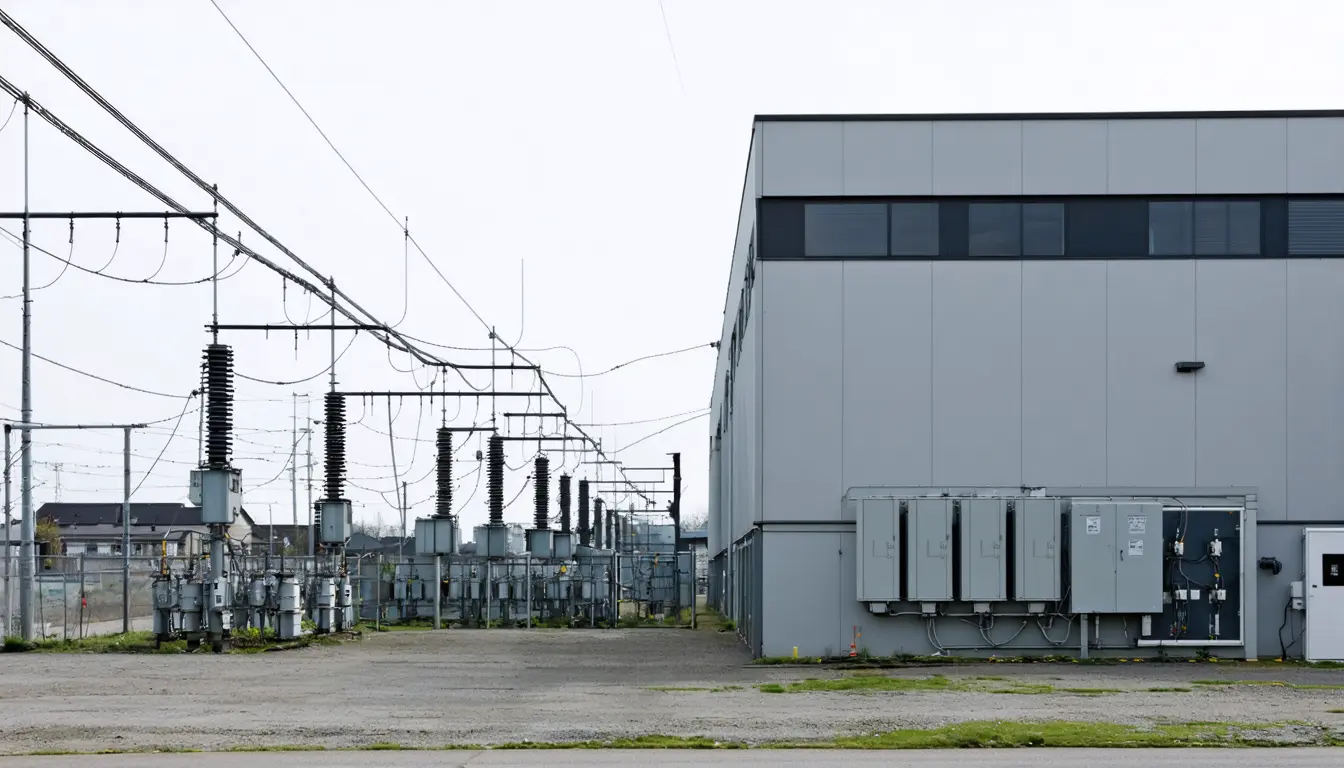
The paper says AI systems, data centres above all, add significantly to electricity consumption and the emissions that come with it [4]. The International Energy Agency's figure for 2030 is more than 945 terawatt hours, more than double current use [5]. That puts today's global data-centre load below 472.5 terawatt hours [14]. Taking this year as the base, a doubling by 2030 needs at least 19% compound growth a year for four straight years [15]. The account of the paper does not put a figure on how much of any country's measured inflation comes from the electricity bill.
Whichever of the paper's two scenarios arrives [9], the money passes through the same channel twice. Spending on data centres and new generation shows up first as grid demand and a higher electricity price that a central bank has to interpret [6], and later as a return or a loss for whoever financed it. The authors warn that disappointing returns on that build-out could pose risks to financial stability [8].
I think the stability warning matters more to holders of capital than the signal noise does. A misread inflation print can be corrected at a later rate decision, while a loss on a data centre or a power plant stays on someone's balance sheet. The counter-case comes from the paper itself, which credits AI with gains in energy efficiency, forecasting and low-carbon technology [11]. If those gains arrive on the incremental path, they offset part of AI's own power demand and ease both problems at once. The noise thesis fails on a simpler test, if electricity prices in grid-constrained markets do not outrun other prices as data-centre demand climbs toward the IEA's 945 terawatt hours [5].
What to watch
- Whether any central bank starts citing data-centre electricity demand separately when it explains an inflation reading or a rate decision.
- IEA revisions, up or down, to its projection that global data-centre consumption could pass 945 terawatt hours by 2030.
- Signs of weak returns or financing strain at AI data-centre and power-generation projects, the risk the paper names.
Information, not investment advice. This story is general information about companies and markets, drawn from cited reporting. It is not a recommendation to buy, sell or hold any security; check the cited sources before acting.
Clarity's read
What the record supports and how the coverage leans. The claims behind it follow.
Reality
- Evidence38
- Adoption
- Not scored
- Hype gap+15
- Incentives
- Not scored
- Confidence35
Claim ledger
Ranked by verification strength, evidence, and original report placement.
- [1]
BIS Paper No. 174 was published on October 8, 2026; its authors are economists Leonardo Gambacorta and Salvatore Polizzi.
- [2]
The paper argues AI's environmental footprint, from rising electricity demand to strained power grids, could obscure the readings officials use to set policy, including capacity utilization and inflationary pressure.
- [3]
The authors argue that AI-driven changes in productivity and energy constraints could muddy the signals central banks depend on, including capacity utilization and inflationary pressure; the questions raised are whether output is climbing from overheating or from AI-driven productivity, and whether prices are rising from excess demand or from data centers bidding up electricity.
- [4]
The paper warns that AI systems, especially those housed in data centers, add significantly to electricity consumption and the emissions that come with it.
- [5]
The International Energy Agency anticipates global data center consumption could exceed 945 terawatt hours by 2030, more than double current levels.
- [6]
The paper notes that AI's energy intensity puts upward pressure on electricity prices and contributes to grid constraints.
- [7]
Misreading an energy-driven price increase as broad overheating could push a central bank toward a policy move the economy does not need.
- [8]
The authors highlight the substantial investments flowing into AI infrastructure and energy generation, and warn that if those investments deliver disappointing returns they could pose risks to financial stability.
- [9]
The paper lays out two scenarios: an incremental one, with AI gradually woven into markets and the economy, and a transformative one involving a leap toward artificial general intelligence; each carries its own uncertainties for economic outcomes and policy.
- [10]
Prior BIS publications between 2024 and 2026 analyzed AI's effects on economic growth, output and inflation; Paper No. 174 extends that work by adding climate.
- [11]
The authors credit AI with supporting climate mitigation and adaptation, pointing to gains in energy efficiency, better forecasting and innovation in low-carbon technologies.
- [12]
The core message for central banks is that environmental effects belong inside traditional monetary policy frameworks; treating AI's energy demand as a separate climate topic risks missing how it shows up in inflation and output data.
- [13]
If energy costs add to inflationary pressure, central banks could respond with tighter policy.
- [14]
If 945 TWh in 2030 is more than double current levels, current global data-centre consumption is below 472.5 TWh.
- [15]
Taking 2026 as the base year, at least doubling data-centre consumption by 2030 requires compound growth of at least about 19% a year over four years.
Get this ledger inside ChatGPT. Ask about any of our stories and the answer brings its figure, each claim’s verdict and the sources. Free, no account.
Sources
1 independent publisher whose own reporting we read for this story.
- cryptobriefing.comBIS study warns AI’s energy appetite is clouding interest rate signals
1 article · October 8, 2026
Topics and entities
Follow any of these and your For You feed starts watching them — no settings page required.
Topics
- AI Energy DemandFollow
- Monetary PolicyFollow
- Bank funding and financial stabilityFollow
- Climate and the economyFollow
Entities
- Salvatore PolizziFollow
- Leonardo GambacortaFollow
- International Energy AgencyFollow
- Bank for International SettlementsFollow