Invest1 publisher2 min readPublished
Saudi Arabia's bypass line would cover a quarter of the barrels Hormuz stops moving
A projectile hit a vessel in the Strait of Hormuz on September 12-13, according to a UKMTO advisory, and on the worst days since the conflict began the corridor has carried two million barrels instead of twenty. Brent is above $100.
The Investor · Invest desk
What happened
- A projectile struck a vessel transiting the Strait of Hormuz on September 12-13, according to an advisory from the United Kingdom Maritime Trade Operations.
- The strait normally handles roughly 20 million barrels of oil a day, about 20% of world supply, through a corridor barely 21 miles wide at its narrowest point.
- On disrupted days transits have fallen to as few as 5 to 10 ships against a pre-conflict norm above 130 a day, with oil flows at times down to roughly 2 million barrels.
Compiled by The InvestorSomething wrong?How this is made
Why it matters
- constraint The route that skips Hormuz entirely is sized at 4 to 5 million barrels a day against an 18 million barrel hole, so even running it covers about a quarter of a bad day.
- exposure At $100 a barrel, roughly $2 billion of crude a day depends on a 21-mile channel that UKMTO is now advising on incident by incident.
- decision Cover is being repriced with each advisory, so a charterer budgeting a Hormuz voyage is working with an insurance line that moves after the fixture is struck.
- contradiction Brent just over $100 and flows at a tenth of normal cannot both be the steady state, and the price is the side of that pair the market is actually betting on.
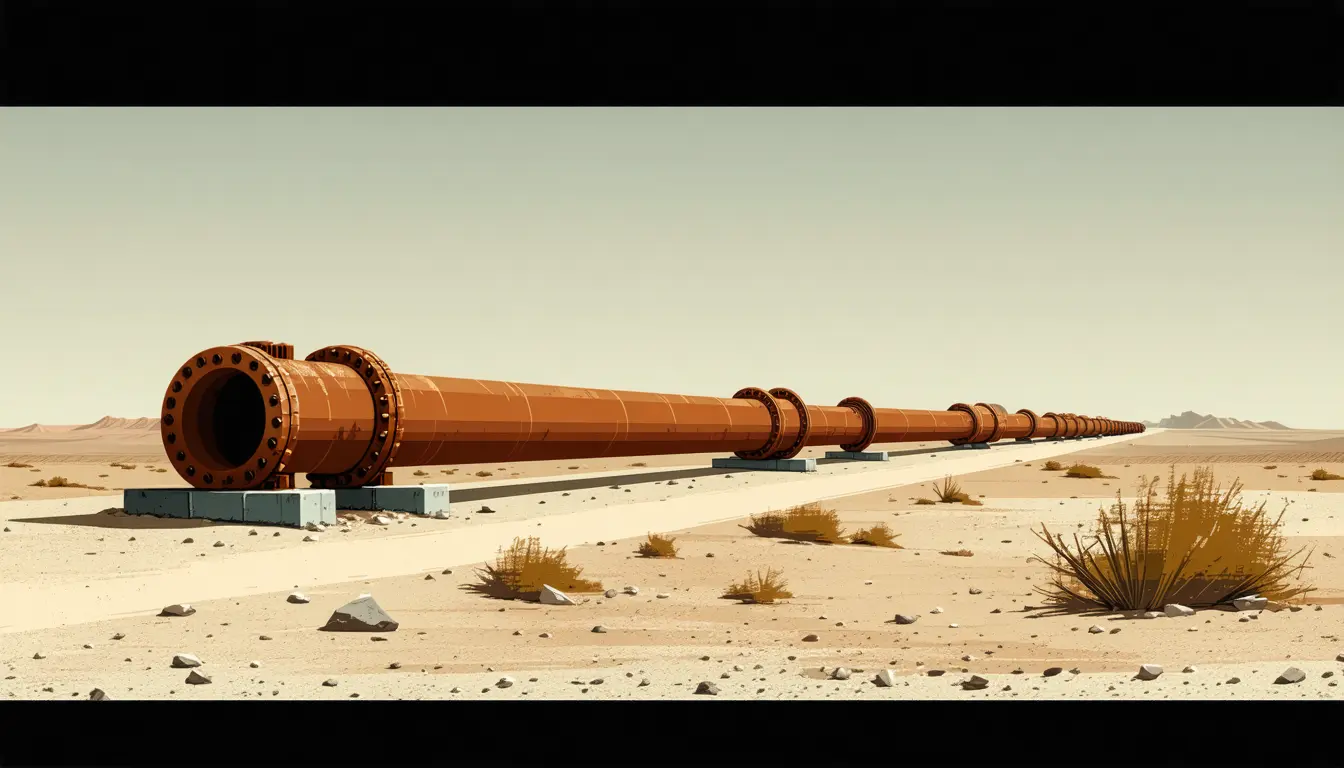
Twenty million barrels a day at a hundred dollars a barrel is two billion dollars of crude crossing 21 miles of water, every day, when the corridor works normally [1]. On the disrupted days cryptobriefing.com describes, the flow ran at roughly two million barrels [7]. That leaves about eighteen million barrels, near 1.8 billion dollars of cargo at that price, not moving through the strait [2]. Saudi Arabia's East-West line bypasses Hormuz altogether, and at 4 to 5 million barrels a day it would cover about a quarter of that gap [9][3]. It was shut after a drone attack the report attributes to Iranian-backed militias operating from Iraq [8].
The strait carries about a fifth of world oil supply [3]. A day at two million barrels therefore takes something like 18% of world supply off the water [7], and a sustained loss of that size does not clear at a hundred dollars. Brent went past a hundred in September 2026, building on the spikes that followed the June attacks [10].
Transits fell further than the barrels did. Five to ten ships against a pre-conflict norm above 130 a day is 4 to 8 percent of normal traffic [4], while flows held near 10 percent of normal [5], so what still sailed on those days was weighted toward loaded crude. At the low end, at least 120 transits a day did not happen [6].
Insurance is where a running cost registers before Brent does. The account says premiums for strait transits have climbed dramatically and that underwriters revisit their risk models with every new UKMTO advisory [11]. It gives no percentage for the increase and no count of the days that ran at the low transit and flow levels [12].
Two readings fit this record. In one, the closures are episodes that inventory and spare capacity absorb, and Brent above a hundred already pays for the risk. In the other, the East-West outage took away the relief valve, and the next closure has no bypass to lean on [9]. I lean to the second, because the vessel strike came within days of the pipeline shutdown [13] and the conflict has already survived attempted truces without normal passage resuming [5]. What would settle it is the transit count: back above 130 a day and September's price is history, a fortnight in single digits and a hundred dollars is the floor [6].
What to watch
- A UKMTO follow-up on the crew and the damage from the September 12-13 strike, neither reported so far.
- Confirmation that Saudi Arabia's East-West pipeline has restarted, and at what daily rate.
- A published war-risk premium for a Hormuz transit, to put a number on a rise the account calls only dramatic.