BuildNot yet confirmed elsewhere1 publisher3 min readPublished
Atomic Machines tests its tooling-free factory claim on a 150-amp relay
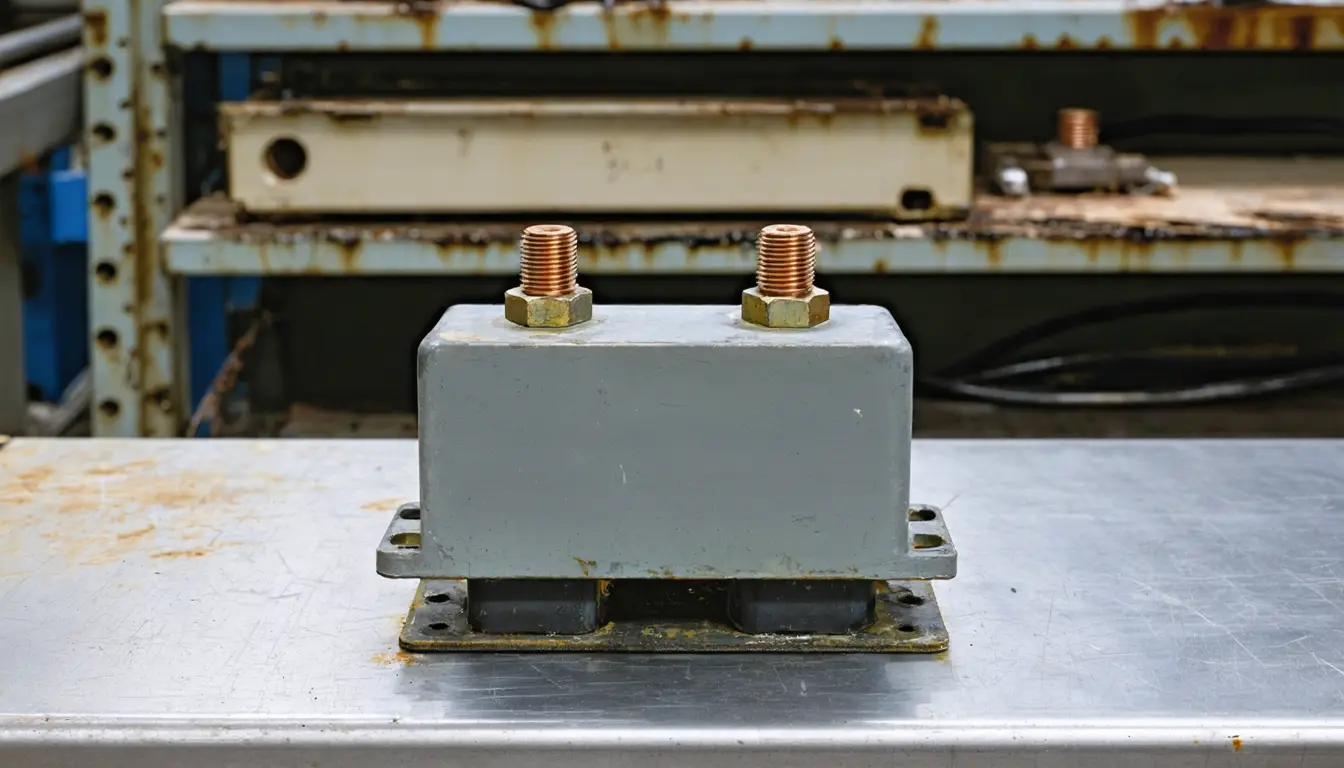
Atomic Machines is shipping PrimeSwitch PS-150, a 150-amp relay and the first device built by its Matter Compiler, to early-access customers for evaluation. Those units are the first outside check on its claim that software can replace device-specific tooling.
The Engineer · Build desk
What happened
- Atomic Machines has not published a price, a production volume or revenue, and its product page lists the relay only as available for sampling.
- The company says its Matter Compiler designs, fabricates and measures each device, then carries information from every build into later designs.
- The relay is aimed at power distribution in AI data centers, where Holden says the move toward 800-volt DC has made the switching trade-off more pressing.
- Atomic Machines has raised $250 million in total across six years in stealth, according to its Business Wire announcement, and no new round was announced.
Why it matters
- decision Early-access customers can measure the part now, but a power-shelf team cannot commit a design to it until it has a price and a supply volume to plan around.
- exposure So far the 50-microsecond and 200-micro-ohm figures come only from Atomic Machines, so evaluation customers become the first independent check on them.
- constraint The company's claim that one system can build different devices stays untested until a second, unrelated part comes off the Matter Compiler.
Holden's case starts with where a device's design lives. In a conventional plant, he argues, the design is embodied in physical tooling: molds, masks, dies, fixtures and retooled lines [12]. Atomic Machines stores device designs as software instructions instead, and measures each production operation, so a design can change without rebuilding dedicated tooling [18]. Its system description calls the process all-digital, with no masks and no production-line retooling [6].
A relay can test only part of that. One relay shows the system can make a relay. The company also says the same system could build different devices [21]. According to RuntimeWire, nothing Atomic Machines has published includes third-party test data or shows the process repeating at commercial volumes [7].
On paper, the part itself is sound engineering. PrimeSwitch is a bistable electromechanical relay, so it holds its state without power [13]. Atomic Machines frames the problem as a choice between two switch types. Electromechanical relays conduct metal to metal but take milliseconds to open, while solid-state switches open in microseconds and conduct through semiconductors that, the company says, bring higher losses and heat [17]. PrimeSwitch is rated to open in 50 microseconds [14]. I think the hybrid-breaker configuration is the best idea in the launch. In it, a small solid-state bypass carries the current only during the microseconds the contacts take to open [1], so the semiconductor is never asked to carry the steady load.
The datasheet figures are the company's measurements of its own parts [14]. At the rated 150 amps, 200 micro-ohms of on-resistance gives a 30-millivolt drop and about 4.5 watts of heat per relay [20][19]. That heat has to leave a surface-mount package 9.5 millimeters across and 3 millimeters high, and Atomic Machines says the part needs no active cooling [15]. For the rating to transfer to a customer's rack, the resistance has to stay near 200 micro-ohms from unit to unit and across switching cycles. The host board also has to move 4.5 watts out of that footprint [19]. Unit-to-unit spread on that resistance is the first figure I would want from the evaluation units, because one number tests both the relay and the measure-every-build process.
Holden introduced PS-150 on October 7, 2026 [2]. He reached factory automation through software and product work, according to Crunchbase [11]. He was a software engineer and vice president at D. E. Shaw, co-founded Pelago, held senior product roles at Amazon and Groupon, and became Uber's chief product officer [11]. Crunchbase dates his founding of Atomic Machines to May 2019 [11]. Named investors include Gigafund, Valor Equity Partners, XTX Ventures and the Regents of the University of California [9]. The relay's first public showing is at the Open Compute Project Global Summit in San Jose, October 12 to 15 [10].
What to watch
- Whether any early-access customer moves from evaluating PS-150 to a volume order for data-center power distribution.
- A published PS-150 price that buyers can set against solid-state switches at the same 150-amp rating.
Clarity's read
What the record supports and how the coverage leans. The claims behind it follow.
Reality
- Evidence30
- Adoption8
- Hype gap+50
- Incentives65
- Confidence40
Claim ledger
Ranked by verification strength, evidence, and original report placement.
- [1]
In a hybrid-breaker configuration, a small solid-state bypass carries current during the microseconds the relay takes to open.
ReportedSupportedSource: Atomic Machines, via RuntimeWire2 sources— create a free account to open themView cited source - [2]
Jeff Holden, founder and CEO of Atomic Machines, introduced PrimeSwitch PS-150 on October 7, 2026, as the first device produced with the company's Matter Compiler.
ReportedSupportedSource: RuntimeWire, citing The New York Times and company materialsView cited source - [3]
The 150-amp PrimeSwitch relay is shipping to early-access customers for evaluation, according to Atomic Machines' product page.
- [4]
Atomic Machines has not published a price, a production-volume figure or revenue figures; the product page lists sampling availability but no price.
- [5]
Atomic Machines says its Matter Compiler designs, fabricates and measures devices, then carries information from each build into later designs.
- [6]
Atomic Machines' system description describes an all-digital process without masks or production-line retooling; Holden's origin story says the system uses no molds, masks or fixtures.
- [7]
The public materials do not include independent test results or evidence of repeatability at commercial volumes.
- [8]
Atomic Machines emerged from six years in stealth and has raised $250 million to date; the announcement describes cumulative funding, not a newly announced round.
- [9]
Named investors are OneIM, Gigafund, XTX Ventures, KAS Venture Partners, Valor Equity Partners, Tru Arrow Partners, Construct Capital, Sozo Ventures and the Regents of the University of California.
- [10]
Atomic Machines says it will show PrimeSwitch publicly for the first time at the Open Compute Project Global Summit in San Jose, October 12-15.
- [11]
Holden worked as a software engineer and vice president at D. E. Shaw, co-founded Pelago, held senior product roles at Amazon and Groupon, and became Uber's chief product officer; Crunchbase dates his founding of Atomic Machines to May 2019.
- [12]
Holden argues that manufacturing remains constrained by designs embodied in physical tooling: molds, masks, dies, fixtures and retooled lines.
- [13]
PrimeSwitch is a bistable electromechanical relay, meaning it holds its state without power.
- [14]
Atomic Machines rates PrimeSwitch for 150 amps continuous AC or DC current, with an opening time of 50 microseconds, on-resistance of 200 micro-ohms and galvanic isolation to 1,500 volts.
- [15]
The surface-mount package measures 9.5 millimeters in diameter and 3 millimeters high, and Atomic Machines says the device needs no active cooling.
- [16]
Atomic Machines is targeting power distribution in AI data centers; Holden points to the move toward 800-volt DC systems as a reason the switching trade-off has become more pressing.
- [17]
In Atomic Machines' account, conventional electromechanical relays offer metal-to-metal conduction but take milliseconds to open, while solid-state switches open in microseconds but conduct through semiconductors that bring higher losses and heat; PrimeSwitch is intended to combine metal contacts with faster switching.
- [18]
Atomic Machines' proposed alternative is to store device designs as software instructions and measure production operations, allowing a design to change without rebuilding dedicated tooling.
- [19]
At the rated 150 amps and 200 micro-ohms on-resistance, conduction loss is about 4.5 watts per relay.
- [20]
At the rated 150 amps and 200 micro-ohms on-resistance, the voltage drop across the relay is 30 millivolts.
- [21]
Atomic Machines says its process could support different devices on the same manufacturing system.
ReportedInsufficientSource: Atomic Machines, via RuntimeWire2 sources— create a free account to open themView cited source
Sources
1 independent publisher whose own reporting we read for this story.
- runtimewire.comAtomic Machines ships its first Matter Compiler relay for evaluation
1 article · October 7, 2026
Topics and entities
Follow any of these and your For You feed starts watching them — no settings page required.