ProductNot yet confirmed elsewhere1 publisher3 min readPublished Updated
Anthropic says 5,380 fake accounts let Moonshot pass Claude off as Kimi
Anthropic says Moonshot AI routed 300,000 Kimi customer requests to Claude over ten days through 5,380 fraudulent proxy accounts in Singapore and Japan. That averages about 56 requests per account, light enough that teams selling model access have to link accounts to one another to see it.
The Product Desk
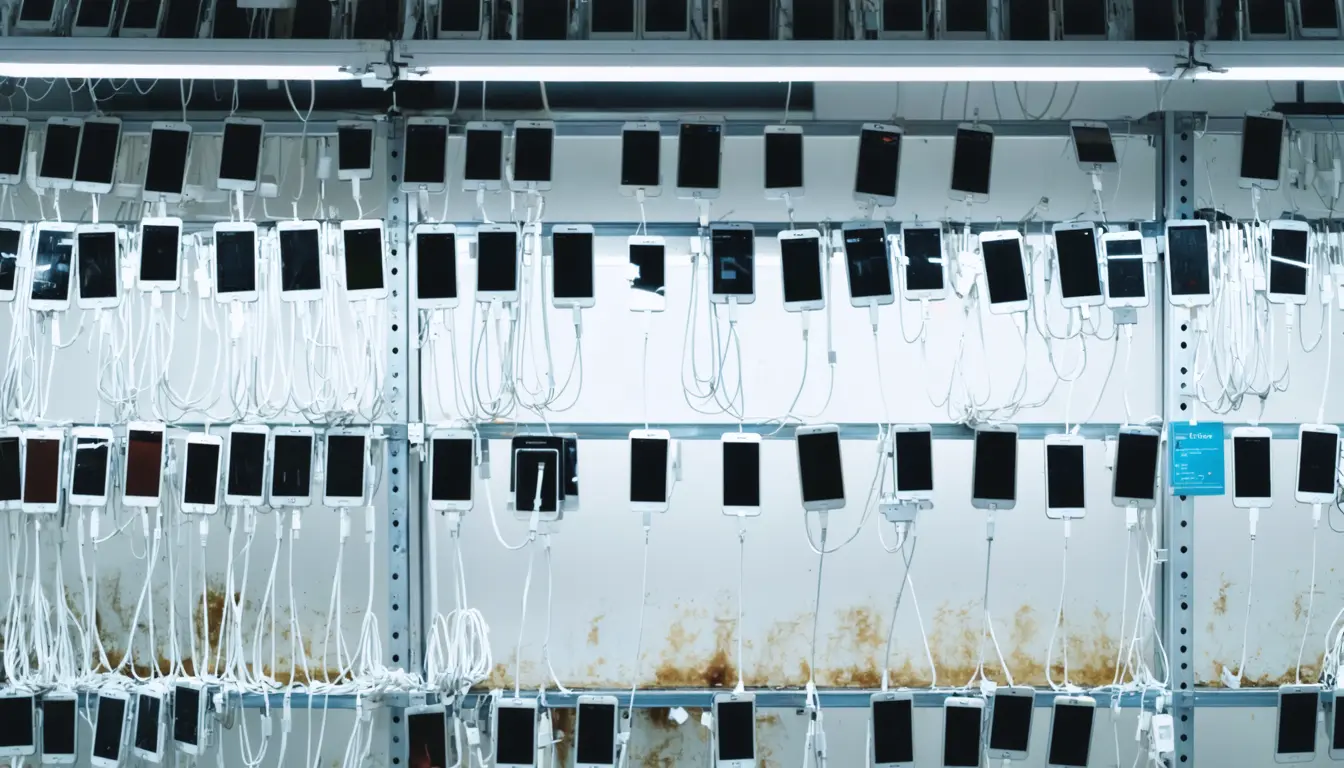
Anthropic's report counts 300,000 customer requests over a ten-day period through a proxy service network of fraudulent accounts. If all ran through those accounts, each carried about 56 requests over the ten days.
| Figure | Value | Note | Claim |
|---|---|---|---|
| Customer requests via fraudulent proxy accounts | 300,000 requests | 4 | |
| Period covered | 10 days | 4 | |
| Requests per fraudulent account, about | 56 requests | if all 300,000 ran via the accounts | 15 |
What happened
- The NSA, FBI and CISA issued a joint advisory naming DeepSeek, Moonshot AI, Alibaba, MiniMax, StepFun and Z.AI in distillation campaigns running since at least late 2024.
- Anthropic's September report says those six firms pulled billions of tokens from variants of Claude, GPT, Gemini and Grok across millions of requests over two years.
- Alibaba alone accounted for more than 151 million distillation activities between May and July 2026, according to Anthropic.
- China's Cyberspace Administration questioned seven developers before narrowing its attention to DeepSeek and Moonshot, the South China Morning Post reported.
- Anthropic says it has disrupted the misuse operations it identified and strengthened safeguards against unauthorized extraction of Claude's capabilities.
Why it matters
- exposure Aggregators and cloud providers that buy model access in bulk are the routes Anthropic says the traffic took, so upstream model providers have reason to scrutinise those customers first.
- decision Companies buying a branded chatbot or model now have a reason to ask which model actually answers, since Anthropic says Kimi users believed Kimi was replying.
- precedent Federal agencies asking AI companies to share intelligence on suspected campaigns means account-abuse findings that used to stay inside one company's trust team are now expected to travel between companies.
A Kimi user types a question and reads the reply as Kimi's. Anthropic's September report says Moonshot AI was secretly forwarding those requests to Claude [3]. If all 300,000 requests in the ten-day window ran through the 5,380 accounts, each account carried about 56 [4][15]. That is five or six a day [16].
For an API team, that spread matters more than the headline totals. We think most teams selling model access still build their controls on the idea that one account is one customer, and attach the rate limit and the bill to it. The operator Anthropic describes is one customer split across thousands of accounts. Each one sends what a per-account limit would log as light use [4][16].
CISA has called the activity a "systematic extraction of proprietary functionalities and capabilities threatening U.S. technological leadership" [2]. Anthropic's own wording is narrower. It calls distillation a "legitimate training method" [7] and defines the illicit kind as "an industrial-scale, covert campaign to extract a model's capabilities and replicate them in another model without authorization" [8]. In the Moonshot case, the industrial scale only appears when the accounts are added together [15].
The excerpts published do not show how Anthropic tied the accounts to Moonshot. Wang Zebin, an investment manager at Shenzhen-based JG Investment, told the South China Morning Post that the report "does not provide enough concrete examples to independently verify how those companies obtained or used the model outputs" [11]. Moonshot and DeepSeek did not respond to the paper's requests for comment [13].
Even with that caveat, we think account-level abuse detection belongs in the core product for any team selling model access. It also has to look at accounts in groups, because the alleged pattern only shows up there [15]. Honest customers pay for this. Linking accounts by region or payment route will also flag real businesses that happen to resemble a proxy network, and each false positive is a suspended key that someone in support has to explain.
A 2x2 sorts the traffic. One axis is whether an account's own volume is normal. The other is whether it acts in coordination with other accounts. A heavy account acting alone is a big customer or a single scraper, and the rate limit and the invoice already deal with it. Heavy accounts acting together are a crude farm that any usage chart shows. Normal volume on its own is the ordinary customer. The fourth cell, normal volume acting as a group, takes cross-account review to see. It is where the Moonshot traffic sits as Anthropic tells it [3][16].
A test of this needs one day of traffic and one scenario: an operator sending five or six requests a day from each of several thousand accounts [16]. That operator sits in the fourth cell, and the check is whether any screen the team already has would show it.
What to watch
- Whether Anthropic publishes the account-linking evidence Wang Zebin says is missing, or the joint advisory adds technical indicators other API providers can check their own traffic against.
- What China's Cyberspace Administration does with DeepSeek and Moonshot after narrowing its inquiry to the two firms.
- Whether the providers behind GPT, Gemini and Grok, which Anthropic's report also lists as targets, publish account-level findings of their own.
Clarity's read
What the record supports and how the coverage leans. The claims behind it follow.
Reality
- Evidence40
- Adoption
- Insufficient
- Hype gap+20
- Incentives
- Insufficient
- Confidence35
Claim ledger
Ranked by verification strength, evidence, and original report placement.
- [1]
Anthropic's September report stated that for two years DeepSeek, Moonshot AI, Alibaba, MiniMax, StepFun and Z.AI "extracted billions of tokens across millions of exchanges/requests from U.S. frontier AI models, including variants of Claude, GPT, Gemini, and Grok."
ReportedSupportedSource: Anthropic report, as reported by Interesting Engineering2 sources— create a free account to open themView cited source - [2]
CISA described the activity as a "systematic extraction of proprietary functionalities and capabilities threatening U.S. technological leadership."
ReportedSupportedSource: CISA, as reported by Interesting Engineering2 sources— create a free account to open themView cited source - [3]
According to Anthropic's report, Moonshot AI secretly forwarded requests to Claude, not Kimi, though users believed it was Kimi.
ReportedSupportedSource: Anthropic report2 sources— create a free account to open themView cited source - [4]
Anthropic report excerpt: "Over a ten-day period, we're talking 300,000 customer requests. They used a proxy service network of 5,380 fraudulent accounts in Singapore and Japan."
ReportedSupportedSource: Anthropic report2 sources— create a free account to open themView cited source - [5]
The NSA, CISA and FBI issued a joint advisory naming DeepSeek, Moonshot AI, Alibaba, MiniMax, StepFun and Z.AI as companies involved in large-scale model distillation campaigns since at least late 2024.
ReportedSupportedSource: NSA, CISA and FBI joint advisory, as reported by Interesting Engineering2 sources— create a free account to open themView cited source - [6]
The NSA, FBI and CISA urged American AI companies to strengthen detection systems, introduce targeted countermeasures and share intelligence about suspected distillation campaigns.
ReportedSupportedSource: NSA, FBI and CISA2 sources— create a free account to open themView cited source - [7]
Anthropic acknowledged that distillation is a "legitimate training method."
- [8]
"We define illicit distillation as an industrial-scale, covert campaign to extract a model's capabilities and replicate them in another model without authorization," Anthropic said.
- [9]
Anthropic believes Chinese developers used third-party aggregators, cloud providers and proxy services known as "transfer stations" to circumvent restrictions on American AI systems.
- [10]
According to Anthropic, Alibaba appeared to have engaged in more than 151 million distillation activities between May and July 2026.
- [11]
The report "does not provide enough concrete examples to independently verify how those companies obtained or used the model outputs," Wang Zebin, an investment manager at Shenzhen-based JG Investment, told the South China Morning Post.
- [12]
According to the South China Morning Post, the Cyberspace Administration of China questioned seven developers before narrowing its attention to DeepSeek and Moonshot.
ReportedSupportedSource: South China Morning Post, as reported by Interesting EngineeringView cited source - [13]
Moonshot and DeepSeek did not respond to the South China Morning Post's requests for comment.
- [14]
Anthropic said it had disrupted identified misuse operations and strengthened its safeguards against unauthorized extraction of Claude's capabilities.
- [15]
If all 300,000 requests ran through the 5,380 fraudulent accounts, each account carried about 56 requests over the ten-day period.
- [16]
That average works out to between five and six requests per account per day.
Sources
1 independent publisher whose own reporting we read for this story.
- interestingengineering.comAnthropic accuses Chinese AI firms of secretly using Claude to train their AI models
1 article · October 10, 2026
Topics and entities
Follow any of these and your For You feed starts watching them — no settings page required.