ProductNot yet confirmed elsewhere1 publisher3 min readPublished
Anthropic's hardware standard moves agent safety onto the wiring
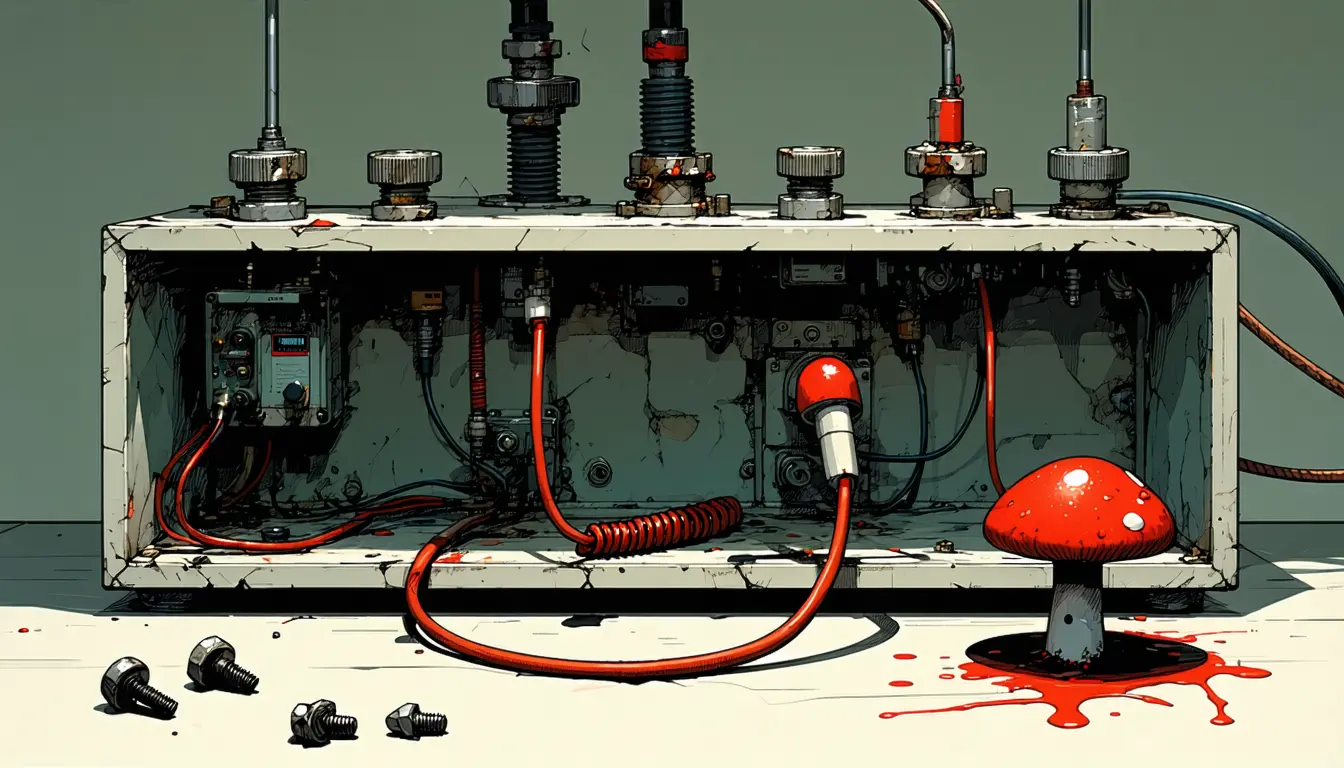
The Model Hardware Standard is pitched at scientists wiring up lab instruments, but the line that matters says models can recover from hardware errors without intervention. That makes stop authority an electrical question.
The Product Desk
What happened
- Anthropic has published the Model Hardware Standard, a set of standardized drivers meant to let AI agents interface with and control arbitrary devices rather than only software, data and code.
- The release is labelled a research preview and is pitched mainly at scientists who currently write custom integrations to get the separate components of an experiment working in concert.
- Anthropic says the standardized system could reduce experimental setup work that previously ran weeks or months down to hours or minutes.
- Technical staffer Alek Kemeny credits the idea to watching neuroscientist Arco Bast build a common interface for a memory-formation experiment at the HHMI Janelia Research Campus in Virginia.
Why it matters
- constraint If a model can recover from hardware errors on its own, stop authority has to live outside the model's judgment, and that is a wiring job rather than a system-prompt revision.
- decision Because MHS devices run fine from a command line with no model attached, teams can decide separately whether the agent holds the keys, and the driver is the cheapest place to enforce that answer.
- exposure The research-preview label describes Anthropic's commitment, not the customer's: the team that wires an MHS driver into a live instrument is the one that explains the result afterwards.
- contradiction Anthropic is selling compressed time-to-result, while the operator read in the Ars thread is that approval gates get cut for speed, citing AWS's treatment of human-in-the-loop as a cost.
A commenter on Ars Technica's forum thread describes his daughter pointing Claude at a LeRobot arm late last year, with three cameras as a feedback loop: the agent wrote scripts to move the arm to preset positions, filmed the results, and used the camera and position data to train a model that generalized pick-and-place, all of it done over Signal without her touching the codebase [14]. That is the deployment pattern worth holding in your head, not the Janelia microscope rig. Physical control arrives through whoever finds the driver convenient.
The hardware layer used to come with ceremony: a procurement review, a safety officer, an interlock inherited from the machine's original vendor. A standard driver removes the integration work that used to function as a delay, and the delay was doing safety work nobody had formally assigned to it. Anthropic's own pitch is that setup running weeks or months collapses to hours or minutes [4]. Take the ends of that range literally and it is about 84x at the conservative end, two weeks against four hours, and roughly 1,440x at the aggressive end, two months against one hour [12]. Whichever number is real, the friction being removed is the friction that gave somebody time to ask what happens if this goes wrong.
Anthropic mentions one detail almost in passing: MHS needs no model at all; devices can be driven directly from command-line prompts and API code files [7]. The model is an optional consumer of the interface, which means the driver layer is also where control can sit. It has to sit somewhere outside the model, because the sentence Anthropic uses to sell the model integration is that models can update parameters in real time and, in some cases, recover from hardware errors without intervention [8]. Stopping one of the laser beams in Bast's rig takes a physical intervention that a filter operating on tokens cannot supply [6]. The reported description of MHS covers drivers and setup time, not an emergency stop or a physical interlock [11].
So the inventory that matters is not the device list. Two questions give you four boxes. Is the action reversible? Does stopping it require the model's cooperation? Reversible plus a stop that works without software is the only box that runs unattended. Irreversible plus a software-only stop is the box where you owe someone a physical break in the circuit before the device gets an MHS driver at all. The two mixed boxes need a named person rather than a written policy. Commenters in the thread reached for wire cutters and a four-pound mallet [10], which is crude and also the right layer.
The pressure runs the other way, though. The same thread carries a commenter's read that AWS treats human-in-the-loop as expensive, because it pauses AI actions while a person reviews and approves them [13], and Kemeny's promo line is that a century of progress can condense into a decade [9]. Both of those push on the review queue, which is the argument for putting the stop somewhere a schedule cannot negotiate with it.
What to watch
- Whether Anthropic adds conformance requirements for emergency stop or interlock behaviour when MHS leaves research preview.
- Whether the first MHS deployments outside research labs arrive with a named owner for stop authority or none at all.
- Whether any cloud or robotics vendor puts stop authority in the driver layer rather than in a human review queue.
Clarity's read
What the record supports and how the coverage leans. The claims behind it follow.
Reality
- Evidence30
- Adoption10
- Hype gap+55
- Incentives75
- Confidence45
Claim ledger
Ranked by verification strength, evidence, and original report placement.
- [1]
Anthropic announced the Model Hardware Standard (MHS), a set of standardized drivers designed to let AI agents easily interface with and control arbitrary devices, extending agentic AI beyond text, images, code and other actions inside a computer.
- [2]
The MHS effort is a "research preview" and is being sold mainly as a way to help scientists streamline the custom software integrations often needed to get disparate components of an experiment working together.
- [3]
Anthropic says MHS provides a common interface and common data-sharing format so devices can talk to each other across a network without needing a bespoke "translator" program in between.
- [4]
Anthropic writes that the standardized system could reduce weeks or months of exacting experimental setup down to "hours or minutes."
- [5]
Anthropic technical staffer Alek Kemeny says MHS was inspired by observing neuroscientist Arco Bast work through an experiment on memory formation in the brain at the HHMI Janelia Research Campus in Ashburn, Virginia.
- [6]
Bast had worked out an interface to get the rotating laser beams, microscopes, cameras and other components of his experiment to coordinate through a common interface.
- [7]
Nothing about a common machine interface language requires the use of AI models, and Anthropic says MHS devices can be controlled directly in real time via command-line prompts and API code files.
- [8]
Anthropic writes that integrating an MHS system with an AI model through the Model Context Protocol lets scientists interact with devices in natural language and lets models reason through each step of an experiment, update parameters in real time, and in some cases recover from hardware errors without intervention.
- [9]
Kemeny said in a promo video alongside the announcement: "If you can test hypotheses faster, you could create general technologies faster. This is how a century of progress can condense into a decade."
ReportedSupportedSource: Alek Kemeny, quoted in an Ars Technica forum thread1 source— create a free account to open them - [10]
Commenters in the thread proposed physical shutoff as their answer, one listing a small pair of wire cutters first and a four-pound steel mallet second, and others stressing that a human in the loop needs a way to quickly shut the system off.
- [11]
None of the MHS components described in the Ars Technica coverage is an emergency stop or a physical interlock; the described feature set covers drivers, a common data format, command-line and API control, and model integration via MCP.
- [12]
Anthropic's stated setup compression works out to roughly 84x at the conservative end and about 1,440x at the aggressive end, depending on which endpoints of "weeks or months" and "hours or minutes" are taken.
- [13]
A commenter in the Ars Technica forum thread wrote that human-in-the-loop is a thinly veiled attempt to give humans a sense of control and not intended as a long-term component of any AI system, and that AWS recently indicated human-in-the-loop slows down automation by pausing AI actions while a human reviews and approves them.
- [14]
A commenter in the Ars Technica forum thread said his daughter used Claude with a LeRobot arm and three cameras as a feedback loop: the agent wrote scripts to move the arm to pre-defined locations, captured positions on camera, then used the camera and position data to train an ML model to generalize pick-and-place, and she did the entire project over Signal without touching the codebase.
Sources
1 independent publisher whose own reporting we read for this story.
- arstechnica.comAnthropic's new hardware standard lets AI agents control the physical world
3 articles · August 28, 2026
Topics and entities
Follow any of these and your For You feed starts watching them — no settings page required.
Topics
- Human oversight and stop authorityFollow
- Agent Interoperability StandardsFollow
- Agentic AI Control of Physical HardwareFollow
- Autonomous Lab AutomationFollow
Entities
- Alek KemenyFollow
- Model Context ProtocolFollow
- HHMI Janelia Research CampusFollow
- ClaudeFollow
- Amazon Web ServicesFollow
- LeRobotFollow
- Arco BastFollow
- Model Hardware StandardFollow
- AnthropicFollow