Science1 publisher3 min readPublished
Animals eat PHA too: bioplastic degradation is not a microbes-only story
A Nature Ecology & Evolution study reports PHA-degrading enzymes in more than 66 animal species across nine phyla. Environmental-fate models built on microbes alone are incomplete.
The Scientist · Science desk
Drafted by a language model from the sources cited here and checked against its claim ledger before publication. How we use AISend a correction
What happened
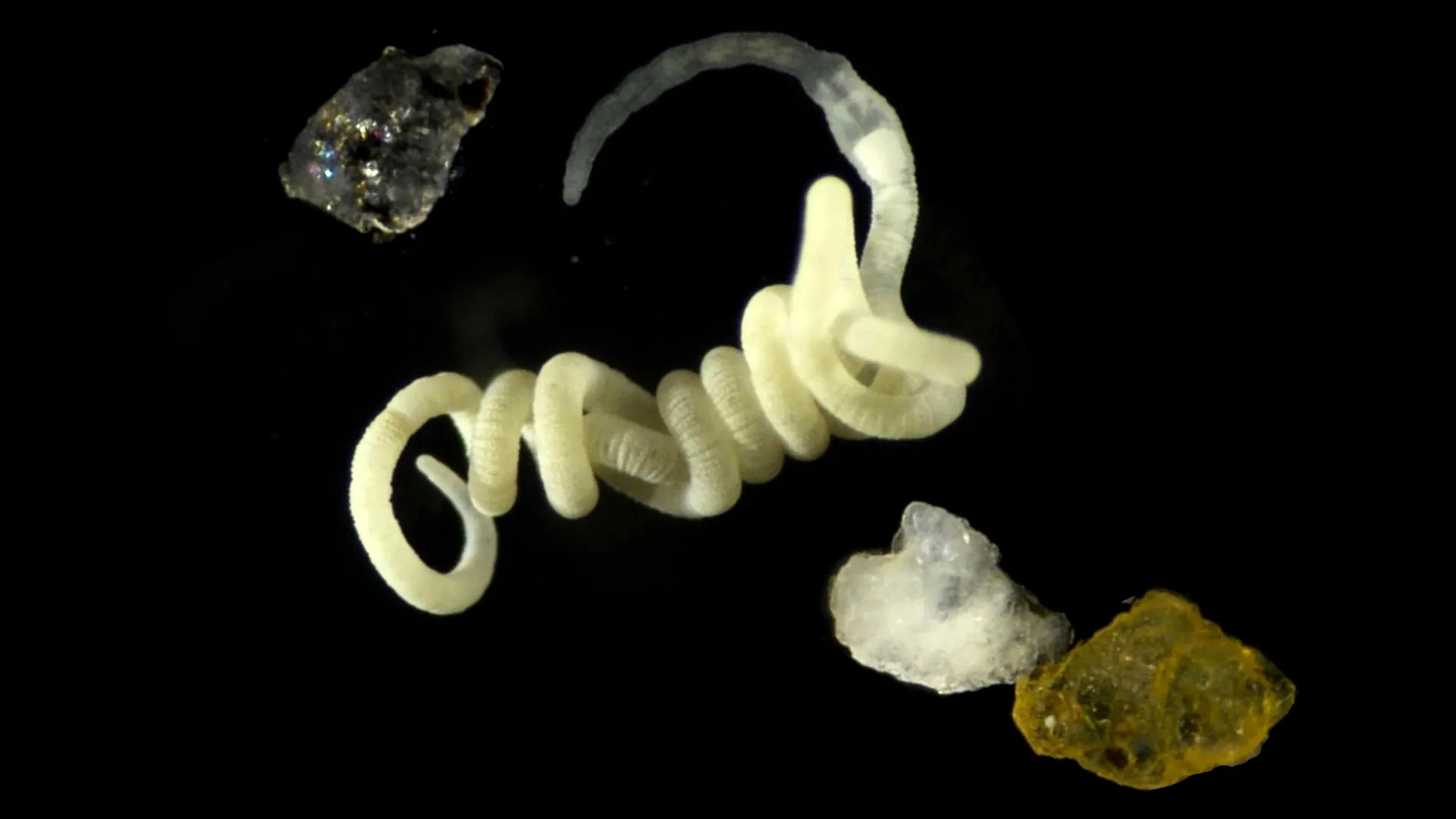
- In a study published in Nature Ecology & Evolution, researchers from the Max Planck Institute for Marine Microbiology in Bremen, Germany, found that a wide range of animals, including marine worms, starfish, earthworms and other terrestrial species, possess enzymes that can degrade microbial PHAs.
- Scientists had long assumed that only microorganisms could break down PHAs; the new research challenges that idea.
- Many bacteria and archaea naturally produce polyhydroxyalkanoates (PHAs), which they store inside their cells as reserves of carbon and energy.
- When the team examined animal genomes more broadly, they found related enzymes in more than 66 species spanning nine different phyla.
- Laboratory tests showed that enzymes from very distantly related animals, including a sponge, an earthworm and a springtail, could also degrade microbial PHAs.
Compiled by The ScientistSomething wrong?How this is made
Why it matters
Researchers at the Max Planck Institute for Marine Microbiology in Bremen report in Nature Ecology & Evolution that animals from nine phyla carry enzymes able to break down polyhydroxyalkanoates, the microbial storage polymer sold commercially as PHA bioplastic [1][4]. That matters because the biodegradability argument for PHA has rested on the premise, stated plainly in the group's own framing, that only microorganisms can take these polymers apart [2].
PHAs are made by bacteria and archaea, which stockpile them inside their cells as carbon and energy reserves [3]. The work began with Olavius algarvensis, a marine worm with no mouth and no gut that lives off symbiotic bacteria under its skin and digests them [6]. According to corresponding author Nicole Dubilier, one of those symbionts stores enormous amounts of carbon as PHA, which prompted the question of whether the worm had evolved access to it [7]. The team found an enzyme in the worm that cuts microbial PHA into smaller molecules animals can use [8], and high-resolution imaging placed production of that enzyme in the same location where the worm digests its bacterial partners [9].
The breadth is the operationally interesting part. A wider genome search turned up related enzymes in more than 66 species across nine phyla [4], which is an average of more than seven species per phylum rather than one clade's oddity [18]. Laboratory tests confirmed activity for enzymes from a sponge, an earthworm and a springtail [5]. First author Caroline Zeidler describes it as a widespread capability shared by animals from very different branches of the tree of life [11]. Every organism named in the release is an invertebrate; the material says nothing about vertebrates [17].
For anyone writing end-of-life claims, two consequences follow. First, the degrading population in soil or sediment includes fauna that are routinely present in exactly the compartments where PHA products end up: earthworms and springtails in soil, worms, starfish and sponges in marine sediment [1][5]. Test systems and models that attribute disintegration solely to microbial consortia are describing part of the mechanism. Second, the authors say the finding opens a previously unrecognised route for microbe-stored carbon into animal food webs [10]; if degradation products are usable by animals [8], then some polymer carbon ends up as animal biomass rather than as respired CO2 [19]. That is a different accounting question from mineralisation rate, and it applies to the same materials now used in food packaging, hygiene products and agricultural fertiliser beads designed to release their contents as the plastic breaks down [12][13].
The medical case deserves separate attention. PHA already appears in wound dressings, drug delivery systems and resorbable implants and sutures meant to degrade inside the body [14], and a study showing animal-encoded depolymerase activity is directly relevant to how those degradation kinetics are predicted, even though this work reports no vertebrate data [14][17].
Scale keeps the stakes modest for now: PHAs are a small share of the bioplastics market, though the source notes bioplastics capacity is expected to grow substantially [15]. Watch for whether the enzyme family shows up in vertebrate genomes, whether the activity holds against commercial PHA formulations rather than microbial granules, and whether biodegradation test protocols start including invertebrate fauna instead of microbial inocula alone.