Alphabet's Porat says next year's AI capex will exceed this year's roughly $200 billion
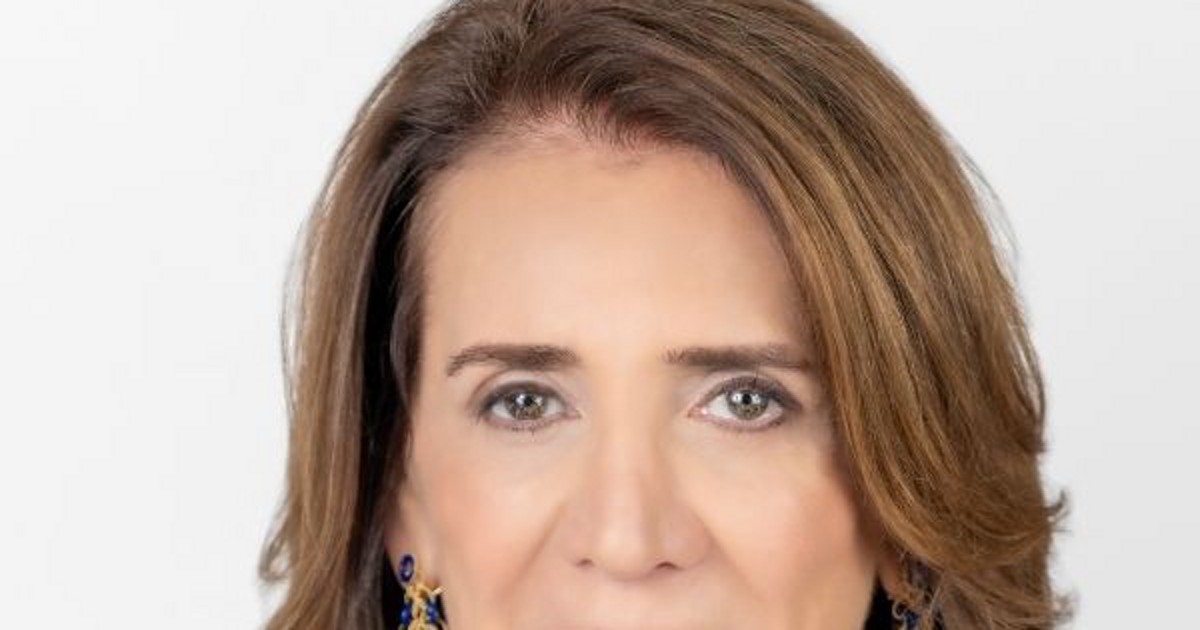
Alphabet expects capex to increase significantly next year from roughly $200 billion on AI this year, president Ruth Porat told Fortune. The evidence offered for the demand behind the plan is Porat's own description of it.
The Investor · Invest desk
What happened
- She made the remarks in an interview with Fortune's Alyson Shontell at the Most Powerful Women Summit in Santa Barbara, California.
- She said demand for compute from partners in the enterprise and in governments "suggests that we're in the buildout here now."
- She traced the spending to Google's 2016 pivot from "mobile first" to "AI first."
Why it matters
- exposure Alphabet is committing the money on its own reading of demand, so any shortfall in customer use of the new capacity falls on Alphabet.
- constraint While the constraint holds, Alphabet can sell only as much compute as it has built capacity for.
- contradiction Porat describes a buildout while the same newsletter's markets headlines say tech investors flee a "casino" and chip stocks fold; if the two are linked, the spender and the market disagree on demand.
Porat's phrase "capacity constrained" [4] fits two readings. In the first, Alphabet has more orders for compute than it can serve. In the second, demand is real but the return on the next dollar of capex is untested, and the constraint is only the limit of what Alphabet has built so far. We lean to the first, because Porat tied the spending to named customer groups [6]. The account gives no utilisation rate, backlog or revenue figure for those groups.
Her only word for the size of next year's rise was "significantly" [3]. Against a base of roughly $200 billion [1], a 10% rise adds $20 billion [10] and a 25% rise adds $50 billion [11].
Porat said, "We do see this as an opportunity that extends for quite some time." [5] She offered it as a forecast. The $200 billion is a cost already incurred, and the revenue it earns will turn on how much of the capacity customers use.
She also framed the spending as long-horizon. "The thing that is true throughout history is anything that is not built for the long run won't endure for the long run," she said [7]. Her case is for judging the spending over years, and it leaves utilisation today open.
We would call the demand thesis wrong if next year's figure comes in at or near this year's $200 billion [1], or if the capacity built against it sits partly unused.
What to watch
- Whether Alphabet attaches a dollar range to 'significantly' when it next guides on capex.
- Any disclosure of utilisation, backlog or unserved demand that would test the 'capacity constrained' claim.
- Whether Fortune's markets items on tech investors and chip stocks tie the selling to AI spending.
Clarity's read
What the record supports and how the coverage leans. The claims behind it follow.
Reality
- Evidence30
- Adoption
- Insufficient
- Hype gap+25
- Incentives65
- Confidence55
Claim ledger
Ranked by verification strength, evidence, and original report placement.
- [1]
Alphabet is spending roughly $200 billion this year to build out its AI capacity.
- [2]
Ruth Porat spoke with Fortune's Alyson Shontell at Fortune's Most Powerful Women Summit in Santa Barbara, Calif.
- [3]
Alphabet expects capital expenditure to "increase significantly" next year, Porat said.
- [4]
Porat said Alphabet remains "capacity constrained" as demand grows.
- [5]
Porat said: "We do see this as an opportunity that extends for quite some time."
- [6]
Porat said demand for compute, because of the value partners see in the enterprise, in governments and across Alphabet's platform, "suggests that we're in the buildout here now."
- [7]
Porat said: "The thing that is true throughout history is anything that is not built for the long run won't endure for the long run."
- [8]
Porat noted that Alphabet's capex is a payoff from a strategy devised years ago, starting with Google's 2016 pivot from "mobile first" to "AI first."
- [9]
Fortune's newsletter carries a markets headline reading "Tech investors flee 'casino'" and a markets item titled "Chip stocks fold," alongside the Porat item.
- [10]
A 10% rise on a roughly $200 billion base adds about $20 billion.
- [11]
A 25% rise on a roughly $200 billion base adds about $50 billion.
Sources
1 independent publisher whose own reporting we read for this story.
- fortune.comBanks in France could collapse because ‘widening riots can cause deposit flight,’ analysts warn
1 article · October 13, 2026
Topics and entities
Follow any of these and your For You feed starts watching them — no settings page required.