Identical B200 clusters are repricing 50-60% higher instead of falling, investor says
Gavin Baker's checks say the same hardware costs half again more than it did seven months ago, so the number worth modelling is the price at which end customers finally cover compute, power and financing.
The Engineer · Build desk
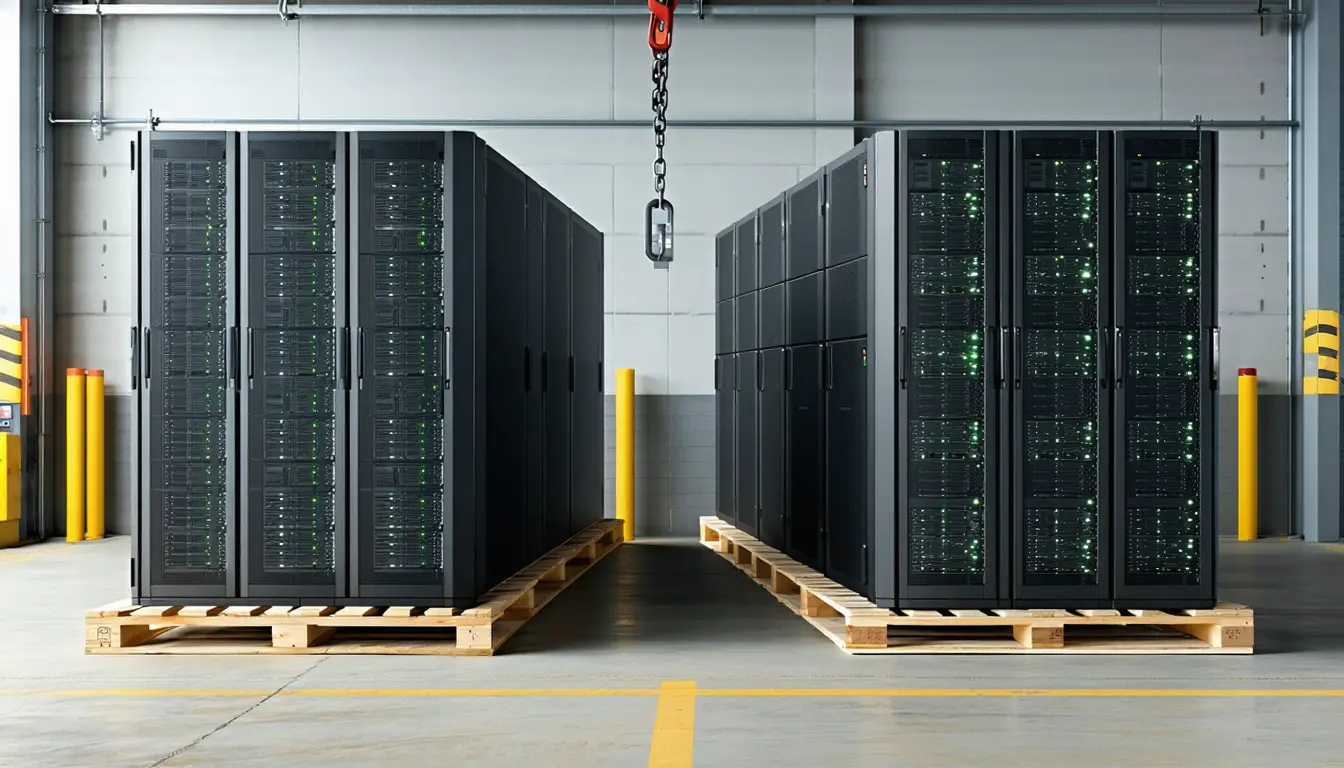
What happened
- Microsoft reported Azure growing 43% in its latest quarter, and management still said customer demand exceeded the capacity available to serve it.
- Investor Gavin Baker's checks put the price of some identical B200 GPU clusters roughly 50% to 60% above where it sat six or seven months ago, rising rather than falling.
- Nvidia says demand exceeds supply and describes its supply chain as stretched, while server memory remains tight.
- Nvidia announced partnerships with Apollo, BlackRock, Blackstone, Brookfield, Goldman Sachs and KKR to mobilize more than $500B of third-party infrastructure capital.
Why it matters
- What it limits constraint Any build-versus-rent model whose key input is a declining price per GPU-hour for a fixed configuration now has that input pointing the wrong way, and the error shows up at renewal rather than in the current bill.
- Who has to decide decision Capacity buyers have to choose between locking multi-year commitments at prices that already look elevated and riding a market where the shortage is measurable but the price customers will pay is not.
- Who's exposed exposure Funding AI factories with outside capital puts the downside on whoever ends up holding the asset if end customers decline the full cost, rather than on the labs renting the racks.
- What doesn't add up contradiction theneuron.ai reads today's evidence as undersupply while arguing the same shortage is what funds a later glut, so the bullish price data and the bearish thesis share a cause instead of cancelling out.
The load-bearing word is identical. Same silicon and same generation means the move Baker reports is not a mix effect or a spec upgrade being read as inflation [3]. For most hardware generations, the rental price of a fixed configuration decays as supply lands and the successor part is announced. Here it went the other way.
Annualise it, because that is the form a budget needs. Fifty percent over seven months compounds to 1.5^(12/7), about 100 percent a year. Sixty percent over six months is 1.6 squared, about 156 percent [8]. Both figures rest on one investor's channel checks in GPU rental markets, as relayed by theneuron.ai [3]. For that rate to land on your invoice, you have to be renewing short-term or spot capacity in the same hardware class; a multi-year offtake signed in the spring makes the reprice somebody else's renewal quote.
The per-megawatt numbers explain why the bid keeps climbing. Dylan Patel puts base AI compute at roughly $10M to $15M per megawatt against as much as $50M of revenue per megawatt that Anthropic has generated at times [10]. That is a ratio of 3.3x to 5x [13]. Whoever converts a scarce megawatt into the most revenue can outbid everyone else for the next one, which is the mechanism under the claim that two labs could absorb roughly half the world's new AI compute [11].
Then there is the $11T through 2029 [9]. Divide it by the same $10M to $15M per megawatt and you get 733 GW to 1,100 GW of base compute [14]. Nobody is energising a terawatt this decade, so most of that total has to be power, buildings, memory and financing rather than accelerators. Two numbers in the same argument rarely share a denominator.
Utilization is an occupancy metric. A busy rack tells you the machine is rented, not that the end customer paid a price covering the GPU, the power, the data center, the financing and the training run [4]. Baker's price series and Zitron's objection are measuring different quantities, which is why a shortage does not settle the question: subscriptions, investor capital, cloud financing and debt all sit between the meter and the person who eventually pays [5].
That is also the number no dashboard produces. In my context it argues for pricing renewals at today's level or above rather than putting hardware deflation into a 2026 plan, and for reading the offtake terms in anything funded out of the more than $500B Nvidia has lined up with outside investors, since the question those structures answer is who holds the asset when the clearing price finally gets quoted [6][7].
What to watch
- Whether Baker's next round of rental-market checks shows B200 cluster prices flattening or continuing to climb.
- Whether Microsoft's next quarter still reports Azure demand above available capacity as new sites are energised.
- Whether the vehicles built on Nvidia's $500B financing partnerships disclose offtake terms that show who holds the asset if prices fall.
Clarity's read
What the record supports and how the coverage leans. The claims behind it follow.
Reality
- Evidence38
- Adoption62
- Hype gap+18
- Incentives72
- Confidence44
Claim ledger
Ranked by verification strength, evidence, and original report placement.
- [1]
Microsoft's latest quarter showed Azure growing 43%, and management still said customer demand exceeded available capacity.
- [2]
Server memory remains tight and Nvidia says demand exceeds supply, with its supply chain stretched.
- [3]
Investor Gavin Baker says the price of some identical B200 GPU clusters has risen roughly 50%-60% in six or seven months instead of falling.
- [4]
Zitron's argument holds that a GPU can run at 100% utilization and still be a terrible investment if the customer eventually refuses to pay enough to cover the GPU, power, data center, financing, model training and everything wrapped around it.
- [5]
Zitron argues utilization can look enormous while subscriptions, investor capital, cloud financing and debt obscure whether customers will ultimately pay the full cost of what they consume.
- [6]
Nvidia announced partnerships with Apollo, BlackRock, Blackstone, Brookfield, Goldman Sachs and KKR designed to mobilize more than $500B of third-party infrastructure capital.
- [7]
Baker describes Nvidia as a pressure valve, helping outside investors finance the data centers, chips and power needed to expand supply instead of forcing OpenAI and Anthropic to own every server rack themselves.
- [8]
Baker's reported repricing implies an annualised rate of roughly 100% at the slow end (50% over seven months) and roughly 156% at the fast end (60% over six months).
- [9]
Dylan Patel estimates AI infrastructure spending could reach roughly $11T through 2029.
- [10]
Dylan Patel estimates base AI compute has recently cost roughly $10M-$15M per megawatt, while Anthropic has at times generated as much as $50M in revenue per megawatt.
- [11]
Dylan Patel and Dwarkesh Patel think OpenAI and Anthropic could consume roughly half of the world's new AI compute surprisingly soon, because the labs can make more money from each megawatt than most competitors.
- [12]
theneuron.ai's own read is that current evidence favors undersupply, but that the shortage may be how the eventual bubble gets built: shortage first, glut second.
- [13]
Anthropic's cited revenue per megawatt is 3.3 to 5 times the cited cost of base AI compute per megawatt.
- [14]
Spending $11T entirely at $10M-$15M per megawatt of base AI compute would buy roughly 733 GW to 1,100 GW, which indicates most of the projected total is not accelerators.
Get this ledger inside ChatGPT. Ask about any of our stories and the answer brings its figure, each claim’s verdict and the sources. Free, no account.
Sources
1 independent publisher whose own reporting we read for this story.
- theneuron.aiAI's $11T Bet: The Bull and Bear Case for the Compute Boom
1 article · August 31, 2026
Topics and entities
Follow any of these and your For You feed starts watching them — no settings page required.
Topics
- AI infrastructure financingFollow
- Data Centre Power and Megawatt EconomicsFollow
- AI Compute Supply and ScarcityFollow
- AI Bubble and Debt-Bomb DebateFollow
- GPU Rental and Cluster PricingFollow