Leadership1 publisherNot yet confirmed elsewhere3 min readPublished
Longer AI-drafted grievances push HR to narrow complaints in person before investigating
Guidance in Personnel Today says employees increasingly draft grievances with generative AI and that legal jargon now appears in nearly all of them. HR teams have to trim those complaints while keeping each investigation thorough enough to count as reasonable.
The Board Room · Leadership desk
Drafted by a language model from the sources cited here and checked against its claim ledger before publication. How we use AISend a correction
What happened
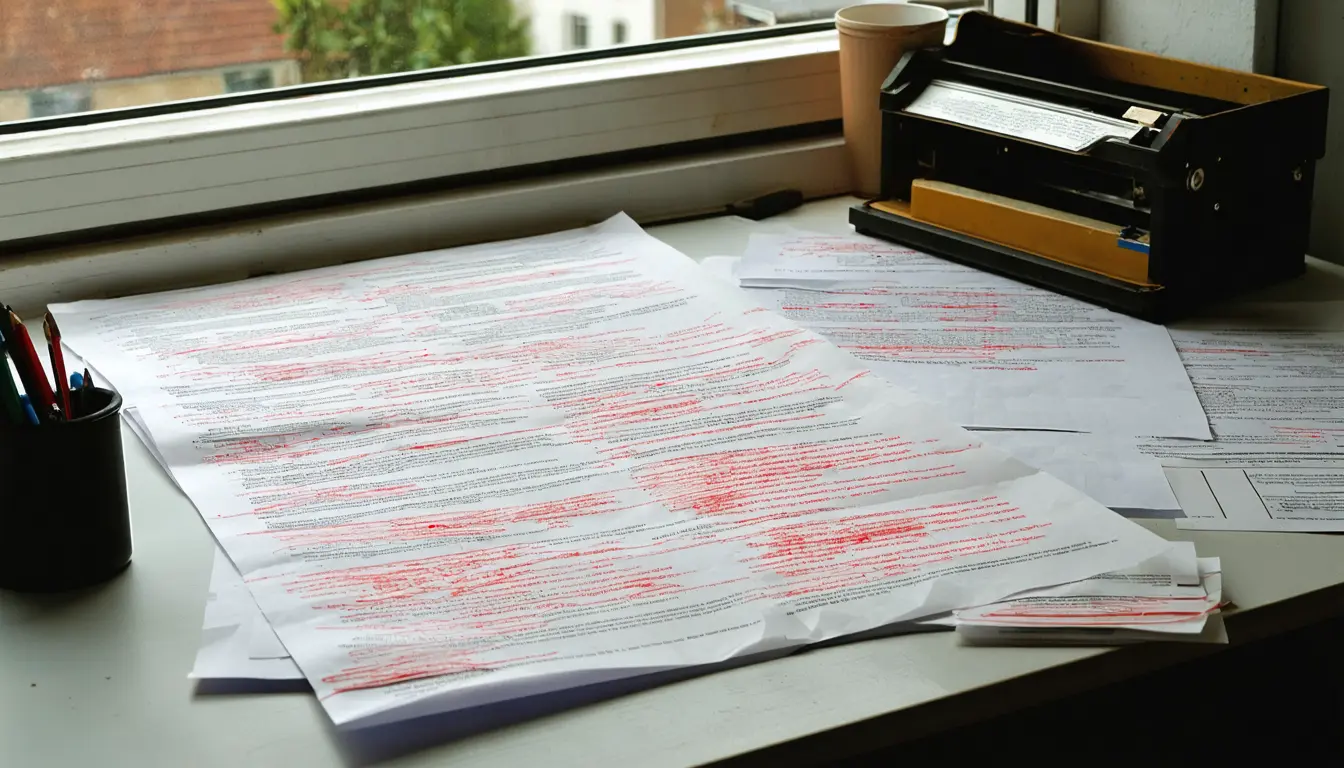
- The guidance says the length, complexity and repetition of some AI-drafted grievances make it hard to pick out the issues that need investigating and to progress cases fairly.
- Stopping employees from using AI will rarely be reasonable, it says, because the tools help people writing in a second language and a ban could invite discrimination claims.
- Employees often struggle to explain an AI-drafted complaint in person, and a different picture can emerge once they describe the issues in their own words.
- If an employee refuses to narrow the grievance or to meet, the employer must decide case by case whether to cut the investigation back, for example to the most serious allegations.
Compiled by The Board RoomSomething wrong?How this is made
Why it matters
- constraint EHRC guidance against compulsory forms leaves triage after a complaint arrives as the main place HR can save time on long AI-drafted submissions.
- decision A unilateral cut to the most serious allegations is a judgement the employer owns alone, and it needs reasons that hold up if the inquiry is later called too thin.
- exposure An inquiry trimmed too far exposes the employer to discrimination claims and to arguments that it broke the implied term of mutual trust and confidence.
The legal standard stays fixed while the documents grow. Under the guidance, a grievance investigation must be thorough enough to be reasonable, and generally the more serious the allegation, the more thorough it has to be [3]. The obvious answer for a stretched HR team is a word limit or a template form. The article concedes both are attractive from an administrative perspective, then advises caution [14]. Its reason is the ACAS Code of Practice, which stresses giving employees a meaningful opportunity to explain their grievance [6]. What is left is an optional pro forma [8]. It asks for the allegations, the people involved, the dates and the outcome sought, and can carry a suggested word count for a summary section [8].
The guidance also asks for grievances in the employee's own words, focused on relevant facts, with supporting documents attached separately [9]. That request sits awkwardly beside its acceptance that employees will draft with AI and that stopping them is rarely reasonable [5]. It works only as a nudge. Employees remain free to raise concerns in a different way [8].
Sequencing is where HR has the most control. "As AI becomes more prevalent, human interaction becomes more important," the article says [15]. A real conversation early on helps identify the key issues and narrows an otherwise unwieldy complaint [16]. Any agreed change to the scope should be put in writing. An investigation carried out in line with that agreement is likely to be considered reasonable, even if the employee objects once the grievance is not upheld [12]. The choice this quarter is whether to make that meeting a standard step and to train managers to spot the cases that carry genuine legal risk [4]. The payoff comes later, when a disputed outcome can be checked against a written scope the employee agreed to [12].
The same tools tend to draft the follow-up emails [19]. Where correspondence turns excessive or repetitive, the guidance suggests moving the discussion into meetings, or, where that is not practical, explaining what steps have been taken and why further correspondence will not be addressed [10].
The evidence behind all of this is practitioner experience. The article rests its claim that AI use is rising on "Ask any HR professional" [17], and its statement that legal jargon now appears in nearly all grievances is its own estimate [18]. It does not include counts of grievances filed or of their length. Longer, more repetitive complaints are supported as an observed problem [1]. Whether AI is also raising the number of grievances, we do not know yet. In my view the length problem alone justifies changing procedure this quarter, while any question about investigator headcount can wait for figures.
What to watch
- Any ACAS or EHRC update that addresses AI-drafted grievances or the formats employers may ask complaints to take.
- Employment tribunal rulings on whether an employer acted reasonably in narrowing an AI-drafted grievance without the employee's agreement.
- Caseload or survey data showing whether grievance numbers, and not only their length, have risen since staff adopted generative AI.